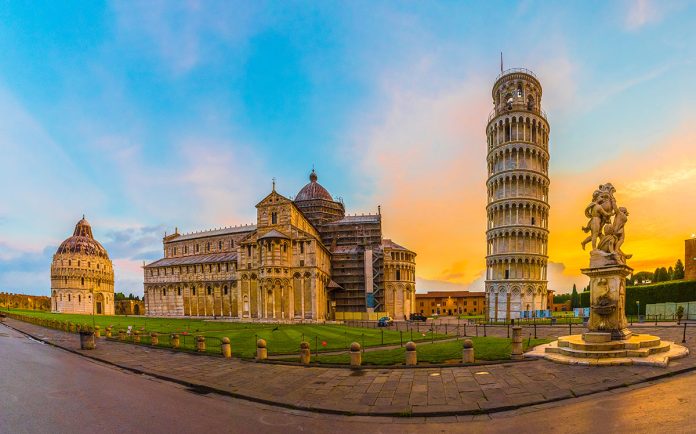
When people talk about Pisa, they inevitably think of its tower; yet this imposing leaning bell tower is only one of the many monuments offered by this beautiful Tuscan city. The splendid Piazza del Duomo brings together, in an architectural complex unique in the world and rightly known as the “Piazza dei Miracoli”, the city’s main religious monuments: the Tower, the Duomo, the Baptistery and the Camposanto. Pisa, however, does not end with this square: just move a little further away to discover the artistic treasures that make it one of the most beautiful art cities in Italy.
Buildings, monuments and museums help keep alive the memory of a past in which Pisa was a Maritime Republic and, for a long time, the undisputed ruler of the Mediterranean. At the same time, still proudly holding the title of Queen of Studies, given to it by the Florentines, Pisa is an extremely young, dynamic and lively city. Here, then, is what you absolutely must see in Pisa to discover this jewel of rare beauty.
If, instead, you are looking for a hotel, we recommend choosing from those offered by Booking.com. There are around 100 hotels with prices, photos and reviews from guests who have stayed there before you. Go to Booking.com
The Leaning Tower of Pisa
1
The emblem of the city thanks to its distinctive tilt, and the first thing to see in Pisa, the Tower is the most famous monument in Piazza del Duomo. Built between the 12th and 14th centuries, the Tower leans because the ground began to subside during the earliest stages of construction, and it has remained that way ever since.

Although it may give you a slight feeling of unease, do not be too impressed: the vertical axis passing through its centre of gravity falls within its base, so unless the laws of physics are overturned, the tower will not fall. It is believed that the Tower was designed by Diotisalvi, who was building the Baptistery in the same period.
In reality, although there are many similarities between the two buildings, the debate over the authorship of the project is still ongoing. The Tower of Pisa has been proposed as one of the seven wonders of the modern world.
Opening hours and ticket prices for the Tower of Pisa
Opening hours: every day from 9 am to 8 pm.
Ticket price:
Cathedral + Tower: €20
All the monuments in the Square: €27
Tickets can be purchased on the official Opa Pisa website.
The Cathedral of Santa Maria Assunta in Pisa
2
The Cathedral of Pisa, dedicated to Santa Maria Assunta, is the most significant example of Pisan Romanesque art. The architect Buscheto, combining the classical tradition with elements of Norman, Byzantine, early Christian and Arab art, created an original style that anticipated the Florentine Renaissance.
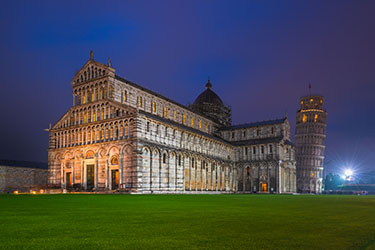
The Duomo of Pisa is a tangible testimony to the prestige that the Maritime Republic reached at the height of its splendour. Its construction began in 1064, at the same time as the rebuilding of St Mark’s Basilica in Venice; it is likely that a tacit rivalry arose between the two cities over who could create the most beautiful and sumptuous place of worship. The current appearance of the Duomo is the result of continuous restoration work carried out over different periods. During the 19th century, some sculptures were replaced with copies and are now preserved in the Museo dell’Opera del Duomo.
Opening hours and ticket prices for the Duomo of Pisa
Opening hours: every day from 10 am to 8 pm.
Ticket price:
Entry to the Cathedral is free if you buy a ticket for another monument in the square. Free tickets for visiting only the Cathedral are timed and limited, and are available exclusively at the ticket offices in the square.
Cathedral + Tower: €20
Cathedral + Baptistery: €7
Cathedral + Museo dell’Opera: €7
Cathedral + Camposanto: €7
All the monuments in the Square except the Tower: €10
All the monuments in the Square including the Tower: €27
Tickets can be purchased on the official Opa Pisa website.
The Baptistery of Pisa
3
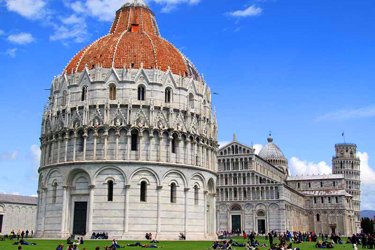
The Baptistery of Pisa is another of the buildings that make up the monumental complex of Piazza del Duomo, also known as Piazza dei Miracoli.
Its construction, begun in 1153, was the work of the architect Diotisalvi, as confirmed by an inscription on an interior pillar, although many sculptures on the façade were created by Nicola Pisano and his son Giovanni.
Also by Nicola Pisano is the Pulpit, which features scenes from the Life of Christ and figures representing the Virtues: all masterpieces that show how their creator was one of the main forerunners of the Renaissance.
The outer dome covers only the inner ring of pillars and probably lack of money explains why it is made of different materials — red tiles and lead sheets. The same reason is given for the absence of frescoes on the ceiling, which were included in the original project. In any case, the Baptistery of Pisa is the largest baptistery in Italy.
Opening hours and ticket prices for the Baptistery of Pisa
Opening hours: every day from 9 am to 8 pm.
Ticket price:
Entry to the Cathedral is free if you buy a ticket for another monument in the square. Free tickets for visiting only the Cathedral are timed and limited, and are available exclusively at the ticket offices in the square.
Cathedral + Baptistery: €7
All the monuments in the Square except the Tower: €10
All the monuments in the Square including the Tower: €27
Tickets can be purchased on the official Opa Pisa website.
The Monumental Cemetery of Pisa
4
The final wonder of the “Piazza dei Miracoli” is the Monumental Cemetery of Pisa, a sacred place because the Crusaders brought here holy soil taken from Mount Golgotha, just outside Jerusalem. A cemetery is not usually found among the things to see in a tourist destination, but this is a truly singular place.

The most illustrious Pisan figures are buried here, and it houses works of art from the Etruscan, Roman and medieval periods through to masterpieces from the last century.
Simple white marble walls protect the tombs of the dead: the most prominent personalities were buried in the central garden or in Roman sarcophagi, while less prestigious figures rested beneath the arcades.
When the Camposanto was reorganised in the 19th century, the sarcophagi were also moved under cover, so today all the burials are beneath the arcades.
The combination of historical celebration and reflection on death made the Camposanto one of the most visited monuments in the 19th century, until the bombings of the Second World War caused serious damage to the frescoes. Restoration work began in 1945 and, unfortunately, is still ongoing.
Opening hours and ticket prices for the Camposanto of Pisa
Opening hours: every day from 9 am to 8 pm.
Ticket price:
Entry to the Cathedral is free if you buy a ticket for another monument in the square. Free tickets for visiting only the Cathedral are timed and limited, and are available exclusively at the ticket offices in the square.
Cathedral + Camposanto: €7
All the monuments in the Square except the Tower: €10
All the monuments in the Square including the Tower: €27
Tickets can be purchased on the official Opa Pisa website.
The Lungarni of Pisa
5
As well as being famous for Piazza dei Miracoli, Pisa is also known for its spectacular lungarni: the streets that run alongside the River Arno. The lungarni are important meeting places for young Pisans as well as fascinating points of interest for visitors.

They are lined with important buildings dating back to the Middle Ages, later transformed over the centuries. Although palaces, bridges, towers and churches now have a Renaissance appearance, the attentive traveller will still notice their medieval structure.
Among the various lungarni, the best known is Lungarno Mediceo, home to some of the city’s most important historic buildings, such as Palazzo dei Medici, Palazzo Toscanelli and the Church of San Matteo in Soarta.
If you are in Pisa on 16 June, do not miss the Luminara di San Ranieri: the lungarni are illuminated by countless tiny flames that highlight the outlines of all the buildings, creating evocative plays of light and colour.
Church of Santa Maria della Spina
6
On Lungarno Gambacorti stands a small Gothic jewel, the Church of Santa Maria della Spina, absolutely worth seeing, although many visitors miss it. It took this name in 1333, when it housed the relic of a thorn from Christ’s crown, now displayed in the Church of Santa Chiara.
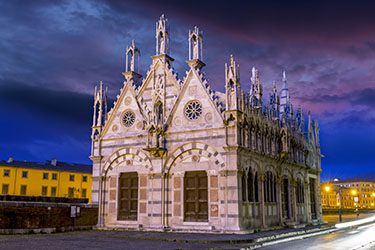
In reality, the church has not always stood in this part of the Lungarni. Its proximity to the river repeatedly endangered its stability, so after the Unification of Italy it was decided to dismantle it and rebuild it a few metres further away from the river, where it would be more stable and secure.
The work was poorly carried out, leading to the destruction of much of the marble and changes to the original structure. Yet this takes nothing away from the Gothic charm of this small church, with its richly decorated exterior, pinnacles and central pillar supporting a Madonna and Child between two angels. Inside is a splendid Madonna della Rosa by Andrea and Nino Pisano.
Opening hours and ticket prices for Santa Maria della Spina
Opening hours:
Monday: 10 am-1 pm
Tuesday, Wednesday and Thursday: 3 pm-7 pm
Friday, Saturday and Sunday: 10 am-1 pm and 3 pm-7 pm
Ticket price: free.
Piazza dei Cavalieri in Pisa
7
The hurried tourist who leaves Pisa after the classic tour of the “Piazza dei Miracoli” misses this wonderful city square. Piazza dei Cavalieri takes its name from the headquarters of the Order of the Knights of Saint Stephen, established here by Grand Duke Cosimo I de’ Medici. For centuries it was the centre of civic power in the city, although today it is above all a place of culture and study thanks to the presence of the Scuola Normale di Pisa, housed in the Palazzo della Carovana.
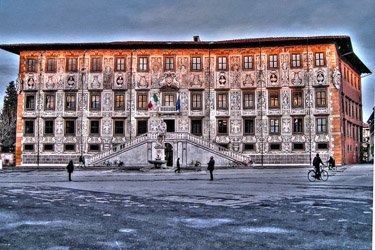
This is an extraordinary example of Renaissance architecture designed by Giorgio Vasari, who had it decorated with allegorical figures and zodiac signs.
Next to it stands the equally splendid Palazzo dell’Orologio, a medieval building that incorporated the “Tower of Hunger”, where in 1289 Count Ugolino della Gherardesca died with his sons and grandsons, a story told by Dante in the Divine Comedy.
The Poet meets Ugolino in Hell while he gnaws at the skull of his enemy, Archbishop Ruggieri. Accused of betraying Pisa in favour of Genoa after the naval defeat of Meloria, the Count was locked in the tower by the archbishop together with his sons and grandsons. According to legend, driven by hunger, the count ate his children. Their tragic end changed the name of the building to the Tower of Hunger. Today the tower belongs to the Normale.
Free guided tours are available by reservation, for a maximum of 20/25 people per visit. For more information: torreugolino@sns.it. The other buildings in the square are the Canonica, the Palazzo del Consiglio dei Dodici, the Church of Santo Stefano and the Church of San Rocco. The Church of Santo Stefano was designed by Giorgio Vasari and contains his painting The Stoning of Saint Stephen, along with a Nativity of Christ by Bronzino. At the centre of the square stands the statue of Cosimo I dressed as Grand Master of the Order of the Knights.
Palazzo Reale and the National Museum
8
The Palazzo Reale of Pisa is less well known than the city’s more famous attractions, perhaps because it is slightly away from the very central Piazza del Duomo. Located on Lungarno Pacinotti, it is worth visiting both for the collections of the National Museum and for the beauty of the palace itself.
The building was constructed towards the end of the 16th century for Francesco I de’ Medici, who decided to leave the old court residence near the Church and Convent of San Matteo and move into the new palace.
The project incorporated the Torre della Verga d’Oro, a small medieval tower still partly visible today, where it is said that Galileo showed Cosimo de’ Medici how the astronomical telescope worked. The palace later passed to the Lorraine family, then to the Savoy dynasty — from which point it was called “Royal” — and finally to the Italian State. Today it houses the National Museum.

The Museum contains remarkable works from both royal collections and private bequests. On display are Italian and Flemish paintings and portraits, including the portrait of Eleonora di Toledo, wife of Cosimo I.
The collection of around 900 swords and pieces of armour used during the ancient “Gioco del Ponte” in the 17th century is particularly interesting.
Among the finest pieces are the Florentine-school tapestries, much loved at the Medici court for decorating the halls of their residences. Among the paintings, highlights include “Rebecca at the Well” by Rosso Fiorentino and “The Miracle of the Two Hanged Men”, part of the Triptych of Saint Nicholas of Tolentino by a very young Raphael. More recent acquisitions have also been added, along with a collection of porcelain, small bronzes and ivory sculptures.
Opening days and hours for Palazzo Reale and the National Museum
Monday and Wednesday to Saturday: from 9 am to 6 pm
First Sundays of the month: from 9 am to 1:30 pm
Closed: Tuesday, all other Sundays, 25 December, 1 January
Ticket price: Full €5 – Reduced €2
How to get there: Shuttle bus E, Pacinotti 1 stop, or LAM red bus line.
Palazzo Blu in Pisa
9A stop not to be missed in Pisa for an artistic and cultural interlude is Palazzo Blu, located on Lungarno Gambacorti. You will recognise it immediately by its blue façade: during restoration work, a fragment of the old late-18th-century plaster emerged, so it was decided to repaint it in this colour. The setting is also fascinating: a noble palace where history can still be felt.
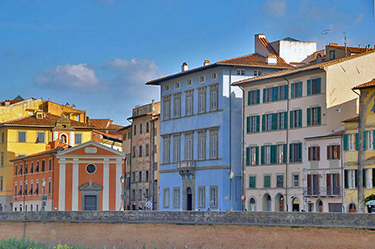
Palazzo Blu is now managed by the Fondazione Pisa and hosts well-organised exhibitions of great interest: one section is dedicated to the permanent collection, while others host temporary exhibitions.
It is advisable to begin the visit on the second floor, where you will find the Fondazione Pisa art collection, with a series of paintings dating from the 14th to the 18th century.
The visit continues on the piano nobile, where a 19th-century aristocratic residence has been recreated with furnishings of great value. Some are original furniture and objects from the palace, while others belong to the Simoneschi Collection.
The ground floor is dedicated to temporary exhibitions, and finally the route continues to the basement, also known as “Le Fondamenta”, with the archaeological and medieval history sections, which display the remains brought to light during the palace restoration works. To find your way around the rooms more easily, you can consult the information sheets dedicated to the works; alternatively, for a more complete visit, you can book a guided tour.
Opening days and hours for Palazzo Blu
Monday to Friday: from 10 am to 7 pm; Saturday, Sunday and holidays: from 10 am to 8 pm.
Ticket price: Permanent exhibition: Full €3; Family reduced ticket €6. The ticket price includes the Artemisia Gentileschi room. Temporary exhibitions have a separate ticket price.
How to get there: Lines 2, 4, 5, 14, LAM ROSSA and LAM VERDE; the stop is in front of the palace entrance. Palazzo Blu is 100 metres from Ponte di Mezzo.
Keith Haring’s Mural in Pisa
10
In 1989, while passing through Pisa, Keith Haring left the city an extraordinary work of art: the mural “Tuttomondo”, painted on the rear façade of the convent of the “Servi di Maria” friars of the Church of S. Antonio.

The church is located just a few metres from the station, in an urban setting where the artist knew how to express himself at his best. A few months later Haring would die, and this mural is one of his last works.
The idea came to him in New York after a chance meeting with a Pisan student with whom he had spoken about world peace. The mural is animated by 30 figures, fitted together like a puzzle, each representing an aspect of a peaceful world: there are the “humanised” scissors defeating the serpent-evil that was devouring the head of the nearby figure.
Then there is motherhood, represented by the woman holding a child, nature with the two men supporting the dolphin, and so on. Haring used soft colours as a sign of respect for the beauty of Pisa.
He worked on it for a week, with the clear intention of making the work permanent. In fact, he used colours specially created by the artisans of the Caparol Center, acrylic paints designed to preserve the quality of the colours for a long time. More than 20 years later, “Tuttomondo” is still there to remind us of the brief and intensely lived life of this extraordinary artist.
Borgo Stretto and Borgo Largo in Pisa
11
If you walk through the historic centre of Pisa, you will probably pass through Borgo Stretto, or “il Borgo”, as the Pisans call it. It is the most characteristic street in the centre, with arcades, shops and café tables. Along the way you come across palaces and buildings from the 14th and 15th centuries that formed the heart of ancient Pisa: here noble and merchant families competed to build the most beautiful, tallest and most colourful residence. Much of that splendour can still be glimpsed today.
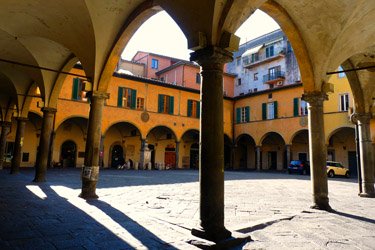
From Via delle Colonne you reach Piazza delle Vettovaglie, a centuries-old food market originally known as Piazza de’ Porci. At the end of the arcades of Borgo Stretto you arrive in Piazza del Pozzetto (Borgo Largo), but before that, stop to see the wooden tabernacle containing a copy of the Madonna dei Vetturini by Nino Pisano.
The Arsenals
12Pisa was a powerful maritime republic, so it had arsenals for building and repairing the ships that sailed the seas. Two architectural remains from that era survive: the Republican Arsenals, open only during exhibitions and events, and the Medici Arsenals, located on the Lungarno.

The latter were commissioned by Cosimo I de’ Medici together with the foundation of the Order of the Knights, as part of a major unified project to conquer the Mediterranean and defend against the Turks.
Today these arsenals house the Museum of Ancient Ships, with one of the most astonishing discoveries of recent decades: in December 1998, during works for the construction of a railway junction, traces of ancient Roman vessels and the remains of an urban harbour emerged in perfect condition. The lack of oxygen and groundwater prevented the deterioration of these finds, which are now beautifully preserved in the Medici Arsenals.
Opening hours and ticket prices for the Museum of Ancient Ships
From October to May:
Friday: 3:30 pm-6:30 pm
Saturday and Sunday: 10:30 am-6:30 pm
From June to September
Friday: 3:30 pm-6:30 pm
Saturday and Sunday: 10:30 am-8:30 pm
Closed: every Monday – 25 December – 1 January – Easter Sunday – 25 April – 1 May – 15 August
Ticket price: €6
What to eat in Pisa
M
Pisan cuisine is not especially famous because it differs little from Tuscan cuisine, although compared with the rest of the region, dishes in Pisa tend to be more generous and more strongly spiced.
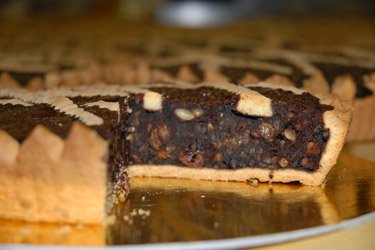
Pisan cooking nevertheless boasts typical dishes such as frog soup, white bean soup from San Michele and bavettine with fish. Fish is one of the main stars of the table: grilled mullet and cod, boiled spider fish and sweet-and-sour stockfish are among the most widespread recipes. Game is also present, especially pheasant, wild boar and wild rabbit. Pisan pesto is also well known and differs from the Genoese version because it includes pine nuts. To end a meal with dessert, Torta Co’ Bischeri — named after the points of shortcrust pastry that protrude from the mould — is made artisanally throughout the city area and is the most typical and widespread sweet of Pisan gastronomy.
Where to stay in Pisa
H
Pisa attracts around 1 million visitors of various kinds every year: many are foreigners, Italians visiting for a weekend, numerous school groups, and also a fair number of people who come to the city to use its excellent hospitals.

It is therefore not always easy to find a room at a good price, especially in high season and during school-trip periods. We therefore recommend booking in advance, especially if you are looking for mid-range 3-star hotels in the most touristy areas. Hotel prices in the centre start from €80 per night in a double room with breakfast included. A good alternative is to stay in hotels or agriturismi in the surroundings of Pisa.
If you are looking for a hotel, we recommend choosing from those offered by Booking.com. There are around 100 hotels with prices, photos and reviews from guests who have stayed there before you. Go to Booking.com
AROUND PISA

10 cose da fare e vedere a Pistoia
10 cose da fare e vedere a Pitigliano
10 cose da fare e vedere ad Arezzo
10 cose da fare e vedere all’isola d’Elba

10 cose da fare e vedere nel borgo di San Casciano...
10 cose da vedere a San Gimignano
12 cose da fare e vedere a Siena

13 cose da fare e vedere nei dintorni di Siena
Cosa fare e vedere a Firenze: 20 luoghi imperdibili

Cosa fare e vedere a Livorno

Cosa fare e vedere a Lucca: 13 luoghi imperdibili
Cosa fare e vedere a Pisa: 12 luoghi da visitare
Cosa fare e vedere a Volterra: 10 luoghi da non perdere

Cosa vedere a Capalbio
Cosa vedere a Grosseto e dintorni

Cosa vedere a Massa Marittima
Cosa vedere a Talamone in Maremma
Cosa vedere nel borgo di Bagno Vignoni
Cosa vedere nel borgo di Cortona in Toscana

Cosa vedere nel borgo di Pienza
Il borgo di Buonconvento
Il borgo di Certaldo

Il borgo di Loro Ciuffenna

Il borgo di Montalcino in Toscana

Il Borgo di Montepulciano in Toscana
Il borgo di Monteriggioni

Il Borgo di San Quirico D’Orcia

L’Abbazia di San Galgano
Le spiagge più belle dell’Isola d’Elba