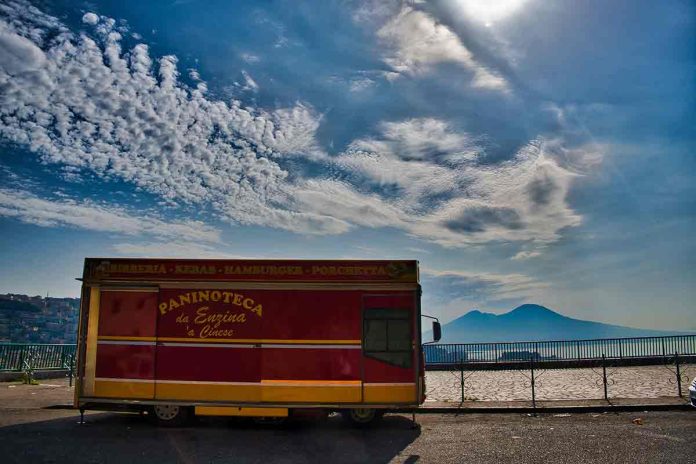
Naples traces its origins back to the siren Parthenope. It is no coincidence that the city’s character has the strange nature of a hybrid: good and evil, joy and sadness, beauty and decay.
Contrasting souls collide and coexist side by side, as becomes clear the moment you set foot in the city.
The splendid historical heritage of the Capodimonte Museum and the Royal Palace stands alongside the harsher signs of modernity: traffic and chaos.
Religious devotion to San Gennaro lives side by side with the city’s pagan soul, preserved and handed down in Underground Naples and the Sansevero Chapel, among the “capuzzelle” of the dead and the alchemy of the Veiled Christ.
And then there are glimpses of a landscape without equal, and rules of life that apply only here and nowhere else on earth.
There is so much to see, and choosing is not easy. Naples is a true open-air theatre of life, free and accessible to everyone.
But do not expect only amusing little scenes and postcard views. To discover the city, it may be enough simply to wander around; but if you do not want to miss the best of it, start with the main places of interest.
Of course, we recommend reading the pages on how to get to Naples and, above all, on how to get around.
This is not a complete list of what to see in Naples — that would be impossible — but it is a good starting point for anyone visiting the city for the first time and wanting to discover its main attractions.
If you are looking for a hotel in Naples, we recommend choosing from the options offered by Booking.com. There are around 700 hotels with prices, photos and reviews from guests who have stayed there before you. Go to Booking.com
What to see in Spaccanapoli
1
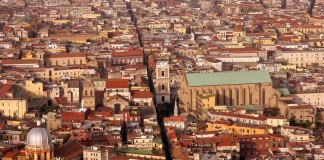
Spaccanapoli is the street that runs from the Quartieri Spagnoli to the Forcella district, cutting straight through the city of Naples.
You understand the name by climbing above San Martino and observing from above how this street splits the heart of the city in two.
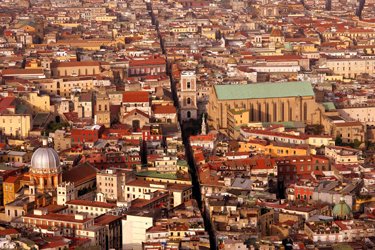
This thoroughfare has very ancient origins: it is in fact one of the three decumani along which the Romans, building on the Greek layout, organised the city.
Walking along Spaccanapoli means crossing the thousand-year history of the city.
Here you will find not only ancient palaces and churches, but also legends and the unmistakable aromas of Neapolitan cooking.
Some of the absolute must-sees in Naples are found along this route: the Sansevero Chapel, Santa Chiara and the Statue of the Nile.
Do not be surprised by anything: along Spaccanapoli you may come across splendid churches and families living in ground-floor homes, artist-craftsmen and illegal vendors selling everything imaginable.
In recent years, small hotels and bed and breakfasts have appeared along the route, allowing visitors to experience Naples just as Neapolitans do.
Spaccanapoli is a narrow urban artery, where Neapolitans, tourists and scooters coexist, not always peacefully.
But there is no place in the city that can tell you more about the soul of Naples, about its essence revealed here without masks.
Spaccanapoli is not a tourist postcard: it is Naples.
Discover the 10 things you absolutely must see in SpaccanapoliSansevero Chapel and the Veiled Christ
2
The Veiled Christ is one of the most fascinating and mysterious works you can see in Naples.
It is said that the marble veil covering Christ’s body was actually a fabric veil, transformed into stone thanks to a special liquid invented by the sinister Prince of Sansevero, a celebrated alchemist.
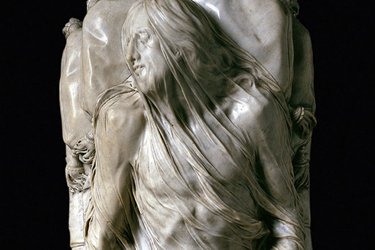
Many, however, argue that the astonishing effect is entirely due to the talent of Giuseppe Sanmartino, the sculptor who created the Veiled Christ.
The discovery of a secret room and of several macabre works, visible inside the Sansevero Chapel, has helped surround both the Prince and the Veiled Christ with an aura of mystery.
The Chapel deserves a visit not only for the Christ, but also for the other works found in this small jewel hidden among the alleys of Naples: a place rich in esoteric and religious symbols, which we help you discover.
Discover the 10 things to see at the Sansevero Chapel in NaplesOpening times and ticket prices for the Sansevero Chapel and the Veiled Christ
Thursday to Monday: 9.00 am-7.00 pm
Closed Tuesday and Wednesday
Last admission 30 minutes before closing
Full ticket: full price €8. Young people aged 10 to 25: €5.00.
How to get there: in the historic centre, on foot via Spaccanapoli or Via dei Tribunali
From Capodichino Airport, Alibus to Piazza Municipio, then on foot.
From the Central Station: Metro Line 1, Dante stop
National Archaeological Museum of Naples (MANN)
3
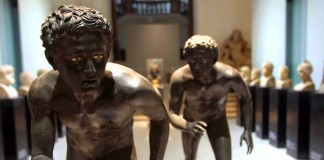
First a riding school and later the seat of the University, the National Archaeological Museum of Naples (MANN) was inaugurated in 1816 and is today one of the most important museums in the world for the quality and quantity of the works it preserves.

King Ferdinand IV intended to create in Naples an imposing institute for the arts, and more than two centuries later it is fair to say that his ambitions have been fulfilled.
In addition to housing the finds from the excavations of Pompeii, the Archaeological Museum contains
- artefacts from the Greco-Roman period
- Egyptian and Etruscan antiquities from the Borgia collection
- ancient coins from the Santangelo collection.
Do not miss the “Secret Cabinet”, which brings together ancient frescoes and sculptures devoted to the theme of eroticism.
Discover the 10 things to see at the National Archaeological Museum of Naples.Opening times and ticket prices for the National Archaeological Museum of Naples
Opening times Monday to Sunday: 9.00 am-7.30 pm
Closed Tuesday
Last admission 30 minutes before closing
Full ticket: full price €13. Young people €2.
How to get there: on foot through the historic centre towards Piazza Dante.
Metro Line 1 Museo stop, 100 metres on foot.
Metro Line 2 Piazza Cavour stop, 100 metres on foot.
Piazza del Plebiscito and the Royal Palace
4
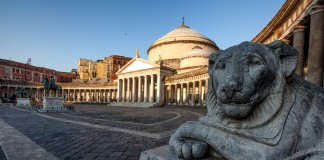
If there is one symbolic place in Naples, it is Piazza del Plebiscito.
Over the centuries it has been transformed from a simple open space on the edge of the city into a gathering place for Neapolitans: medieval tournaments were held here, as well as the Bourbon “cuccagne”, organised to keep the people entertained.
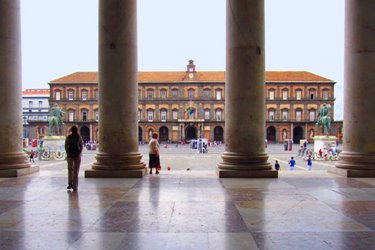
Today it is the symbol of the new “Neapolitan Renaissance”: freed from cars, it has become a place where locals and visitors stroll, coming to admire its grandeur and its two jewels:
the neoclassical colonnade of the church of San Francesco di Paola and the Royal Palace.
The latter was built at the end of the 16th century, when news of a possible visit by King Philip III to Naples caused a certain agitation.
The capital of the Viceroyalty, in fact, had no suitable residence to host the most powerful man in the world. But we will talk about that in the next section!
Royal Palace of Naples
5
After endless second thoughts, the viceroy Don Fernando ordered the construction of a residence for the illustrious guest.
The Royal Palace was commissioned to Domenico Fontana in 1600, and he delivered it just two years later, although it was not entirely finished.
Unfortunately, the capricious King Philip III changed his mind without warning: he postponed his visit to Naples indefinitely.
You, more fortunate than the King, can visit the Royal Apartment, the Royal Chapel, the gardens and the Court Theatre. There is much more to see.
Discover the 10 things to see during a visit to the Royal Palace of Naples.Opening times and ticket prices for the Royal Palace
Opening times:
Historic Apartment: every day except Wednesday, 9 am-8 pm (last admission 7 pm)
Gallery of Time: every day except Wednesday, 9 am-7 pm (last admission 6 pm)
Romantic Garden: from 9 am, with closing times varying from 4.30 pm to 8 pm depending on the month.
Roof Garden: 40-minute guided tours every Saturday from 11 am to 4.15 pm. Sundays and public holidays at 11 am, 11.45 am and 12.30 pm. Closed on free-entry Sundays.
Ticket price:
Apartment + Gallery of Time + temporary exhibitions:
Full price: €10; ages 18-25 €2; free for ages 0-18.
Roof Garden: €2 in addition to the ticket, without guide; €5 in addition to the ticket, with guided tour.
How to get there: the Royal Palace is in Piazza del Plebiscito, in the city centre, and can be reached on foot.
Underground Naples
6
For centuries, tuff stone was extracted from the deep belly of Naples to build the city above.
The city below, therefore, hides a dense maze of ravines, caves and tunnels that tell a story running parallel to the life of Naples on the surface.
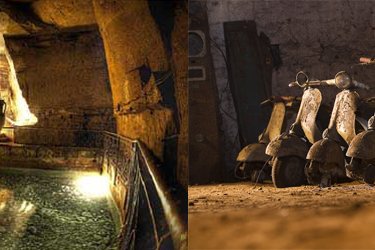
The underground city has served Neapolitans in many ways: as a refuge during bombings, as a source of water, as a dump and as a place where criminals could hide.
Underground Naples
In recent decades, an extensive recovery of Underground Naples has been under way. Today you can visit it through two main routes: from Via dei Tribunali you enter the classic route, which crosses the Greco-Roman aqueduct, air-raid shelters, the War Museum, underground gardens and the “Arianna” Seismic Station.
Particularly unusual is the visit to the nearby Roman Theatre of Nero, accessed through a private home by moving a bed beneath which a trapdoor is hidden!
The theatre is completely incorporated into the buildings of the historic centre and is accessed from Via dell’Anticaglia through the trapdoor of a typical Neapolitan “vascio” home.
You can understand how the setting alone is worth the experience.
In these underground spaces you can see what were once the rooms of the theatre of ancient Neapolis, where Nero performed and had his private dressing rooms.
Recently another space was discovered inside an old carpentry workshop, the “Summa Cavea”, where wooden display cases contain scenes from the Neapolitan nativity tradition.
Along the route you can also see the remains of sewers dating back to the Bourbon period.
Opening times and ticket prices for Underground Naples
Opening times: every day from 10.00 am to 6.00 pm, every hour. The route lasts about 2 hours.
Ticket price: around €9.
How to get there: it can be reached on foot from the Historic Centre; access to Underground Naples is from Piazza San Gaetano in Via dei Tribunali.
The closest metro station to Underground Naples is Dante on Line 1.
The Bourbon Tunnel of Naples
7
The Bourbon Tunnel
Also carved underground, but for different reasons, is the Bourbon Tunnel, commissioned in 1853 by Ferdinand II of Bourbon.
The aim was to create an underground viaduct connecting the Royal Palace with Piazza Vittoria, allowing troops quick access to the Palace and giving the Neapolitan sovereigns an escape route towards the sea.
Over time, the Tunnel has served as an air-raid shelter and as a judicial storage depot: along the route, therefore, you will find wells, cisterns, cavities, traces of daily life during the war, enormous fragments of statues and old vehicles from the 1950s, ’60s and ’70s.
Find out more about the Bourbon TunnelOpening times and ticket prices for the Bourbon Gallery/Tunnel
Opening times: The Gallery is open to the public every Friday, Saturday, Sunday and on public holidays at 10.00 am/12.00 pm/3.00 pm/5.00 pm. Booking required: +39 366 248 4151, +39 081 764 5808, mail@galleriaborbonica.com
Ticket price: €10.
How to get there: There are two entrances: from Vico del Grottone no. 4, near Piazza Plebiscito, and from the Morelli car park, in Via Morelli.
Capodimonte Museum and Park
8
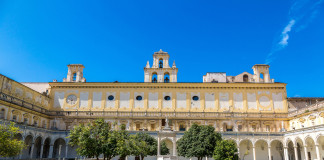
In 1738, Charles of Bourbon decided to transform his hunting lodge in the wood of “Capo di monte” into a Royal Palace-Museum to house the Farnese Collection inherited from his mother.
Even today, walking through the large halls of the palace, it almost feels as if the Bourbon family had left home just moments before our arrival.

The museum occupies three floors: on the first floor are the Historic Apartment and the rich Farnese collection, with works by Titian, Masaccio, Botticelli, Raphael, Guido Reni, Pieter Bruegel the Elder, Andrea del Sarto and many others.
On the second floor is the gallery with works from the 13th to the 18th century: Ribera, Goya, Pinturicchio, Vasari, Mattia Preti, Ribera and Caravaggio’s extraordinary “Flagellation of Christ”.
The masterpieces of Capodimonte from the 19th century to today
On the third floor is the collection of 19th-century and contemporary art, with masterpieces by internationally renowned artists:
Andy Warhol, Mimmo Jodice, Alberto Burri, Mario Merz, Joseph Kosuth, Enzo Cucchi, Michelangelo Pistoletto.
Throughout the route there are collections of everyday objects used by the Bourbons in the Royal Palace. If you still have some strength left, outside there is a splendid park with a magnificent Belvedere over the city, known by Neapolitans as “the view of Naples”.
Opening times and ticket prices for the Capodimonte Museum
Museum opening times: every day.
Closed: Wednesday, 1 January and 25 December.
On 24 December and 31 December the museum has reduced hours: 8.30 am-2.00 pm (last admission at 1.00 pm).
Opening times of the Capodimonte Wood: winter and autumn 7.00 am-5.00/6.00 pm. In spring and summer, closing at 7.30 pm.
The Capodimonte Wood is closed on Easter Monday.
Ticket price: €10. Reduced €2 for ages 10-25.
How to get there: Capodimonte is on a hill and is not served by the metro. The only options are by car, taxi or bus from the Museo (Line 1) and Piazza Cavour (Line 2) metro stops.
The Art Metro of Naples
9
It may seem truly unusual that in a city so rich in history as Parthenope, metro stations should appear on a list of what to see in Naples.
You may think this until you step into one of the stations on Lines 1 and 6, a true contemporary art museum, not by chance known as the Art Metro.

The route can begin at the new Garibaldi Station, which connects with Naples Central Station.
Here, the French urban planner Perrault designed a station with suspended escalators dominated by glass and steel. Then you reach Università, where the Egyptian architect Rashid drew inspiration from digital languages, with an extraordinary sculpture called “Synapse”.
Toledo: the most beautiful station in the world
Then comes Municipio and then Toledo, considered by many to be the most beautiful station in Europe and one of the most beautiful in the world.
With Robert Wilson’s work Relative Light, it is illuminated by extraordinary plays of light in shades of blue.
Also not to be missed are Dante, Museo, Materdei and the stations that follow. More than 200 works by contemporary artists can be admired with a metro ticket. A unique route in the world, not to be missed.
Find out more about the Art Metro.The Cathedral and the Treasure of San Gennaro
10
Along 19th-century Via Duomo, the majestic façade of the Cathedral of Naples appears, a place primarily devoted to the cult of San Gennaro.
Rich in chapels belonging to powerful Neapolitan families, the Cathedral is embellished with paintings by Luca Giordano depicting the Apostles, the Fathers and the Doctors of the Church.
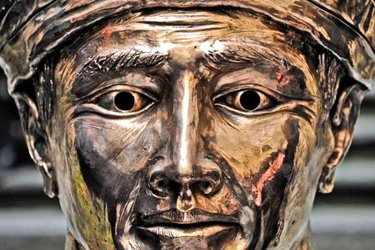
For Neapolitans, the Cathedral is above all the place where you find the Chapel and the Treasure of San Gennaro.
This confirms that the bond between Neapolitans and San Gennaro goes far beyond simple devotion to the patron saint.
It is a visceral and shared feeling, which over the centuries has overcome bans and restrictions, growing ever stronger.
Although San Gennaro may be considered by the Church a “second-rank” saint, he is certainly not so for Neapolitans.
The Chapel of San Gennaro
The Chapel and the Treasure are the most immediate and important proof of this love for “Faccia Gialla”, the name by which Neapolitans refer to the saint, due to his most famous gilded silver statue.
The Chapel has a gate by Cosimo Fanzago, frescoes by Domenichino and works by Ribera.
The Treasure of San Gennaro
The Treasure of San Gennaro has finally found a home in a place next to the Cathedral and contains relics and precious objects that have become oracles of faith.
The Treasure also includes statues, candelabra and various silver objects, which devotees have jealously protected during the city’s many sackings.
It is a testimony to how much Neapolitans consider San Gennaro a close and comforting presence, almost like a dear neighbour to turn to in moments of need, but also when one simply feels like talking for a while.
Discover the 10 things to know about San Gennaro and his Treasure.Opening times and ticket prices for the Treasure of San Gennaro in Naples
Opening times:
Treasure: every day from 9.30 am to 6.30 pm (last admission 5.30 pm).
Chapel of the Treasure: Tuesday to Friday 9.30 am-1 pm and 2.30 pm-6 pm, Monday and Saturday 9.30 am-1 pm and 3 pm-6 pm, Sunday 9 am-1 pm and 4.30 pm-6 pm. Last admission 30 minutes before closing.
Ticket price: €10 adults, €7 over 65, €5 ages 12-14, free for ages 0-12.
How to get there: the Treasure of San Gennaro is located beside the entrance to Naples Cathedral, at Via Duomo 149, in the historic centre.
San Gregorio Armeno
11
In San Gregorio Armeno, it is Christmas all year round.
In every month of the year, even when it is hot and Christmas is far away, the masters are at work building the traditional cork nativity scenes and terracotta shepherds.
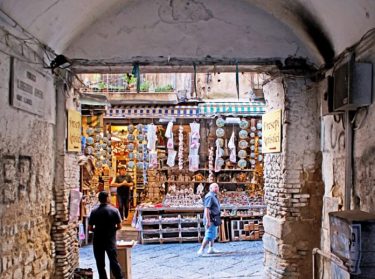
The atmosphere of San Gregorio Armeno begins to warm up in November, but December is the month when the street is packed with people at every hour of the day.
This is why San Gregorio is always included on any list of what to see in Naples.
Every nativity-scene master knows exactly how to advise customers on the meaning, symbolism and use of each shepherd figure.
Talking to them is a journey into the traditions of Naples and the proverbial kindness of Neapolitans.
Discover San Gregorio ArmenoCastel dell’Ovo and the Naples Seafront
12
Proud and melancholic, caressed by the waves of the sea, Castel dell’Ovo rises on the ancient islet of Megaride.
You reach it from Piazza del Plebiscito, following the horizon and the sound of the sea.

Legends compete to claim a piece of the castle’s history: some say its fate, and that of all Naples, was tied to the integrity of an egg jealously guarded in the underground chambers; others claim the city’s name was inspired by Parthenope, the siren who washed up lifeless on the islet of Megaride.
And let us not forget Niccolò, the fish-man who brought the king precious gems found in the tunnels beneath the islet.
The climb towards the upper part of the castle offers very evocative views, but the most beautiful point is certainly the Terrazza dei Cannoni, located at the highest part of the castle, from which there is a wonderful view over the Gulf.
Borgo Marinari
As a setting for Castel dell’Ovo, there could only be a village with a distinctive structure and evocative atmosphere:
the Borgo Marinari of Naples, built to provide homes for fishermen and later, over the centuries, transformed into a place of cafés, distinctive little restaurants and sailing clubs.
This microcosm is surprisingly beautiful, but watch out for the prices: even a coffee may cost you dearly.
The most beautiful seafront in the world
Once you leave the Castle, the Seafront awaits you, considered by many to be the most beautiful in the world.
It is a walk of several kilometres, with the sea on the left and restaurants on the right, until you reach the Villa Comunale and the Aquarium.
Discover Castel dell’Ovo.Opening times and ticket prices for Castel dell’Ovo
Opening times: every day from 8.30 am to 5 pm. Closed on Sunday.
Ticket price: free.
How to get there: on foot from Piazza Plebiscito towards the Seafront.
The Maschio Angioino in Naples
13
The Maschio Angioino, with one eye on the port and the other on the mayor’s office, watches over all of Piazza Municipio and turns its gaze as far as the seafront of Via Caracciolo.
Under the Angevins it was a splendid castle and a centre of culture frequented by artists such as Giotto and literary figures such as Petrarch, while later, under the Aragonese, it became an impregnable fortress.
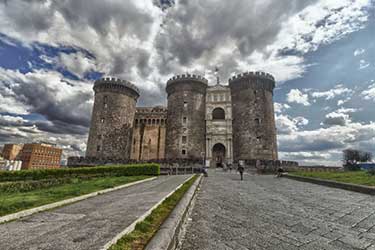
The story of the prisons in the underground chambers is fascinating: prisoners would inexplicably disappear from them.
Only later was it discovered that a crocodile entered the underground spaces through an opening and carried the prisoners out to sea, making them vanish without trace.
The Civic Museum
Today the Maschio Angioino houses the Civic Museum and, especially in summer, hosts performances and cultural events.
The museum route runs through the Hall of the Armoury, the Palatine Chapel or Chapel of Santa Barbara, the first and second floors of the southern curtain wall, together with the Charles V Hall and the Loggia Hall, which host exhibitions and artistic activities.
Do not miss the visit to the 14th-century Palatine Chapel, frescoed by Giotto and his pupils with stories from the Old and New Testaments.
At the entrance to the Maschio Angioino, remember to look up at the triumphal arch, commissioned by Alfonso of Aragon to celebrate his conquest of the Kingdom of Naples in 1443.
Discover the Maschio AngioinoOpening times and ticket prices for the Maschio Angioino
Opening times: every day from 8.30 am to 5 pm. Closed on Sunday.
Ticket price: €6.
How to get there: on foot from the historic centre towards Piazza del Plebiscito and San Carlo. Alternatively Metro Line 1, Municipio stop.
The Charterhouse and Museum of San Martino
14
The Charterhouse of San Martino stands on one of the highest points in the city.
From the belvedere, you can admire the entire Gulf of Naples: a breathtaking sight.
From here, especially after a rainy day, Naples reveals itself in a magnificent explosion of colours, alleys, sky, earth and sea.
Inside the charterhouse is the Museum of San Martino, which houses Neapolitan sculptures and paintings from the 15th and 16th centuries.
Of course, if you are up there, a visit to the nearby five-pointed star-shaped fortress is also unmissable: Castel Sant’Elmo, through which the history of Naples has passed!
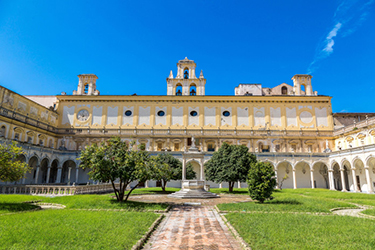
For those who love the Neapolitan nativity scene, the San Martino collection is an essential stop after San Gregorio Armeno.
The Cuciniello Nativity Scene
Do not miss the Cuciniello Nativity Scene, set inside an artificial cave created from an old area of the Charterhouse kitchens: people, animals, objects and the procession of the Magi speak of Palestine but depict 18th-century Naples, in the realistic faces of the shepherds, the shops and the clothes.
This nativity scene is the most complete and important Italian nativity collection.
During the visit you will find other panoramic points from which to observe Naples stretched out by the sea. As Pino Daniele sings: “From San Martino you can see the whole city, with the world in your pocket and without saying a word”.
Find out more about the Museum of San Martino Find out more about the Charterhouse of San MartinoOpening times and ticket prices for the Charterhouse and Museum
Opening times: every day from 8.30 am to 5.00 pm. Closed on Wednesday. Last admission at the ticket office at 4 pm.
Ticket price: €6.
How to get there: from Montesanto, take the funicular to Morghen. Bus V1.
The Fontanelle Cemetery in Naples
15
If there is one place that truly represents the soul of Naples and the Neapolitans, it is the Fontanelle Cemetery, located in the heart of the Rione Sanità, between Via Foria and the hill of Capodimonte.
In this reborn district, now considered one of the trendiest places to see in Italy, there is one of the most evocative sites in Naples.
The Fontanelle Cemetery is a centuries-old ossuary containing more than 40,000 human remains.
So far, nothing extraordinary. What makes it unique is that here the bones are exposed to the devotion and care of Neapolitans, and watching them visit the place illustrates their relationship with religion, death, the dead, destiny, the lottery and luck.
A visit to the Fontanelle Cemetery tells the story of Naples and its people, helping you understand the spirit of this community far better than many words could.
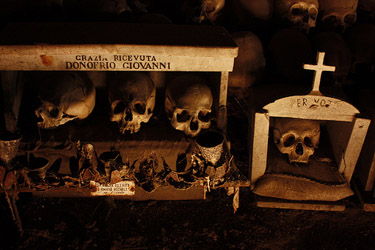
Neapolitan devotees of this place choose a skull, give it a name if it does not already have one, clean it, speak to it and in some cases build a small altar for it with flowers, candles and rosaries.
From that moment on, they pray for the soul to which the bones belonged, asking for help in everyday life: health, work, lottery numbers.
These souls are called “pezzentelle” because they are the remains of poor Neapolitans who were buried here and there in the city and who, after repeated moves, finally found peace and company in this place.
Find out more about the Fontanelle CemeteryOpening times and ticket prices for the Fontanelle Cemetery
Opening times: every day from 10 am to 5.00 pm.
Ticket price: free. Be wary of anyone outside offering paid visits.
How to get there: in the Rione Sanità. Metro Line 1, Materdei stop.
The San Carlo Theatre in Naples
16
The Real Teatro San Carlo is one of Italy’s greatest theatres and among the oldest in Europe.
Together with many other sites in Naples, it is recognised by UNESCO as part of the World Heritage Site.
As with other European dynasties, King Charles of Bourbon ordered its construction in 1737 as a demonstration of his power.
The result of this royal egocentrism was the gift to the city of Naples of a marvellous theatre admired all over the world.
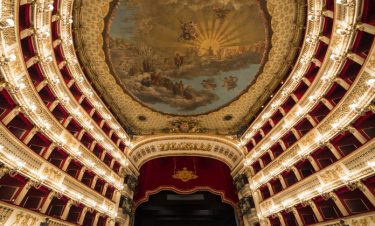
The project was entrusted to the architect Giovanni Antonio Medrano, who delivered the theatre fully completed and ready for performances just eight months after the start of construction.
An extraordinary achievement, considering that the San Carlo has 184 boxes plus a royal box, with room for 1,379 people.
Naturally, King Charles had a door built behind the Royal Box so he could come and go from the nearby Royal Palace without having to pass through the street.
Over the centuries, the San Carlo has undergone various alterations to adapt its acoustics and scenography, until it achieved the effect it still has today, which also enchanted the French writer Stendhal:
“The eyes are dazzled, the soul enraptured.” The same effect it has on anyone visiting the San Carlo, whether as a tourist or as a spectator.
Find out more about the San Carlo TheatreOpening times and ticket prices for the San Carlo Theatre
Opening times: the San Carlo can only be visited with a guided tour.
Monday to Sunday, guided tours from 10.30 am to 5.30 pm
Morning
10.30 am Italian
11.30 am English
12.30 pm Italian
Afternoon
2.30 pm Italian
3.00 pm Italian
3.30 pm English
4.30 pm Italian
5.00 pm French
5.30 pm Italian
Ticket price: €7 for the guided tour.
How to get there: near Piazza Plebiscito. On foot through the historic centre along Via Toledo. Metro Line 1, Municipio or Toledo stop.
Bus R2.
What to see in the Galleria Umberto I
17
Directly opposite the San Carlo is one of the four entrances to the Galleria Umberto I in Naples. Looking at its grandeur, it is hard to believe that it was built in just three years.
Begun in 1887 and completed in 1890, it was built in the same years in which, in Paris, Gustave Eiffel was creating his famous Eiffel Tower.
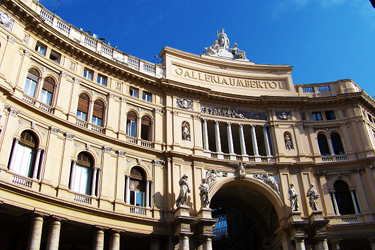
Since its inauguration, the Galleria Umberto I in Naples has played its role as one of the city’s fashionable meeting places.
For generations, artists of the Neapolitan tradition have met here: singers and soubrettes, their agents and theatre impresarios. A tradition that still continues today.
Even now, the Galleria is a point of reference for Neapolitans and tourists: it is located along Via Toledo and just a few steps from the San Carlo and Piazza Plebiscito, making it ideal for a coffee, a pastry or some expensive shopping!
Find out more about Galleria Umberto IThe Church and Cloister of Santa Chiara in Naples
18
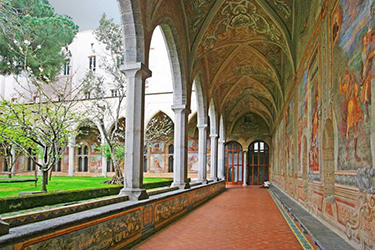
Let us start with the wonderful majolica-tiled cloister, a true oasis of peace right in the centre of Naples.
If you are tired of walking around — Naples has one of the largest historic centres in the world — take a break in this splendid cloister beside the Church of Santa Chiara and you will not regret it!
Of course, do not miss a visit to the basilica, the most important and significant example of Gothic architecture in Naples.
Sadly, on 14 August 1943, Naples suffered the most violent aerial bombing raid since the beginning of the war.
The Santa Chiara Complex
The most devastating wound was precisely the destruction of the medieval complex of Santa Chiara, reduced to a mass of stones and dust.
But the Neapolitans did not resign themselves to its disappearance: only the perimeter walls, the façade with the rose window and the portal remained standing, but the complex was completely restored and today has its original medieval appearance, fascinating and elegant, even though it no longer possesses some of its priceless works of art.
Find out more about the Church of Santa Chiara and the CloisterOpening times and ticket prices for Santa Chiara
Opening times: Monday to Saturday from 9.30 am to 5.30 pm.
Sunday: 10.00 am-2.30 pm
Last admission 30 minutes before closing
Basilica opening times
Monday-Saturday: 8.00 am-12.45 pm / 4.30 pm-8.00 pm
Sunday: 9.00 am-12.45 pm / 4.30 pm-8.00 pm
Ticket price: €6 for adults.
How to get there: in the historic centre of Naples, in Piazza del Gesù.
The nearest Line 2 metro stop is Montesanto, or on Line 1, Dante.
The Church of Sant’Anna dei Lombardi
19
In Piazza Monteoliveto, just a few metres from the very central Via Toledo, stands the Monumental Complex of Sant’Anna dei Lombardi.
At every corner of Naples you come across some small pearl, and Sant’Anna dei Lombardi is one of them.
The complex deserves a visit as much as the better-known attractions, for its architectural beauty and above all for the Florentine artistic workmanship of 16th-century Naples.
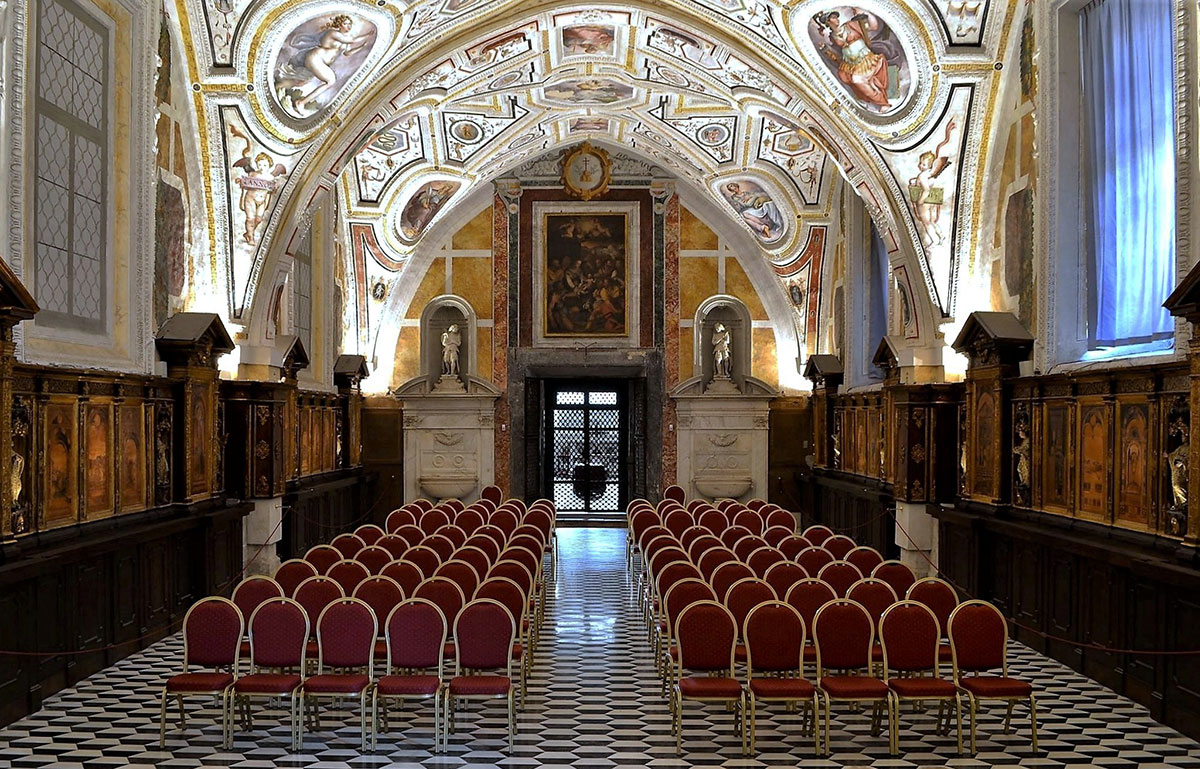
Inside the church there is a single nave with a wooden coffered ceiling and a series of side chapels topped by domes, including the Piccolomini Chapel and the Chapel of Marino Correale.
Along the route we encounter works by Vasari, by a young Michelangelo and by pupils of various Renaissance schools who worked in Naples. Let us look at the highlights of the complex.
Vasari’s Sacristy
We begin with the Sacristy frescoed by Giorgio Vasari, a place of great beauty. Pause to admire the vault, where the celestial sphere is depicted with constellations and iconographies of the virtues.
Of unique drama and pathos, meanwhile, is the Lamentation over the Dead Christ by Guido Mazzoni, a masterpiece of Renaissance sculpture. Also worth noting are the wooden choir and the altar of the Annunciation.
The Crypt of the Abbots will be a pleasant surprise, and we recommend adding the small supplement to the entrance ticket to see it.
It is the Hypogeum, the highlight of this experience. It is visited with a guide who explains the so-called draining seats, where the bodies of the abbots were “drained”, and the series of well-preserved frescoes, especially the one depicting “Calvary”.
Opening times and ticket prices for Sant’Anna dei Lombardi
Mon to Sat: 9.30 am-6.30 pm; Sun: 12.30 pm-5.30 pm
Full ticket: €6; €8 with entry to the Hypogeum; reduced ticket under 26: €4, or €6 with Hypogeum; free for under 12s.
How to get there: on foot in the historic centre of Naples, with a short detour from Via Toledo at Piazza Carità.
The tombs of Virgil and Leopardi and the Crypta Neapolitana
20
Many people do not know that two great figures of Italian poetry rest in peace in Naples: Giacomo Leopardi and Virgil, just a few metres from one another.
We are outside the historic centre, not far from the seafront and already in the direction of the populous Fuorigrotta district, where the Maradona stadium is located.
We are in a very busy area, at the entrance to a sad, old tunnel through which tens of thousands of cars pass every day.
But this should not discourage you, because here you can visit some jewels of art and history: the tombs of Virgil and Leopardi are located near the entrance to the Crypta Neapolitana.

According to legend, it was Virgil himself, regarded in Naples as a magician, who dug the Crypta in a single night.
This long tunnel connected Naples to the Phlegraean Fields. Virgil also rests in this same place, as recalled by the inscription with the words of Petrarch.
The tomb of Giacomo Leopardi
A few metres away is the tomb of another great Italian poet, Giacomo Leopardi, who died in Naples and rests here, not in his native Recanati, as many people believe.
The Church of Piedigrotta
Also worth a visit is the nearby church of Madonna di Piedigrotta, not the most beautiful or tourist-oriented church, but much loved by Neapolitans because it houses a Madonna linked to popular devotion, legends and a historic Neapolitan festival.
Find out more about the Church of Santa Chiara and the CloisterOpening times and ticket prices for the Tombs of Virgil and Leopardi and the Crypta
Opening times: 10.00 am-2.50 pm (winter opening hours from 16 October to 15 April). Closed on Tuesday.
9.00 am-7.00 pm (summer opening hours from 16 April to 15 October)
Ticket: free.
Address: Salita della Grotta 20
How to get there: Metro Line 2, Mergellina stop. The entrance is 200 metres away.
The Catacombs of San Gennaro in Naples
21
In the Rione Sanità you can visit the Catacombs of San Gennaro, an experience we recommend in order to understand the close bond between these underground spaces and the patron saint.
The Catacombs of San Gennaro have very ancient origins: it is said that before becoming the great ossuary of the Christian community, they were the private property of a noble family.
The site is spread over two levels: the lower catacomb and the upper catacomb.
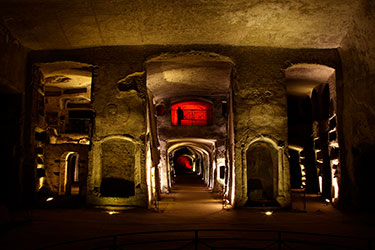
The heart of the lower catacomb is the Underground Basilica of Sant’Agrippino, where the tomb containing the saint’s remains was historically located.
Admire the ancient altar and the large baptismal basin.
The upper catacomb, meanwhile, is known for having housed the tomb of San Gennaro — whose remains are now in Naples Cathedral — before later becoming the “Crypt of the Bishops”.
A couple of curiosities: more than 3,000 burials have been identified to date; moreover, the tuff from the catacombs was used to build the walls of well-known buildings in the city, such as the Basilica of Santa Chiara, the Church of San Domenico Maggiore and Castel dell’Ovo.
The tour of the Catacombs of San Gennaro is completely barrier-free and therefore accessible to everyone.
Opening times and ticket prices for the Catacombs of San Gennaro
Every day from 10 am to 5 pm.
Ticket price: full price €11; reduced €5 for children and teenagers under 18; over 56s and students €7; free for children under 6. Tickets can be purchased on site and online.
How to get there: the main entrance and ticket office are on Via Capodimonte 13, at the Basilica del Buon Consiglio.
By metro: Line L1, “Museo” stop, then continue by bus no. 168, 178 or C63 (Basilica Incoronata – Catacombe San Gennaro stop).
By bus: lines 168, 178, 204, Basilica Incoronata – Catacombe di San Gennaro stop.
By car: free parking on site.
The excursion to Mount Vesuvius
22
An excursion to Mount Vesuvius is an experience we recommend doing at least once in a lifetime when visiting Naples and the surrounding area.
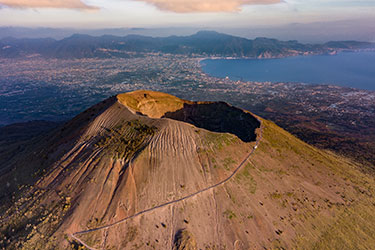
Not only for the thrill of climbing to the top of one of the most famous active volcanoes in the world, but also for the breathtaking view over the whole coast and the city.
The excursion takes place along the network of trails in the Vesuvius National Park.
There are 11 routes marked with specific signage; the most famous is Trail no. 5, “The Great Cone”, which starts from the Park Square.
There are essentially two ways to reach Vesuvius: by car independently; in this case, it is not possible to park in the Park Square, so you must leave your car in one of the municipal car parks along the provincial road and continue from there by shuttle, at a cost of a few euros.
Alternatively, you can join an organised tour departing from central Naples, with transport included.
Already from the Square you can enjoy a view of the surrounding mountains. Look up and admire from this perspective the uphill route awaiting you, which will lead you to the top of the crater.
The climb up the volcano is not particularly demanding.
The excursion is carried out with knowledgeable guides who explain the history, curiosities and evolution of Vesuvius from 79 AD, the date of the catastrophic eruption that destroyed Pompeii and Herculaneum.
It is essential always to follow the guides’ instructions and to wear comfortable clothing.
A hat and sunscreen are recommended, especially during the summer season.
Among the trails of the Vesuvius National Park, popular with trekking enthusiasts, we recommend the Valle dell’Inferno, especially evocative because it crosses a wood and a pine forest that are home to a variety of plant and animal species.
Also interesting is the loop route around Monte Somma, whose summit is over 1,100 metres above sea level. Both offer panoramas of great beauty.
Opening times, ticket prices and other information for the excursion to Vesuvius
Opening times:
November to February: 9 am-3 pm
March and October: 9 am-4 pm
April, May, June and September: 9 am-5 pm
July and August: 9 am-6 pm
Ticket: €10; reduced €8 for under 25s.
There is no ticket office on site; tickets for the visit to Vesuvius and for parking can be purchased ONLY online. The visit takes place in a fixed time slot, indicated on the ticket.
How to get there: Those arriving by train at Stazione Centrale-Piazza Garibaldi must continue on the Circumvesuviana to Ercolano-Scavi station. From there, shuttles or alternatively taxis depart for Vesuvius.
What to see around Naples
+
The itinerary proposed on this page is enough to cover anything from three days to a week in Naples.
Anyone who manages it sooner is trained for a marathon, but will certainly miss the pleasure of calmly exploring a complex city like Naples.
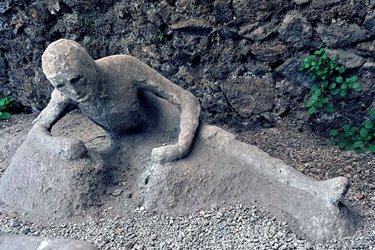
If you have more time left, the area around Naples offers some of the most beautiful places in Campania and in Italy.
Let us start with the three islands in the Gulf: Capri, Ischia and Procida, Italy’s Capital of Culture 2022: Procida.
For Ischia and Procida you can also embark from Pozzuoli, ancient Puteoli, an important port of ancient Rome and a treasure trove of historical remains unknown to most visitors: the Rione Terra, the Macellum and the third-largest amphitheatre in Italy.
Pozzuoli lies at the heart of the Phlegraean Fields, the “burning land”, gateway to the Underworld sung by Virgil.
Pompeii is one hour from Naples, while heading a little further south you encounter, in succession, the Sorrento Coast, the Amalfi Coast and then Cilento. In short, there is enough to visit for at least a month!
What to eat in Naples
M
If you have tried pizza in other parts of Italy and were disappointed, you brought it on yourself!
Pizza is an exclusively Neapolitan good. Many pass off unthinkable round, flat, salty pies as Neapolitan pizza.

But the real thing is made with just a few ingredients and follows almost divine laws: water, flour, salt and yeast, for a thin dough with high, flavourful edges.
Despite the many variations, all strictly high-calorie, the original pizza is the “Margherita”, invented by the pizzaiolo Raffaele Esposito in honour of the Queen.
Esposito topped it with tomato, mozzarella, oil and basil, creating one of the most delicious, patriotic and envied dishes in the world.
In Naples, pizza is excellent everywhere: if you want to find a place where it is bad, it will not be easy.
Of course, Neapolitan cuisine is not only pizza: it is something extraordinary, a true symphony of flavours, colours and calories.
Think of a dish: there is a good chance it was born in Naples. Spaghetti, ragù, lasagne, pasta with seafood, fried fish, braciole and soffritto, sweet and savoury pies, desserts, babà, struffoli, pastiera and then… and then… Sit down and enjoy.
Discover what to eat in Naples.What to see in Naples: the less touristy places not to miss
+
The places we have recommended are, of course, some of those visited by the masses of tourists who descend on Naples especially at Christmas and in spring. If you have more days to spend in the city, we also recommend the Botanical Garden, one of the largest and most beautiful in the world; Villa Pignatelli in the seafront area and the nearby MADRE Museum; also not to be missed is Villa Floridiana with the Museum of Ceramics in the Vomero district.
Where to stay in Naples
H
In recent years, Naples has become a rapidly growing tourist destination. Small hotels and bed and breakfasts have appeared everywhere in the historic centre.
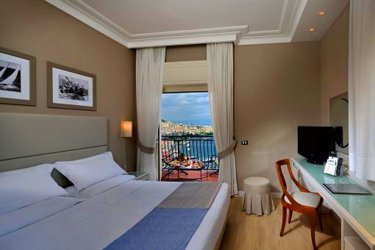
Prices are still fairly low, and the warm, authentic Neapolitan hospitality attracts millions of tourists to the city.
A room in a 3-star hotel starts from €50 per night, while prices rise considerably for the most exclusive and panoramic hotels on the seafront.
The city is particularly crowded during spring long weekends, on every weekend, at Christmas and in the summer and autumn months.
It is best to book in advance to find the best places at acceptable prices.
If you are looking for a hotel, we recommend choosing from the options offered by Booking.com. There are around 700 hotels with prices, photos and reviews from guests who have stayed there before you.
Go to Booking.com