
Ischia was a tourist destination virtually unknown to most Italians when, in 1951, Angelo Rizzoli, publisher and film producer, arrived on Ischia aboard his yacht.
The people of Ischia lived from fishing and agriculture, and only a handful of Neapolitans spent their summer holidays there.
In less than ten years, Rizzoli transformed Ischia into an international destination: he invited Hollywood and Italian stars, painters and musicians.
He built hotels, thermal spas, a hospital and even a football pitch.
Through his magazines, he promoted Ischia’s hotels all over the world and, through his film production company, made films that turned the island into a place loved across the globe, almost an essential destination for the beau monde of the 1950s and 1960s.
Richard Burton, Liz Taylor, Ava Gardner, Charlie Chaplin and the Duke and Duchess of Windsor visited Ischia and were captivated by it.
Since then, the “Green Island” has never lost its appeal, attracting visitors drawn above all by its thermal springs and crystal-clear sea.
Here is our guide to choosing the 10 things to do and see if you decide to spend your holiday on Ischia.
A good selection of hotels is available on Booking.com. More than 200 hotels on Ischia with descriptions, photos, prices and reviews from guests who have already stayed there. Go to Booking.com
The Aragonese Castle in Ischia
1
The outline of the Aragonese Castle announces to those arriving by sea that Ischia is close at hand.
This imposing symbol of the island, one of the absolute must-sees on the Green Island, is connected to the main island by a bridge that has been rebuilt several times over the centuries, as the sea occasionally sweeps it away.
As early as 474 BC, the Greeks had taken refuge on this small islet to defend themselves from their enemies, but it was Alfonso of Aragon who, in 1441, transformed it into a fortified citadel.
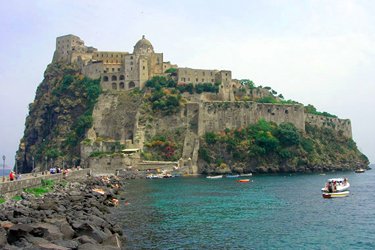
If, instead of taking the comfortable lift, you choose to reach the top by walking through the tunnel carved into the rock you will notice the openings in the ceiling, built to throw boiling oil and stones down on attackers.
Today the Castle only has to defend itself from the assault of tourists climbing up to visit the Church of the Immaculate Conception, the Cathedral of the Assumption with its crypt, the Convent of the Poor Clares and, above all, the views over the Gulf of Naples.
The visit takes about an hour and a half and is a little demanding, but it is well worth the effort!
Opening hours and ticket price for the Aragonese Castle
Opening hours: all year round, 7 days a week, from 9 am until sunset.
Ticket price: €12
How to get there from Ischia Port:
Bus: 7 (15 minutes);
Taxi: (5-10 minutes);
On foot: (20-30 minutes).
Villa Arbusto in Ischia
2
On a small promontory in the municipality of Lacco Ameno stands Villa Arbusto, now home to the Archaeological Museum of Pithecusae.
In the 18th century, the villa was a rural farmhouse with a large garden — still there today — a chapel and the “piscinale”, the water channel that supplied the house.
The smaller building adjoining the main one was used for the therapeutic benefits of the hot fumaroles.

In the mid-20th century, the house was purchased by Angelo Rizzoli, the entrepreneur who had fallen in love with Ischia and personally oversaw the long restoration process.
Today, the rooms of Villa Arbusto are used as museum spaces: the display is somewhat dated and lacks digital tools, but it houses around a thousand archaeological finds.
You will see Neolithic discoveries, amphorae and pottery from the Greek and Roman periods, as well as objects such as scarabs and Egyptian funerary goods.
It is worth remembering that Pithecusae was the first Greek colony in Italy and maintained commercial exchanges as far away as Egypt.
Nestor’s Cup on Ischia
The highlight of the collection is Nestor’s Cup, bearing an inscription in ancient Greek: “Whoever drinks from this cup will immediately be seized by the desire of love for fair-crowned Aphrodite.“
This is considered the earliest fragment of poetry preserved in its original written form and the first known evidence of a text written in ancient Greek.
End your visit in the room dedicated to the memory of Angelo Rizzoli, where photographs and various documents are displayed.
Then take a walk through the garden of Villa Arbusto, amid the scents of the Mediterranean scrub, and enjoy the spectacular view from the terrace. Opposite the villa, the Church of Santa Restituta is dedicated to the patron saint of the island.
Opening hours and ticket price for Villa Arbusto
Monday and Sunday: from 9:00 am to 1:45 pm
Tuesday to Saturday: from 9:00 am to 5:45 pm
Ticket price
Full price: €8; Reduced for students aged 14-18 and university students: €6; Reduced for children aged 6-13: €3; Free for children up to 5 years old.
How to get there from Ischia Port:
Bus: CD CS 1 and 2 (San Lorenzo stop);
Taxi: (5-10 minutes);
On foot: (20-30 minutes).
The Thermal Gardens of Ischia
3
The Romans, who greatly appreciated the benefits of thermal bathing, were already enjoying Ischia’s thermal waters when much of the rest of the world was still living in relative barbarism. Today, you can enjoy them too by visiting one of the many parks scattered across the island: beautiful places to look at, thanks to their lush vegetation and striking settings, but above all ideal for unwinding and restoring body and mind.
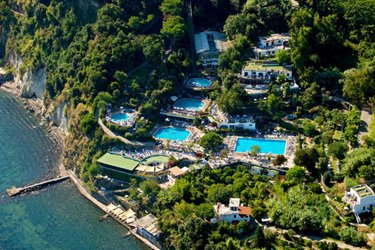
The best known are the Poseidon Thermal Gardens, but the Aphrodite, Eden and Tropical Gardens, as well as the Castiglione, Bagnitiello, Negombo and Cavascura thermal spas, also deserve a day devoted to relaxation.
What do these parks offer? In exchange for a fairly expensive admission ticket, you can choose from pools at different temperatures, waterfalls, Kneipp paths and saunas, and almost always access to the sea via a private beach.
There is never any shortage of extra beauty and wellness services, such as massages, mud treatments and gyms, among others. These gardens and parks are true spa resorts, so they also feature sun terraces with loungers and parasols, restaurants and bars.
When to go: some thermal gardens are open all year round.
Ticket prices: from around €40 per person.
Sorgeto Bay in Ischia
4
The almost 234 steps you need to tackle to reach Sorgeto Bay in Ischia are not really an obstacle, because the reward makes the effort more than worthwhile, especially outside the high season: hot springs rising from underground meet the seawater, creating natural pools and basins of different sizes and temperatures.
You can choose boiling, warm or cold water, just like in the finest thermal spas — but free of charge and all year round.
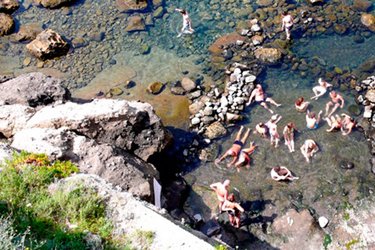
Naturally, Sorgeto Bay attracts many locals and even more tourists, so it may be difficult to find even a few square centimetres to put down your bag.
Go early in the morning or in the evening, even at night, as the water temperature does not change.
Sometimes you can also get there by boat from Sant’Angelo but the service depends on too many variables to guarantee that it is always available.
Find out more about Sorgeto Bay
Opening hours and ticket price for Sorgeto Bay
Opening hours: always open.
Ticket price: free.
How to get there: bus to Panza, Sorgeto stop
The Church of Soccorso in Forio, Ischia
5
The little white Church of Soccorso is one of the favourite photographic subjects for visitors to Ischia.
Small in size yet endowed with extraordinary charm, it stands on a headland overlooking the sea.
It was built there so that sailors could spot it from afar and know they were returning home.

The little church brings together different architectural styles, but its most moving feature is the collection of ex-votos offered by sailors and their wives, hung everywhere in thanksgiving for having survived yet another storm.
The Torrione of Forio, Ischia
Not far from the little church stands the Torrione of Forio, the other symbol of this Ischian town.
Over the centuries, it helped protect the people of Forio and of the whole island of Ischia, because it was from this tower that the first warning was given whenever invaders appeared from the sea.
Today it houses an art gallery and a small municipal museum. Forio is one of the island’s most peaceful towns and offers pleasant walks, charming little squares and a little shopping along the main street.
The Village of Sant’Angelo in Ischia
6
Sant’Angelo is Ischia’s chic village, the one most appreciated by the wealthy, by VIPs and by those who prefer to stay بعيد from the crowds of holidaymakers: this hamlet of colourful houses is entirely pedestrianised and not especially easy to reach.

It is served by just one bus, usually very crowded, and the journey from Ischia Porto takes about 1 hour.
Once you reach the terminus, there is a pleasant 1 km walk to the village (or an expensive taxi ride).
The picture-postcard image is that of a classic Mediterranean seaside village: white or brightly coloured houses, narrow lanes, souvenir shops, ice-cream parlours, restaurants and bars with outdoor tables.
Compared with the rest of the island, what stands out is the tranquillity and the absence of motor vehicles.
From Sant’Angelo to Maronti
From the little harbour, boats take visitors to the Maronti Beach, while a further uphill walk leads to the Aphrodite-Apollon Thermal Park.
The Nitrodi Spring in Ischia
7
The Romans were the first to discover the exceptional healing qualities of the water from the Nitrodi Spring, so much so that they built a nymphaeum placed under the protection of the “Nitrodes” nymphs and Apollo, the god traditionally associated with beauty and physical health.
But are the waters of this spring really so beneficial?

The answer is yes, and this has also been recognised by the Italian Ministry of Health. In fact, these are the only thermal waters on Ischia that can also be drunk.
What are they good for? A little bit of everything: diuresis, kidney cleansing, reduction of uric acid, gastritis and ulcers. For those interested only in cosmetic benefits, Nitrodi water makes the skin feel as smooth as silk.
In addition, it helps eliminate spots and impurities and also has a rapid healing effect.
The Nitrodi Spring is not a thermal park in the strict sense, but rather a nature trail where springs alternate with gardens and aromatherapy paths.
Opening hours and ticket price for the Nitrodi springs
Opening hours: from April to November.
From 1 to 31 May 10:30 am – 5:30 pm.
From 1 June to 30 September 9:00 am – 7:00 pm.
From 1 to 30 October 10:30 am – 5:30 pm.
Ticket price: from €25 to €45
How to get there from Ischia Port: to Buonopane, a hamlet of Barano d’Ischia.
Bus:
from Ischia, Casamicciola and Lacco Ameno: CS line.
from Barano, Serrara Fontana and Forio: CD line.
The Cavascura Thermal Baths in Ischia
8
Forget Ischia’s more classic and popular thermal parks, because Cavascura is a truly unique spa experience.
Picture the scene: the ancient Romans bathing and relaxing in rustic pools carved into the tuff rock, surrounded by steaming hot springs.
At the Cavascura thermal baths, you will still find a setting not so very different from this today. In fact, their origins are even older: it was the Greeks who first benefited from the virtues of these waters. Many centuries have passed since then, but the Cavascura Thermal Baths have not undergone any major transformations.
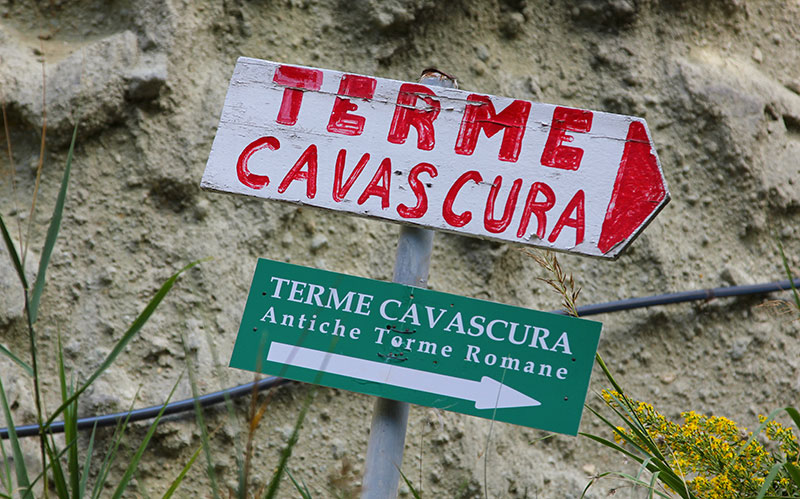
The waterfalls that flow from the mountain at high temperatures continue to delight visitors with their warmth. These waters are beneficial for the skin, bones and bronchi, and are known for their therapeutic properties in the treatment of many conditions.
In addition to bathing in the pools, at the Cavascura thermal baths you can enjoy saunas, mud treatments, massages and thermal showers, or simply lie in the sun on the wooden solarium terrace.
In a dedicated cave, the ancient “stufe” are still practised: inhalations of vapours released from the heart of the thermal basin. It is possible to book packages that include several treatments and, after a thermal bath, relax while sipping a freshly squeezed citrus juice.
Opening hours and ticket price for the Cavascura Thermal Baths
The Cavascura thermal baths are open from 20 April to 20 October.
Opening hours: every day from 8:30 am to 6:00 pm.
Ticket price: basic admission €2.
Admission with sunbed, parasol, sauna and shower: €20
How to get there:
From Ischia Porto: take bus line no. 5 to Maronti Beach, then continue on foot along a gently uphill path between the tuff walls of the hillside.
From Sant’Angelo: by taxi boat, followed by a short uphill walk. Cost: €3.
La Mortella Gardens
9
Let’s start with the name, which has nothing to do with death but comes from the myrtle that once grew luxuriantly in this part of Ischia.
We are in Faro, in the municipality of Forio. Here, in 1958, the English composer Sir William Walton and his Argentine wife, Lady Susana Walton, purchased a plot of land to create a magnificent Mediterranean and subtropical garden.

To design it, they called upon the celebrated landscape architect Russell Page, who conceived the garden by integrating it among the volcanic rock formations typical of Ischia.
La Mortella is divided into two sections: a lower garden and an upper garden on the hill.
What to see at La Mortella in Ischia
The variety and richness of the plants, the flowers, fragrances, fountains, pools, small streams and magnificent views of the sea create a place of peace and wonder that fully deserves its place among the absolute must-sees in Ischia.
The garden also contains three tropical greenhouses: the “Victoria House”, where Victoria amazonica is cultivated, the Orchid Greenhouse and the Temple of the Sun.
For those seeking deep relaxation, there is also the Thai Room, a meditation space immersed in an Oriental atmosphere and surrounded by lotus flowers, peonies, bamboo and Japanese maples. Do not forget to pay tribute to one of the two creators of this extraordinary place by visiting Sir William’s Rock, where the composer’s ashes are kept.
Opening hours and ticket price for La Mortella
Opening hours: from Saturday 2 April to Sunday 30 October.
Tuesday, Thursday, Saturday and Sunday from 9:00 am to 7:00 pm
(ticket offices close at 6:00 pm)
Ticket price: €12
How to get there from Ischia Port:
Bus:
from Ischia, Casamicciola and Lacco Ameno: CS line.
from Barano, Serrara Fontana and Forio: CD line.
Ravino Gardens
10
In Forio, Ischia, you can stroll through a small Eden of exotic plants, set against a truly beautiful panorama.
The Ravino Gardens are home to the largest collection of succulent plants in Europe, created by Captain Giuseppe D’Ambra, who over fifty years fulfilled his dream of creating his own botanical garden and opening it to the public.

We commonly know them as “fat plants”, and in this park you will find them in every species, size and origin, with new specimens added every year.
Favoured by the sun and their proximity to the sea, some of these plants have grown remarkably fast and, over the years, have become increasingly majestic.
Walking along the paths of the Ravino Gardens, you will come across centuries-old cacti, Mediterranean plants — especially citrus trees — aromatic plants such as lavender, and even a small organic vegetable garden.
Every now and then, you may encounter a friendly peacock roaming freely along the paths. Take a moment to relax: at the Cactus Lounge Café, you can admire the view from the “Grusoni Terrace” while tasting the famous Cactus Cocktail. The name makes it fairly easy to guess the main ingredient. You can also stay overnight inside the botanical garden at Villa Ravino, choosing between Aparthotel or B&B options.
Opening days and hours of the Ravino Gardens
Every day except Tuesday and Thursday, from 10:00 am to 7:00 pm.
Ticket price: Full price: €10
Reduced ticket (children aged 6 to 12): €5
Free for children up to 5 years old
Guided tours are available for a minimum of 6 people: from €16 per person.
How to get there: Bus lines: 1; 2; CS; CD, Via Bocca stop.
The Beaches of Ischia
11
If you love spending your days between sun and sea, you are in the right place: all you have to do is choose the kind of beach you prefer.
La Chiaia in Forio, Ischia is one of the largest and most convenient beaches, and therefore also one of the most crowded.

Also in Forio is Cava dell’Isola, connected to the road by a long flight of steps. Quieter than La Chiaia, it has clear water and is well served by three restaurant-bars.
The Bay of San Montano, in the municipality of Lacco Ameno, is also one of the most beautiful on the island. The water is clear, with green reflections, and the sand is fine and golden.
Maronti Beach, which can be reached by boat from Sant’Angelo or from the upper road, has dark, fine volcanic sand and also thermal springs that flow into the sea, including the one at Cavascura.
How to Get to Ischia
12
You can reach Ischia from the port of Naples or from Pozzuoli, about 30 minutes north of Naples. Ferries arrive at Ischia Porto or Casamicciola and, with some hydrofoils, directly at Forio.
Connections are frequent during the summer and slightly less so during the winter months. Several ferry companies carry both passengers and cars (Medmar, Caremar), while some hydrofoils carry passengers only (Alilauro and Caremar).
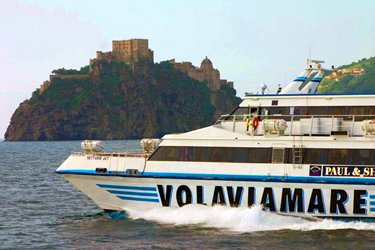
The crossing from Naples takes about 1 hour, while from Pozzuoli it takes around 50 minutes.
The ticket price for a single passenger ranges from €9 to €15, while bringing a car increases the cost by around €50 for an average-sized vehicle.
In high season, it can be difficult to find a space for your car, especially at weekends.
It is therefore advisable to book both the outbound and return journeys. It is not uncommon for many tourists to be left off the ferry because there are no car spaces available.
What to Eat in Ischia
M
One might think that Ischia’s cuisine, being that of an island, is strictly seafood-based. In reality, that is not the case, and it is no coincidence that the island’s most representative dish is “Coniglio all’ischitana“, rabbit cooked in the Ischian style, while vegetables, greens and pulses also play an important role.
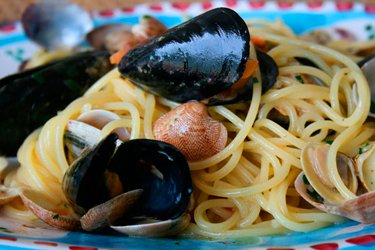
Ischia, after all, is an island with an important mountain rising above it, Mount Epomeo, from which many products of the land come. It is no coincidence that the higher up your restaurant is located, the more substantial, almost “northern” and less Mediterranean the cuisine becomes.
Of course, the sea is present in the dishes: fried anchovies, octopus stewed or served in salad, grilled tuna and swordfish. Seafood is the star of many first courses, in classic Campanian combinations with spaghetti, vermicelli and fresh pasta. The first course par excellence, however, is bucatini dressed with the sauce from coniglio all’ischitana.
Desserts do not stray far from the Neapolitan tradition, although those made with lemon, such as Delizie, hold a special place. There is also a good selection of white and red DOC wines, including Per ‘e Palammo, Biancolella, Forestanera, Piedirosso and Ischia. The island’s typical liqueur is Rucolino, prepared with wild rocket from Ischia. Pleasant to drink on the spot and excellent to take home as a souvenir.
Where to Stay in Ischia
H
At certain times of the year — July and August, for example — you might begin to wonder whether Ischia is really an island at all. The number of holidaymakers becomes substantial and, added to the island’s many residents, turns Ischia into a kind of “floating city”.

There is no shortage of hotels, guesthouses, B&Bs and apartments: with the arrival of summer, many private homes are also turned into places to stay. Across the island there are around 220 establishments, ranging from 1 to 5 stars, and bookings often come in well before the summer begins. During spring long weekends and in July and August, finding reasonably priced accommodation can therefore be very difficult. For these periods, we recommend booking in advance.
A good selection of hotels is available on Booking.com. More than 200 hotels in Ischia with descriptions, photos, prices and reviews from guests who have already stayed there. Go to Booking.com