The beauty of Siena can only truly be appreciated a few days after leaving it.
When you are there, too busy trying to see as much as possible, you do not immediately realize the beauty of this small city in the heart of Tuscany.
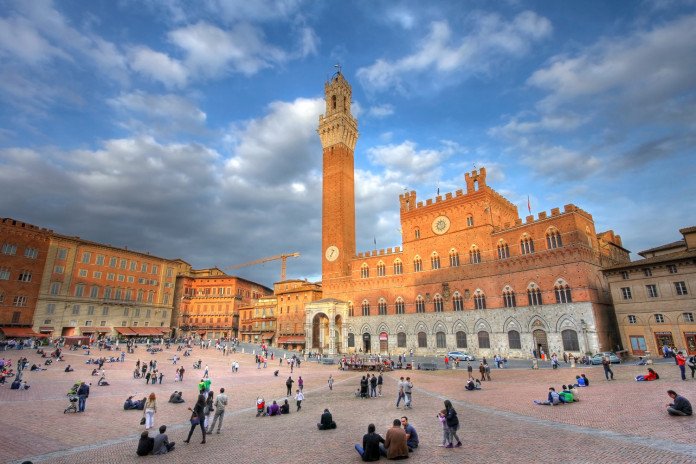
The memories surface only a few days later: first comes back Piazza del Campo with the Palazzo Pubblico and the Torre del Mangia; then the black and white of the Duomo, the Baptistery and everything else.
But perhaps, more than anything, what remains in your memory is the colour of the palace façades and rooftops, that “Terra di Siena” known all over the world, which makes the cityscape coherent, harmonious and beautiful to look at.
Perhaps this is what makes Siena so fascinating and beloved: it has remained intact, just as it was in the Middle Ages, and feels like a journey through time, a search for a golden age that once belonged to many other small and large Italian towns and will never return.
If you are looking for a hotel in Siena, we recommend choosing from the options offered by Booking.com. There are around 100 hotels with prices, photos and reviews from guests who have stayed before you. Go to Booking.com.
Piazza del Campo in Siena
1
Piazza del Campo in Siena is considered one of the most beautiful squares in the world. It has a distinctive shell shape divided into 9 sections, a detail that can only truly be appreciated from the top of the Torre del Mangia. Since the 14th century, it has been the centre of life in Siena, serving as a market and a gathering place for the Sienese during important political moments, festivals and tournaments. Just as still happens twice a year during the famous Palio.
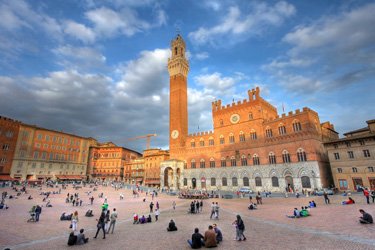
Today, Piazza del Campo is Siena’s tourist spot par excellence, an essential stop where restaurants and souvenir shops dominate the scene, without however overshadowing the beauty of the square.
The gentle slope makes the outline of the Palazzo Pubblico with the Torre del Mangia even more imposing, while the entire square is surrounded by the beautiful and majestic façades of noble palaces.
The ultimate tourist ritual is to sit on the ground and admire the patch of sky that opens above the square. It is also a good way to rest after all the ups and downs imposed by Siena’s narrow streets.
At the upper end of the square stands the Fonte Gaia, the most beautiful of Siena’s water fountains. The one you see today in Piazza del Campo is a copy of the fountain sculpted by Jacopo della Quercia between 1409 and 1419.
Find out more about Piazza del Campo.The Palazzo Pubblico in Siena
2
The Palazzo Pubblico in Siena is the city’s ultimate symbol of political power. In fact, from the Government of the Nine, which in the 14th century made Siena as beautiful as we see it today, right up to the present, all Siena’s rulers have had their seat here.
If just nine “politicians” managed to imagine and bring such a marvel to life, perhaps we should expect something better from the hundreds of administrators who crowd our town halls today…
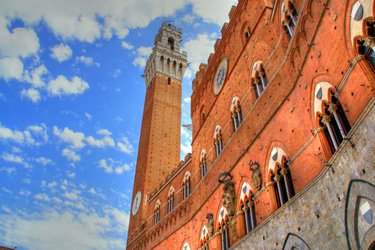
The Palazzo Pubblico in Siena is considered one of the most beautiful civic palaces in Italy, long admired for its majesty and harmony.
Its beauty was already evident during construction, prompting the city government to issue an edict requiring the owners of the houses in Piazza del Campo to build their palaces in stylistic harmony with the Palazzo Pubblico, but not more beautiful or larger than it.
Inside the palace is the Civic Museum of Siena, with the famous frescoes by Ambrogio Lorenzetti depicting the Allegory of Good and Bad Government.
Opening hours and ticket prices for the Palazzo Pubblico and the Civic Museum of Siena
Opening hours: from November to 15 March, from 10 am to 6 pm. From 16 March to October, from 10 am to 7 pm
Ticket price: €10 without reservation. €11 with reservation.
Combined tickets
Civic Museum + Santa Maria della Scala €14.00
Civic Museum + Torre del Mangia €15.00
Civic Museum + Santa Maria della Scala + Torre del Mangia €20.00; Families (2 adults + minors over 11 years old) €40
Family ticket (2 adults + minors over 11 years old) €22.00
Free admission: residents of the Municipality of Siena, children under 11, public and university schools in Siena, accompanying teachers, group leaders (1 every 10 people), people with disabilities, journalists.
How to get there: on foot in the historic centre of Siena.
Find out more about the Palazzo PubblicoThe Torre del Mangia in Siena
3
If you suffer from vertigo, perhaps it is not a good idea to venture up to the 88 metres of the Torre del Mangia, but we should warn you: you will miss an exceptional view. From up there, the sight is truly breathtaking.
You can see all of Siena: from Piazza del Campo to the Duomo a little further away, and on to the distant hills. The spectacle, of course, comes at the cost of climbing no fewer than 400 steps!

The tower takes its name from Giovanni di Duccio, its first keeper, who enjoyed life by spending all his earnings eating in the taverns of Siena. The Sienese nicknamed him Mangiaguadagni, “the earnings-eater”, hence the name Torre del Mangia.
Legend has it that during construction, lucky coins were buried at the foot of the tower and that at each corner of the tower there are stones bearing Latin and Hebrew inscriptions, intended to keep thunder and storms away from the tower.
Opening hours and ticket prices for the Torre del Mangia
Opening hours: from 16 November to 28 February, 10 am – 4 pm
From 1 March to 15 November, 10 am – 4 pm
Ticket price: €10. Combined ticket Civic Museum + Torre del Mangia €15.00
Civic Museum + Santa Maria della Scala + Torre del Mangia €20.00.
How to get there: on foot in the historic centre of Siena.
Find out more about the Torre del MangiaThe Civic Museum of Siena
4
The Civic Museum of Siena contains one of the most famous allegories in the world: the Allegory of Good and Bad Government, painted on the walls by Ambrogio Lorenzetti. In 1337, the Government of the Nine commissioned Ambrogio Lorenzetti to decorate the room where visiting guests were received with a fresco representing the ideals that guided the government of Siena. For the first time in the history of art, a pictorial cycle was created in which the main theme was not religious, but civic.
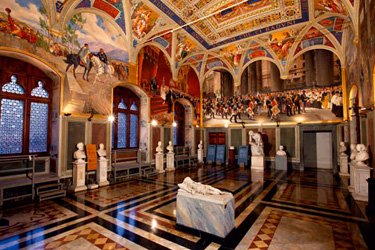
The result is the Allegory of Good and Bad Government, an extraordinary account of how the way a society is governed — separation of powers, citizen participation and military strength — determines its prosperity or decline. The museum’s other great masterpiece is Simone Martini’s Maestà, which the Nine had painted to bear witness to the deep devotion of the Sienese people to the Virgin Mary.
Opening hours and ticket prices for the Civic Museum of Siena
Opening hours: from November to 15 March, from 10 am to 6 pm. From 16 March to October, from 10 am to 7 pm
Ticket price: €10 without reservation. €11 with reservation.
Combined tickets
Civic Museum + Santa Maria della Scala €14.00
Civic Museum + Torre del Mangia €15.00
Civic Museum + Santa Maria della Scala + Torre del Mangia €20.00; Families (2 adults + minors over 11 years old) €40
Family ticket (2 adults + minors over 11 years old) €22.00
Free admission: residents of the Municipality of Siena, children under 11, public and university schools in Siena, accompanying teachers, group leaders (1 every 10 people), people with disabilities, journalists.
How to get there: on foot in the historic centre of Siena.
Find out more about the Civic MuseumThe Duomo of Siena
5
People usually arrive at the Duomo after visiting Piazza del Campo. With the majesty of the square and the Palazzo Pubblico still in their eyes, they do not expect to be amazed again. What could Siena possibly offer that is even grander and more beautiful? The answer is simple: the Duomo, with its façade dominated by black and white.
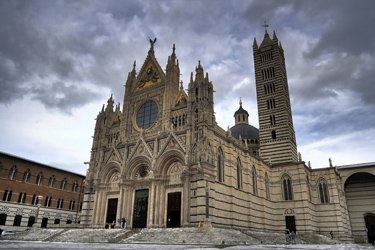
But however splendid it may be, this is not the finest part of this church dedicated to the Assumption of Mary.
The most important treasures are inside: the floor, filled with esoteric symbols and religious stories: it features all the Sibyls of tradition, as well as the Massacre of the Innocents, King David and Hermes Trismegistus, the life of Moses and the Sacrifice of Jephthah.
In the left nave, before the transept, the Piccolomini Library opens up, frescoed by Pinturicchio and, despite its name, it never housed the books of Pope Pius II.
Immediately after the Library is the Piccolomini Chapel, where Michelangelo worked from 1501 to 1504, sculpting the 4 statues in the lower niches. Also not to be missed is the Pulpit, created by Nicola Pisano, with biblical scenes and episodes from the life of Jesus.
Opening hours and ticket prices for the Duomo of Siena
Opening hours:
Cathedral, Piccolomini Library, Opera Museum, Panorama from the Facciatone, Crypt, Baptistery:
From 1 May 2021:
10:30 am – 6:00 pm
Cathedral on holidays: 1:30 pm – 6:00 pm
Cathedral on pre-holidays: 10:30 am – 6:00 pm
1 November – 28 February: 10:30 am – 5:30 pm
Cathedral on holidays: 1:30 pm – 5:30 pm
Cathedral on pre-holidays: 10:30 am – 5:30 pm
26 December – 6 January: 10:30 am – 6:00 pm
Cathedral on holidays: 1:30 pm – 5:30 pm
Cathedral on pre-holidays: 10:30 am – 5:30 pm
Period when the Cathedral floor is uncovered
From 26 June to 31 July and from 18 August to 17 October 2021
10:30 am – 7:00 pm
Cathedral on holidays 9:30 am – 6:00 pm
Gate of Heaven:
Open from 1 March to 6 January. Opening hours follow those of the Cathedral
Ticket price:
01/11 – 24/12; 07/01 – 28/02 €8.00
01/03 – 25/06; 01/08 – 17/08; 18/10 – 31/10; 26/12 – 06/01 €13.00
During the period when the floor is uncovered
26/06 – 31/07; 18/08 – 17/10 €15.00
How to get there: in Piazza del Duomo. On foot in the historic centre of Siena.
Find out more about the DuomoThe Museo dell’Opera del Duomo in Siena
6
From the right side of the Duomo, you can enter the Museo dell’Opera del Duomo, also known as the Metropolitana Museum, which houses works from the Duomo and the Diocese of Siena.

It is impossible to list the full series of masterpieces on display, but just a few will be enough to convince you to visit this museum: the Tondo by Donatello, depicting the Madonna and Child; the Madonna Enthroned with Child and Cardinal Casini, a work by Jacopo della Quercia; the Maestà by Duccio da Buoninsegna; the ten statues of saints by Giovanni Pisano, once displayed in the Duomo; the Nativity of the Virgin by Pietro Lorenzetti; the Dead Christ by Sodoma, an extraordinary work; and much more.
Opening hours and ticket prices for the Museo dell’Opera del Duomo in Siena
See the information in point 5
The Baptistery of Siena
7
Just behind Siena Cathedral, since 1325 the Baptistery has rivalled the cathedral as the city’s most important religious site.

For many centuries, beneath the pointed vault of the Baptistery, all Sienese people were baptised here, famous and ordinary alike.
Across the three naves, the eye is drawn to and enchanted by the frescoes by Benvenuto di Giovanni — The Miracles of Saint Anthony of Padua, 1460 — Pietro degli Orioli, The Washing of the Feet, and Lorenzo di Pietro, known as “Vecchietta”, with the frescoes on the vaults depicting the Articles of the Creed, 1447/1450.
But the true protagonist of the Baptistery is the baptismal font in bronze and marble, placed right at the centre of the Baptistery. Jacopo della Quercia, Giovanni di Turino, Lorenzo Ghiberti and Donatello all worked on it and left their mark; Donatello also created the bronze angels that decorate the ciborium.
Find out more about the BaptisteryOpening hours and ticket prices for the Baptistery of Siena
See the information in point 5
The National Picture Gallery of Siena
8
A visit to Siena would not be complete without discovering the masterpieces preserved in the National Picture Gallery. The layout begins with works from the 15th and 16th centuries in Siena on the first floor, but the true masterpieces are on the second floor, where the works are arranged in chronological order, from the origins of Sienese painting to the second

half of the 15th century: Duccio, with the Madonna of the Franciscans, Simone Martini, Pietro and Ambrogio Lorenzetti, with the “Little Maestà” from the 14th century, Sano di Pietro, Giovanni di Paolo, Sassetta, Matteo di Giovanni and Francesco di Giorgio Martini from the 15th century.
The third floor houses works from the Spannocchi-Piccolomini Collection, belonging to a wealthy Sienese family, including a Saint Jerome by Albrecht Dürer and a Nativity by Lorenzo Lotto.
Opening hours and ticket prices for the National Picture Gallery of Siena
Opening hours:
Monday: 9:00 am – 1:00 pm
Tuesday to Saturday: 8:15 am – 7:15 pm
Sunday and public holidays: 9:00 am – 1:00 pm
Patron saint’s day, St Ansanus, 1 December: 9:00 am – 1:00 pm
Closed: 1 January – 1 May – 25 December
Ticket price: full price €4.
Reduced: €2, for European Union citizens aged 18 to 25 and permanent teachers in state schools
How to get there: Via di San Pietro. On foot in the historic centre of Siena.
The Caterinian Basilica of San Domenico
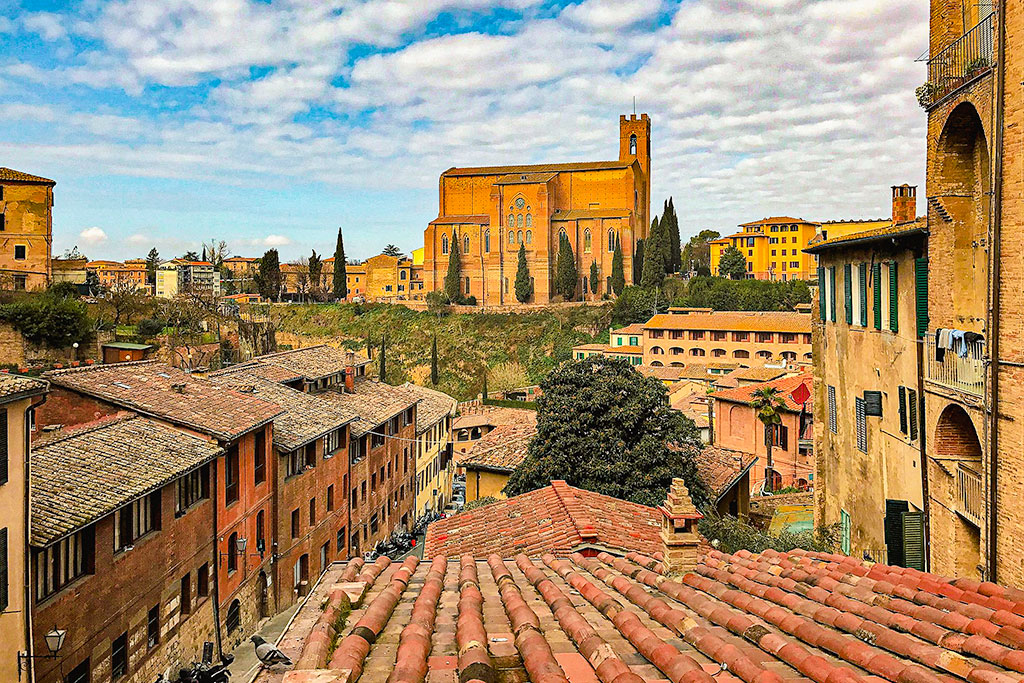
9A ten-minute walk from Piazza del Campo brings you to the Caterinian Basilica of San Domenico, in the square of the same name.
You can also reach it from Fontebranda, climbing a staircase that leads to the rear of the church. Stop for a moment and enjoy the view over the centre of Siena before going inside.
Built in the 13th century and enlarged in the following century, the Basilica of San Domenico fully belongs to the circuit of sacred places linked to the figure of Saint Catherine, who experienced the most significant mystical episodes of her life in this church.
Do not expect to find a lavish church: although it is tall, imposing and has an enormous nave, inside it is simple and bare, just as the Dominican spirit preached.
The Chapel of Saint Catherine
The heart of the basilica, and also the main point of interest and devotion for both tourists and the Sienese themselves, is the Chapel of Saint Catherine, where the sacred relic of her head is kept.
A chalice from which the saint drank and her right thumb are also carefully preserved in a display case; every year, during the celebrations in her honour, the thumb is carried to Piazza del Campo to impart the blessing to the faithful.
The masterpieces by Sodoma
On either side of the altar, two masterpieces by Giovanni Antonio Bazzi, known as Sodoma, are worth noting: the Mystical Fainting and the Ecstasy of the Saint. Other 16th-century frescoes depicting miracles and other episodes from Catherine’s life have been attributed to Francesco Vanni.
The Chapel of the Vaults
Then there is the Chapel of the Vaults, the place where the saint would withdraw in prayer and where she had her visions and ecstasies.
Here you can see a painting depicting her, created while she was still alive and therefore considered the most faithful artistic representation of her.
Opening hours and ticket price for the Basilica of San Domenico
Opening hours:
From March to October: from 7:00 am to 6:30 pm
From November to February: from 8:30 am to 6:00 pm
How to get there: On foot in the historic centre of Siena.
The Caterinian Basilica of San Domenico
10In a religious itinerary through Siena, the Sanctuary of Saint Catherine simply cannot be left out.
It is located 300 metres from the church of San Domenico and admission is free. Do not expect a classic sanctuary, but rather a House-Sanctuary: in the 15th century, this was the house where the saint lived with her family in the so-called “contrada di Fontebranda”, where wool was produced and where Catherine’s father worked as a dyer.
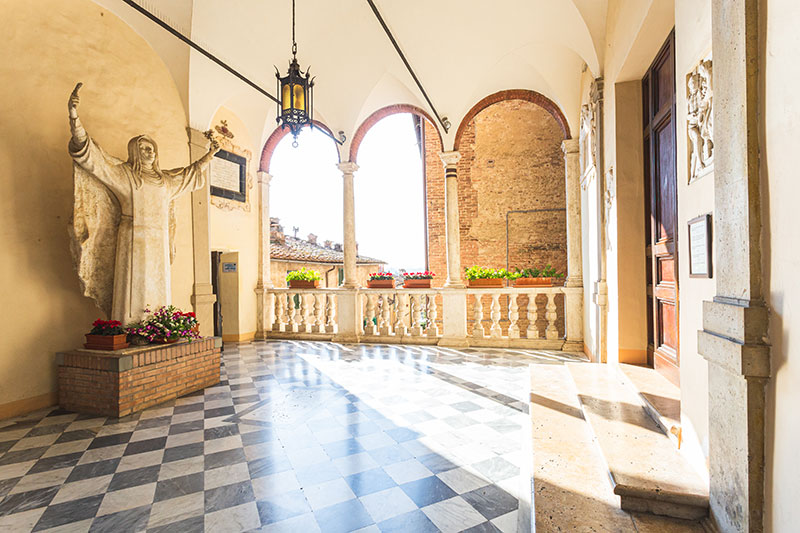
You enter through the Portico dei Comuni, so called because it was dedicated to all the municipalities of Italy that contributed to its construction.
Admire the well dating back to the 15th century, then continue into the small 16th-century loggia, from which you can access the various rooms of the Sanctuary open to visitors.
In the Church of the Crucifix you will find the miraculous crucifix from which the saint received the stigmata in 1375. On the walls, various paintings depict episodes such as “Saint Catherine before Gregory XI in Avignon” and “Catherine’s Almsgiving”, recalling how she used to give charity secretly at night, without making a spectacle of it.
Then there is the Oratory of the Kitchen, the place corresponding to the old kitchen of Catherine’s house.
Even today, you can see the remains of the hearth where the saint slipped during a moment of ecstasy without miraculously being burned.
The floor with coloured majolica tiles, the blue and gold coffered ceiling and the canvases on the walls were added around the mid-16th century to enrich this space.
On the lower floor is the Oratory of the Chamber, the room where Saint Catherine would go to pray, and the small cell with the stone on which she rested her head to sleep and meditate.
Above the small altar is the splendid 16th-century painting of the saint receiving the stigmata.
Opening hours and ticket price for the House of Saint Catherine
Opening hours:
Open every day from 9:00 am to 12:30 pm and from 3:00 pm to 6:00 pm.
How to get there: On foot in the historic centre of Siena.
Ticket price: free
Fontebranda in Siena
11
Fontebranda is the oldest fountain in the city; it dates back to the 13th century!
It is not only the most historic, but also the most famous: it was mentioned both by Boccaccio in the Decameron and by Dante Alighieri in Canto XXX of the Inferno.
In the Middle Ages, Fontebranda was part of a truly ingenious underground water system that ran beneath the city, with a network of aqueducts stretching for kilometres.

They were called “bottini” because they were covered by barrel vaults; their purpose was to bring water inside the city walls from the surrounding countryside, and Fontebranda was the most important of them.
It supplied drinking water to homes, served as a washhouse and as a drinking trough for animals, and fed the tanneries and dye works of the Contrada dell’Oca, the district where Saint Catherine lived with her family and where her father worked as a dyer.
The fountain of Saint Catherine of Siena
This is also why Catherine is known as the “Saint of Fontebranda”. Aesthetically, the fountain blends perfectly with Sienese architecture, with its three brick arches topped by Gothic battlements.
At the centre are four stone lions from which the water once flowed, together with the Balzana, the coat of arms of the city of Siena. In the clear water of the basin, you can see small fish swimming.
Fontebranda is located below the Basilica of San Domenico, near the House-Sanctuary of Saint Catherine and the historic city gate of the same name.
A few metres away, the Santa Caterina car park is convenient for those arriving by car; from here, you can reach the historic centre in just a few minutes via a system of escalators that lead to within 150 metres of the Duomo.
Opening hours: always visible.
How to get there: On foot in the historic centre of Siena.
Ticket price: free
What to eat in Siena
For centuries, the hills around the city have provided olive oil, wine, meat and vegetables. Thanks to the farming wisdom cultivated over the centuries, these ingredients are transformed into a genuinely popular cuisine, only slightly touched by modernity.
With wild boar, especially Cinta Senese pork, and hare, people prepare crostini, pappardelle and grilled meat. Also on crostini, served as an appetiser, you will often find and enjoy cured meats, pecorino cheese, honey and fegatelli.
Among winter soups, ribollita is the one that best helps you get through the cold. The great wines of Siena and its province are always present: Chianti, Brunello di Montalcino, Montepulciano and Vernaccia di San Gimignano.
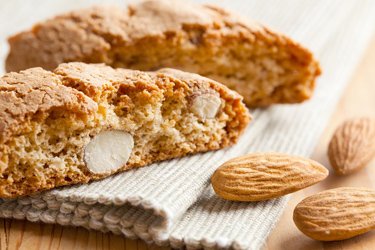
For those who never leave the table without finishing with dessert, there is plenty to choose from: cantucci, ricciarelli, panforte and cavallucci, served with the classic Vin Santo.
Find out more about Siena’s cuisineWhere to stay in Siena
HVisited every day of the year by thousands of tourists, Siena is one of the busiest destinations in Italy. Fortunately, the city has an excellent tourist infrastructure and also a large number of hotels, rooms, bed and breakfasts and agriturismi. Staying in a hotel in the centre can be expensive and requires booking well in advance.
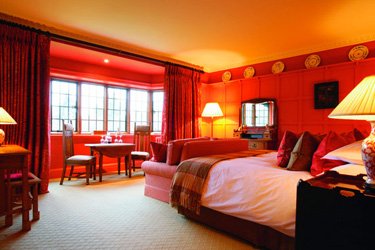
You will have many more chances of finding a room at a good price in the agriturismi in the surrounding hills and in the small towns around Siena. The price for a double room in a 3-star hotel in the centre starts from €90 per night, while in agriturismi outside the centre and in the surrounding area you can find excellent rooms starting from €50 per night.
If you are looking for a hotel in Siena, we recommend choosing from the options offered by Booking.com. There are around 100 hotels with prices, photos and reviews from guests who have stayed before you. Go to Booking.com
Around Siena
We are in a wonderful area, one of the most beautiful in the world. The choice of what to visit is truly wide: just a few kilometres by car there are Monteriggioni, Bagno Vignoni, San Gimignano, Montalcino, Montepulciano, San Galgano and the other places you will find on the surroundings of Siena page.