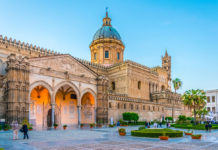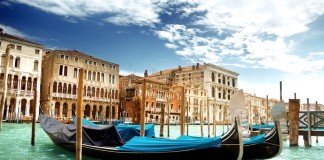
Chiamare il Lago di Garda semplicemente “un lago” è un po’ limitante, visto che si tratta del maggiore lago italiano con una superficie di 370 km quadrati. Sarebbe giusto considerarlo un mare tra le montagne, perché è questa la sensazione che si prova a guardarlo: in qualsiasi direzione si rivolge lo sguardo, non si riesce a coglierne i confini. In effetti, il Lago di Garda bagna tre regioni italiane: Lombardia, Veneto e Trentino-Alto-Adige, offrendo una varietà di paesaggi straordinaria.
Dalle montagne innevate alle dolci colline, dalle piccole località sulle sponde alle isole nel centro del lago, il Lago di Garda è una destinazione che riesce ad accontentare tutti, in ogni periodo dell’anno. In questa pagina vi indichiamo alcuni dei posti da visitare e cosa fare e vedere se decidete di trascorrere qualche giorno sul Lago di Garda.
Se cercate un hotel vi consigliamo Booking.com. Più di 380 hotel con descrizioni, foto, prezzi e commenti di chi ha già soggiornato. Vai a Booking.com
The Castle of Sirmione on Lake Garda
1
The Scaliger Castle of Sirmione dates back to around 1250 and is one of the best-preserved castles in Italy.
Today it is in perfect condition and fully open to visitors: two crenellated towers overlook the lake and the still-functioning dock, which houses a Roman-era lapidarium.
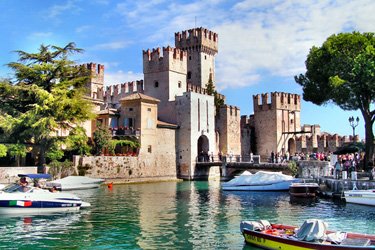
The castle of Sirmione is a striking fortress standing directly on the lake, accessed by a drawbridge over the water.
Its 146 steps lead up to the patrol walkways, from where you can admire the whole surrounding area.
The castle entrance is also the only way into Sirmione’s historic centre: here you can experience the history of this town up close and discover one of the few lakeside defensive structures in Italy.
Built by Mastino I Della Scala, the Castle of Sirmione is also linked to many legends, including that of Ebengardo and his beloved Arice.
According to the legend, one night a knight asked for hospitality at the castle. Struck by Arice’s beauty, he slipped into her room. Shocked, Arice rejected him, and he stabbed her. Ebengardo then killed his rival, and since then, on stormy nights, his spirit has wandered through the castle in search of his beloved.
Opening hours and ticket prices for the Rocca Scaligera of Sirmione
Opening hours: open from Tuesday to Saturday, 8:30 am-7:30 pm;
Sunday from 8:30 am to 1:30 pm.
Ticket price: Full price: €5.00. Reduced: €2.50.
How to get there: at the entrance to Sirmione, impossible to miss.
The Grottoes of Catullus in Sirmione
2
“The Grottoes”, as this Roman domus was called before the excavations of the 15th century, are in fact the well-preserved remains of a Roman villa built in the 1st century AD, now considered the most important example of a Roman villa in northern Italy.

The reference to the Veronese poet Catullus also dates back to the 15th century, but in reality there is no certain evidence: the villa was built after his death.
The complex, today as more than a thousand years ago, dominates a peninsula on Lake Garda and covers about 2 hectares. The original structure had three floors and long panoramic terraces overlooking two sides of the lake.
There was an efficient thermal area, evidence of Sirmione’s reputation as an outstanding spa destination already known to the Romans, as well as an underground cistern used to collect water.
Today the villa is open to visitors and includes a large olive grove and a museum. Thanks to a restoration project, the villa’s 1,500 olive trees now produce a fine-quality olive oil, while the museum preserves a series of archaeological finds discovered here and in the other Roman villas around Lake Garda, together with detailed documentation on the history of the lake and its peoples from Prehistory to the Middle Ages.
Opening hours and ticket prices for the Grottoes of Catullus
Opening hours: open every day except Monday, from 8:30 am to 7:30 pm. On Sundays and public holidays, the site is open from 8:30 am to 2:00 pm.
How to get there: the Grottoes of Catullus can be reached on foot along a route that starts from the historic centre, about 1 kilometre long and taking around 20 minutes. During the summer, they can also be reached by taking a paid tourist train from the Terme di Catullo to the entrance of the archaeological area.
Full ticket price: €6.00; reduced €3.00 — for visitors aged 18 to 25; free for visitors under 18 and for everyone on the first Sunday of each month.
Peschiera del Garda
3
Peschiera del Garda è Patrimonio Unesco perché ha conservato integre le mura di difesa che i veneziani costruirono per difendere non solo Venezia, ma anche i territori di terra e le rotte commerciali.

Le opere veneziane trasformarono Peschiera in una “fortezza sull’acqua”, di cui ci si rende pienamente conto non appena si vede la cittadina da lontano e si supera una delle tante porte di accesso.
Cinque bastioni avvolgono il centro storico in un pentagono circondato da canali sulla foce del fiume Mincio: il Bastione Cantarane del 1551 si innalza sulle acque del Mincio non distante dal Bastione Feltrin, il primo ad essere costruito e che ospitava la polveriera Austriaca.
Oltre il ponte si susseguono i Bastioni Tognon e Feltrin collegati da un cammino imperdibile perché permette di ammirare tutta la Fortezza. Gli ultimi due Bastioni sono il Querini del 1552 e il Bastione San Marco che ospita la “Palleria” asburgica, il luogo dove si conservavano le palle di cannone degli austriaci.
Le isolette su cui è costruito il centro storico di Peschiera del Garda sono unite da ponti, il più famoso dei quali è quello detto “Ponte dei Voltoni” alla fine del quale c’è l’ultima tradizionale stazione di pesca del Garda. Da qui è tutto un susseguirsi di canali, case affacciate sull’acqua, ristoranti romantici e piccole botteghe che sono valse a Peschiera il titolo di “Piccola Venezia sul Garda”.
Punta San Vigilio
4
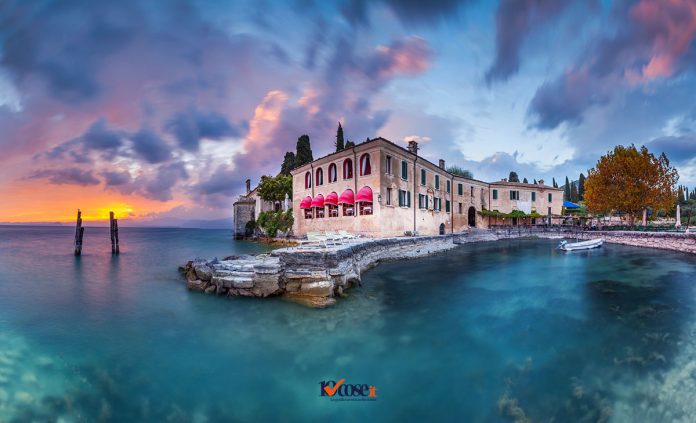
Lake Garda is full of romantic spots, but Punta San Vigilio is widely regarded as the romantic place par excellence. It is a small peninsula located just beyond Garda, the town to which it belongs. You can also reach the point on foot from Garda town centre, although it is a fairly tiring walk best suited to those who enjoy hiking.

Much of the Punta San Vigilio peninsula is privately owned but open to visitors, so we recommend not missing Villa Guarienti, the little church, the historic inn, the small harbour and the park.
The highlight of Punta San Vigilio is Villa Guarienti, a 16th-century villa with a small chapel inside and a beautiful Italian-style garden decorated with statues.
The villa has welcomed many distinguished guests, including Pietro Aretino, Marie Louise of Austria, Winston Churchill, Tsar Alexander II and many others.
Also part of the same estate are the nearby restaurant, a luxury hotel and the spectacular tavern by the harbour. This is the most photographed area: a stone pier stretching out into Lake Garda, where you can sit down (for a rather high price) and enjoy a coffee with your feet almost in the water.
It is no coincidence that a plaque at the entrance reminds visitors to leave “the worries of the city” behind.
Isola del Garda
5
Isola del Garda, also known as Isola Borghese, is the largest island on Lake Garda and lies about 200 metres from the shore, within the territory of San Felice del Benaco.
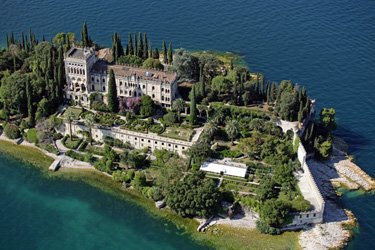
Today it can be reached by boat and is owned by the Cavazza counts, who have been organising guided tours since 2002 through its enchanting park and Villa Ferrari, a remarkable example of an early 20th-century villa and the only example of Venetian neo-Gothic style on the lake.
Besides the villa and its gardens, Isola del Garda is worth visiting for its fascinating history.
This place was already inhabited in Roman times, as shown by the tombstones and remains of votive temples found here, and for a long time it was a refuge for pirates, before becoming an important religious centre thanks to Saint Francis of Assisi, who had a small hermitage built there.
Over the centuries, the island has had many owners and welcomed several illustrious figures: in addition to Saint Francis of Assisi, Dante Alighieri, Saint Anthony of Padua and Adelaide Malanotte, the leading performer in Rossini’s operas, all stayed here.
Visitor information for Isola del Garda
How to get there: departure from Gardone Riviera, on the lakeside near the Hotel Savoy.
Ticket price: €31. The package includes the return boat trip, a guided tour of the gardens and part of the villa, and a welcome drink.
Riva del Garda
6
Riva del Garda, in Trentino, is one of the northernmost towns on Lake Garda and has a very special charm.
Here the lake narrows and slips between the high rocky walls of Monte Rocchetta: the water is colder and bluer, the scenery reflects the nearby Dolomites, and the silence feels even more rarefied, also because motor navigation is prohibited on the Trentino side of Lake Garda.

Riva del Garda, as its name suggests, overlooks the lake and is nestled between its waters and the historic centre, which climbs gently along the mountain. Riva is a well-equipped, well-kept tourist destination with a rich history, inhabited since Roman times and full of traces of its medieval past.
The heart of Riva is Piazza 3 Novembre: here you will find the Torre Apponale, its most important monument, dating back to 1220, the Palazzo del Comune, rebuilt by the Venetians in the 15th century, and the Palazzo Pretorio, built in 1375 by the Scaliger family. A walk through the square lets you soak up Riva’s Austro-Hungarian charm, perhaps sitting at one of the café tables while admiring the palaces that overlook it.
Also worth visiting are the Church of the Inviolata, a fine example of Baroque style built in 1603, the medieval Marocco district — from “marocche”, the landslide deposits on which the buildings were constructed — and the lakeside promenade, lined with white balustrades overlooking the water.
Torbole on Lake Garda
7
Lake Garda is not usually associated with surfing, yet the village of Torbole attracts surfers from all over the world. Here, a unique combination of mountains, lake and wind creates the ideal place for windsurfing and performing acrobatics, even though the sea is hundreds of kilometres away.

We are 4 km from Riva del Garda, on the Trentino shore, in a small yet welcoming and enchanting village.
Do not miss the charming and much-photographed Casa del Dazio, a tiny house right on the water with flower-filled balconies in every season. It was once the Austrian customs house.
In Torbole, you can stroll peacefully through the little square, along the lakeside, or climb up towards the Busatte Adventure Park. It is also worth remembering that the famous panoramic Lake Garda cycle path starts from Torbole and leads all the way to Riva del Garda.
Lake Tenno and Canale
8
Seven kilometres from Riva del Garda, still on the Trentino side of the lake, lies Tenno, a place worth visiting for its medieval charm and beautiful landscapes. The setting is completed by Lake Tenno, equipped with nature trails and services including a kiosk, a rest area and a campsite.

In summer, you can settle down on the small beaches of Lake Tenno, sunbathe and swim, as bathing is allowed. The blue-green shades and the mild water temperature invite you to take a dip, although water shoes are recommended because of the stony lakebed.
In Tenno, do not miss the small village of Canale di Tenno, the perfect starting point for discovering the lake along an easy trail that takes about twenty minutes on foot.
Canale is part of the Most Beautiful Villages in Italy network and has been awarded the Orange Flag by the Touring Club. Also worth seeing is the Casa degli Artisti, which in the 1960s became a meeting place for painters who found inspiration here.
Another must-see in Tenno is the fortified village of Frapporta, with its defensive walls and houses perched on the rock overlooking the Sarca Valley, as well as the 12th-century castle, although it cannot be visited inside. It is still perfect for taking scenic photos of the walls.
The Church of San Lorenzo, just outside the village of Frapporta, dates back to the 11th century. Built in Romanesque style, it is well preserved. It is open to visitors only during the summer months and houses a fresco depicting the martyrdom of Saint Lawrence and a painting of the Last Judgement. During the rest of the year, it is still worth walking up to photograph it from the outside and enjoy the view of Lake Garda from this vantage point.
During the holiday season, between November and December, Christmas markets are set up in Canale di Tenno. They are very charming and well organised.
How to get to Tenno
By car: from Riva del Garda.
By train: Rovereto railway station, then a local bus to Riva del Garda and a connection by bus to Tenno.
Gardone Riviera and the Vittoriale degli Italiani
9
The Vittoriale degli Italiani is the burial place of Gabriele D’Annunzio and a true citadel that he commissioned and built together with architect Giancarlo Maroni between 1921 and 1938. It is located in the municipality of Gardone Riviera, not far from Riva del Garda.

Here, the poet chose to celebrate his literary, military and patriotic achievements. The Vittoriale includes the Prioria, a large house-museum filled with objects, themed rooms and decorations, a vast park with statues, small lakes and gardens, a 200-seat auditorium hosting exhibitions, conferences and events, several museum spaces and an amphitheatre.
Among the most fascinating places is the D’Annunzio Segreto Museum, located beneath the amphitheatre. It displays objects from the Vate’s daily life, including shoes, clothes and collars for his dogs.
Among the many relics to admire, two stand out above all: the Mausoleum at the top of the hill, which houses his remains, and the Puglia Ship. This ship is now set in the park, with its bow facing the Adriatic. It was donated to D’Annunzio by the Royal Italian Navy in 1923.
The village of Gardone Riviera is also worth a visit, with its beautiful lakeside promenade and Central European atmosphere. Do not miss the Hruska Botanical Gardens, founded in 1903 by Arthur Hruska, an Austrian dentist and botanist.
Over around 60 years, this passionate collector created a garden with alpine and tropical flora, including about 2,000 plants from all over the world.
Everything is set within a forest of streams, little bridges, ponds, waterfalls and bamboo. Since 1988, the garden has belonged to singer and artist André Heller, who added sculptures by Keith Haring, Roy Lichtenstein, Mimmo Paladino and Erwin Novak.
If you still have some time, the Il Divino Infante Museum is also worth visiting, with more than 200 sculptures dedicated to the Baby Jesus, the Virgin Mary and the Neapolitan nativity scene. Friday, Saturday and Sunday from 3 pm to 7 pm, ticket €7.
Opening hours and ticket prices for the Vittoriale degli Italiani
Opening hours: Monday to Friday from 9:30 am to 8 pm. Saturday and Sunday from 9 am to 8 pm. Closed: 24-25 December and 1 January.
Ticket price: full price €18, reduced €14.
How to get there: Via Vittoriale 12, Gardone Riviera — Brescia.
Limone sul Garda
10
Limone sul Garda è uno dei centri più antichi e meglio conservati che si affacciano sul Lago di Garda. Le origini del nome sono incerte: potrebbero derivare da “limes”, confine in latino, ma in realtà sono i limoni a dominare questa piccola perla del Garda.

Limone è nota infatti da sempre per la coltivazione di agrumi, che qui, grazie alla brezza del lago e al suo microclima sono coltivati da sempre nelle “limonaie”. Si tratta di terrazze protette, una sull’altra, dove trovano spazio magnifici agrumeti. La più famosa, oggi di proprietà del comune, è la Limonaia del Castel, che risale al 1700 e oggi è aperta al pubblico.
Oltre ai celebri limoni troverete cedri, mandarini, chinotti, Kumquat. Il centro storico di Limone sul Garda è invece una piacevole passeggiata tra vicoli, piazzette e antiche case di pescatori direttamente sul lago.
Oggi le case sono ristrutturate e aperte ai turisti per le vacanze. Da non perdere inoltre la chiesa di San Pietro in Oliveto: costruita nel IX secolo, è una delle chiese romaniche più antiche della zona e grazie ai restauri del 1989 oggi permette di ammirare gli affreschi originali.
Meritano una visita anche Piazza XX Settembre, l’antica Piazza del Mercato, con la Torre Viscontea (XVI sec.), la Basilica di San Nicolò, ora Duomo cittadino, il Municipio ottocentesco (Palazzo Bovara) e il Ponte Azzone Visconti con le sue arcate.
Costruito in epoca rinascimentale, il ponte serviva a collegare Lecco al Ducato di Milano ed ancora oggi rappresenta l’accesso alla città per chi arriva da Milano o Garda.
Gardaland and the other parks on Lake Garda
11
Oltre a panorami indimenticabili, natura intatta e borghi fermi nel tempo, il Lago di Garda offre anche una serie di parchi di divertimento tematici moderni e perfetti per tutta la famiglia.
La maggior parte dei parchi si trova a pochi km dalle sponde del lago, in provincia di Verona e c’è davvero l’imbarazzo della scelta. I parchi di divertimento del Lago di Garda sono aperti generalmente da aprile a fine ottobre, con aperture speciali durante le vacanze di natale e nei fine settimana.

Si parte dal celebre Gardaland, il più grande d’Italia, con più di 35 attrazioni a tema per grandi e piccini che si arricchiscono ogni anno: il parco si trova a Castelnuovo del Garda, in provincia di Verona.
Gli amanti dell’avventura non possono poi perdere i parchi tematici di Caneva World: Movieland, dedicato al mondo del cinema con spettacoli, animazione e ricostruzioni di set cinematografici, e il Caneva Acqua Park, un vero paradiso di piscine per grandi e piccoli con scivoli, attrazioni e giochi d’acqua. Entrambi i parchi si trovano a Lazise sul Garda, in provincia di Verona.
Il Parco Natura Viva invece, si trova a Pastrengo, sempre in provincia di Verona, ed è un giardino zoologico con più di 1.500 animali di 200 specie diverse da tutti i continenti. Un’occasione perfetta, anche per i piccoli, per imparare a conoscere e a proteggere le specie animali del mondo. Ma non pensate di visitare un semplice zoo: il parco è un centro di tutela, ricerca e conservazione negli animali, e comprende il Parco Safari con mammiferi e uccelli africani, un acqua terrario e un‘area completamente dedicata ai dinosauri.
Cathedral of Salò on Lake Garda
12
The Cathedral of Salò, in the province of Brescia, is built in late Gothic style and is worth visiting because it appears to visitors almost as it did in 1453, when the first stone was laid.

Even the façade — simple, unfinished and made of plain brick — was enriched only in 1509 with a Renaissance-style marble portal. Inside, it houses, among others, works by Paolo Veneziano, Romanino and Moretto. The Cathedral of Salò is the town’s most important place of worship and is dedicated to Santa Maria Annunziata. It is also famous for its gilded wooden altarpiece, placed behind the altar and dating back to the 15th century: richly carved and openworked, it is one of the most important examples of local craftsmanship from the Brescia area.
At the centre of the church stands a large wooden crucifix made in 1493 by Giovanni Teutonico, while to the left of the crucifix is the large and precious organ built in 1489 and placed under the protection of the Superintendency for Artistic Heritage in 1957.
Opening hours and ticket price for the Cathedral of Salò
Opening hours: every day from 8:30 am to 12 noon and from 3:30 pm to 7 pm.
Ticket price: free.
How to get there: on Salò’s lakeside promenade.
The Giant’s Kettles on Lake Garda
13
The Giant’s Kettles are a true wonder of nature; those in Torbole are unique because they are in an excellent state of preservation. Imagine huge holes, about 5 metres wide and up to 12 metres deep, set into a kind of canyon in a landscape that looks almost lunar.
In summer, the glaciers melted quickly, creating streams that rushed down into the valley and formed waterfalls of water mixed with pebbles. These eroded the rock, creating wells, natural pools and basins that can still be seen today.
An interesting detail: the discovery of ceramics and arrowheads shows that the Giant’s Kettles of Torbole were inhabited in prehistoric times.

What to see in Malcesine
14
Malcesine is one of the unmissable destinations on Lake Garda, a beautiful town of medieval origin overlooking the Veneto shore.
Tourists visit it in every season: in summer for its walks, beaches and lovely climate, and in winter for skiing in the Monte Baldo ski area. Thanks to two cableway systems, visitors can access ten kilometres of slopes where enthusiasts can enjoy snowboarding, ski mountaineering and snowshoeing.

The castle is open to visitors, and the route leads to the courtyard and ground floor, where the Natural History Museum is located. The visit continues into the Goethe Room, which recalls the poet’s journey through Italy and his fascination with the landscapes of Lake Garda, which inspired some of his works. The most impressive part of the tour is the climb to the top of the Tower. Keep your camera ready, because the view is absolutely worth capturing.
Let us head to the centre of Malcesine, where the Palazzo dei Capitani stands, now home to the town hall and municipal library. It is worth stopping here for its history, the beauty of its frescoed ceiling and its Gothic-Venetian decorations.
One experience not to miss in Malcesine is a ride on the cable car, which takes you in just a few minutes up to Monte Baldo, at an altitude of about 1,800 metres. In summer, the mountain is a starting point for trekking along its network of trails.
There are routes suitable for everyone, from the easiest walks to more challenging trails for experienced hikers. For a relaxing walk, we recommend the Anello della Colma, just over three and a half kilometres long, starting from the cable car station. The views over the lake and the Pre-Alps will win you over.
Those who want to swim in the waters of Lake Garda will find many beaches in Malcesine, both equipped and public, with all services, facilities, bars and restaurants nearby. In particular, we recommend Val di Sogno, a charming bay reached by a beautiful lakeside walk from the centre of the village.
To get to Malcesine by train, the nearest station is Rovereto; from there, continue by bus on line 484.
Garda
15
Garda is located on the Verona side of Lake Garda, about thirty kilometres from Verona. It is a good place to stay at any time of year, but from late June to August, during the swimming season, it becomes one of the liveliest tourist destinations on the lake. You will find two free public beaches, or alternatively you can use the facilities and comforts offered by several beach clubs.

From Garda, by taking a ferry, you can enjoy pleasant trips to nearby destinations such as Bardolino, Lazise, Peschiera and Sirmione. A walk along the lakeside promenade is a must: sunset is the most atmospheric time to have an aperitif in one of the outdoor bars with a view, or right in the historic centre.
Garda is also an excellent starting point for walks along the local trails, setting off directly from the town centre.
There are various well-marked routes of different lengths, suitable for walking or cycling. We recommend the one that leads to the top of the Rocca, about 7 km long and not too difficult, or the easier path connecting Garda to the municipality of Costermano, which is also suitable for children.
Among the attractions to visit is the Lake Garda Museum, on Lungolago Regina Adelaide. It displays objects, tools and artefacts once used in agriculture, as well as in everyday life and traditional crafts in this part of Italy. Admission is free.
As for churches, the Pieve di Garda is one of the oldest, dating back to the 10th century. It is located in Piazzale Roma and overlooks the lakeside. Among the town’s historic buildings, the 19th-century Palazzo dei Capitani, in Gothic-Venetian style, stands next to the harbour in Piazza Catullo.
If you are in Garda around Ferragosto, you can attend the traditional Palio delle Contrade, with flag-waving performances, the historic regatta and the final fireworks display.
Verona
16
Tra le mete imperdibili per chi visita il Lago di Garda c’è Verona. La bellissima città d’arte dista dalle sponde venete del lago solo 30 minuti di auto o di treno. Non si può pensare a Verona se non come allo scenario tragico della vicenda d’amore di Romeo e Giulietta.

Il dramma di Shakespeare ha certamente fatto la fortuna della città veneta: una buona parte dell’economia della città si basa su questo “turismo romantico”, che trova la sua degna conclusione sotto al famoso balcone di Giulietta.Eppure identificare Verona come la città di Romeo e Giulietta ha nascosto altre bellezze di questa città, non a caso definita la “Porta d’Italia“, perché anticipa a chi proviene da nord, il volto, la bellezza, la sostanza del nostro Paese.
Un concentrato di testimonianze artistiche, storiche e culturali immerse nella suggestiva atmosfera di vicoli e piazze completata dai sapori della cucina tradizionale e territoriale. Se vi piace guardare oltre il famoso balconcino, vi proponiamo un percorso tra luoghi famosi di Verona, sapori tipici e piacevoli intrattenimenti per lasciarvi sedurre da una città il cui fascino vi convincerà a tornarci.
Ecco quindi le 10 cose da vedere a Verona durante un week end o una breve vacanza.
Trento
17
Anche Trento dista dal Lago di Garda solo 30 minuti di auto, quindi se avete tempo vale davvero la pena fare una deviazione per visitare questa meta le cui bellezze architettoniche e naturali sono sconosciute a buona parte degli italiani. Eppure la città trentina meriterebbe molta più attenzione e una visita non frettolosa, perché ha molto da offrire.
Prima di tutto, una storia importante, fatta di incontri e scontri: per secoli città autonoma, poi
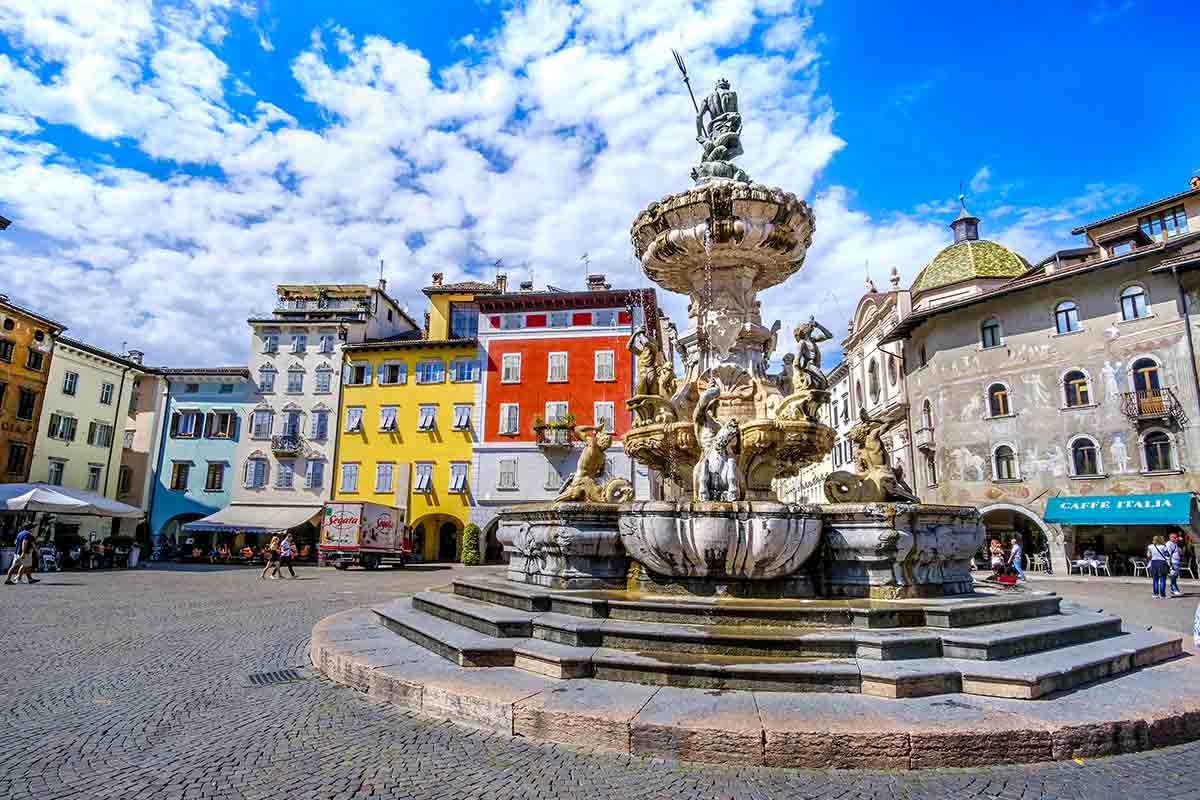
asburgica, poi italiana, ancora oggi riemergono ogni tanto conflitti e tensioni tra le due parti che non si sono ma integrate del tutto.
Molto più armonico è il rapporto tra la natura, l’architettura e l’arte cittadina, come potrete scoprire iniziando la vostra visita da Piazza Duomo con la Basilica di San Vigilio, il Palazzo Pretorio e la Torre Civica, con alle spalle le verdi montagne del Trentino.
Poi ci sono musei importanti dentro e fuori città, come il Muse e il MART di Rovereto e basta fare pochi chilometri per ritrovarsi immersi in una natura intatta, spettacolare non solo per chi ama gli sport invernali ma anche per chi vuole semplicemente godersela con lo sguardo.
In questa pagina vi consigliamo le 10 cose da fare e vedere a Trento.
Where to stay on Lake Garda
H
l Lago di Garda è una meta del turismo internazionale, amata da persone comuni e Vip di tutto il mondo.

Star del cinema, artisti, ricconi vari hanno comprato una casa da queste parti o decidono di passarci una parte delle proprie vacanze. L’accoglienza turistica è di gran livello, con più di 2100 strutture disponibili. Nei mesi primaverili ed estivi c’è una forte affluenza di turisti italiani, stranieri e scolaresche, quindi conviene prenotare in tempo. In autunno il tempo è più fresco e gli hotel meno affollati, quindi è il periodo ideale per godersi il Lago di Garda in pace e senza fretta.
Se cercate un hotel vi consigliamo Booking.com. Più di 380 hotel con descrizioni, foto, prezzi e commenti di chi ha già soggiornato. Vai a Booking.com