There are two ways to visit Venice: you can follow the stream of hurried visitors who, in just a few hours, complete a fixed itinerary chosen by around 20 million people every year, or you can step away from that route and try to discover a Venice that is less postcard-perfect and far more real.
We believe you can do both: walk to St Mark’s Square, enjoy the thrill of finding yourself there, in a place you have seen countless times in photographs, or climb the Rialto Bridge to admire the Grand Canal and wrestle with the crowd for a souvenir photo.
But you can also move beyond the clichés about Venice and discover that there are extraordinary places even in a city that is already, in itself, utterly out of the ordinary. And you can only do this by going inside the palaces, not simply admiring their façades.
That is what happens when you enter the Gallerie dell’Accademia, the Scuola Grande di San Rocco or the Basilica dei Frari: you discover magnificent works and refined architecture that tell the true story of Venice, the one too often hidden behind postcard tourism. On this page we recommend the 10 essential things to see in Venice during a weekend or a longer holiday. It is necessarily a selective list, but we think it contains the very best.
If you are looking for a hotel in Venice, we recommend choosing from the options available on Booking.com. There are around 450 hotels, with prices, photos and reviews from guests who stayed before you. Go to Booking.com.
St Mark’s Square
1
St Mark’s Square is the first place that comes to mind whenever Venice is mentioned. The vast open space overlooked by the Basilica, with pigeons waiting for crumbs, is perhaps the most famous image of the city.

Before the arrival of the relics of St Mark and the subsequent construction of the Basilica, this area was simply a large vegetable garden, crossed by the Rio Batario, later filled in by order of Doge Vitale II Michiel.
St Mark’s Square is the only large open space in Venice that has the privilege of being called a “piazza”; all the other spaces of this kind are called “campi”.
During the years of the Venetian Republic it hosted fairs, tournaments, processions and bull hunts; today it is surrounded by very expensive cafés, where you can sit and watch visitors from all over the world pass by, visibly astonished by so much beauty.
Find out more about St Mark’s Square in Venice
Doge’s Palace
2
Venetians are deeply attached to this palace because it is the guardian of their history and the setting for many of the city’s most important events.
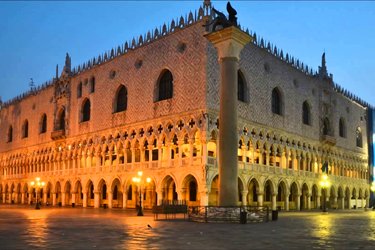
The Doge’s Palace stood exactly where it stands today during the years of the Republic; it survived the successive dominations and was still standing when Venice was annexed to the Italian state.
A constant and faithful presence in the city of Venice, the style of the Doge’s Palace has changed many times, largely because of a long series of terrible fires that brought significant transformations over the centuries.
The political importance of the palace, which housed the Doges of the Republic of Venice, was also underlined by Napoleon Bonaparte when, in 1797, he made it the centre of his administration after conquering the city. The historical importance of the Doge’s Palace is also proven by the large sum paid by the newly formed Italian state to fund a complete restoration of the building.
Despite the heavy deficit of unified Italy, which had taken on the debts of all the former states absorbed under the tricolour, no expense was spared in giving one of Venice’s most important symbols a renewed appearance.
Opening hours and ticket price for the Doge’s Palace
Opening hours: every day from 10:00 am to 6:00 pm; last admission at 5:00 pm.
Ticket price: one combined ticket, €25, for the Doge’s Palace and the integrated itinerary of the Museo Correr, the National Archaeological Museum and the Monumental Rooms of the Biblioteca Nazionale Marciana.
How to get there: on foot, following the flow of visitors.
Vaporetti
From Piazzale Roma: Line 1, Vallaresso or San Zaccaria stop; Line 2, Giardinetti stop; Line 5.1 or Line 4.1, San Zaccaria stop.
From Venezia Santa Lucia railway station: Line 1, Vallaresso or San Zaccaria stop; Line 2, Giardinetti stop; Line 5.1 or Line 4.1, San Zaccaria stop.
From the Lido di Venezia: Line 1, Vallaresso or San Zaccaria stop; Line 5.2, San Zaccaria stop.
Find out more about the Doge’s Palace in Venice
The Grand Canal
3
Venetians call it the Canalazzo, but this is not a dismissive nickname: it is simply their way of referring to the Grand Canal.
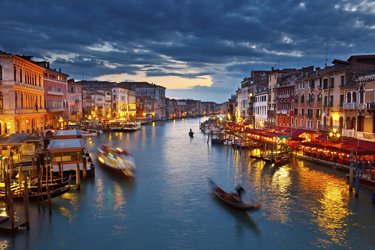
The Grand Canal runs through Venice for a full 4 kilometres, dividing the historic centre in two. Much older than the city itself, the canal has the shape of a reversed S and in some places reaches a depth of 5 metres.
Its width varies depending on the area of the city; in some places it is as much as 70 metres wide. If you want to see and admire Venice from a different perspective, take a tour along the Grand Canal, from Santa Lucia railway station to St Mark’s Square, for a truly magnificent view.
The palaces overlooking the Grand Canal all face the water, and during the ride they seem almost to compete for the attention of visitors.
As you observe the beauty of the palaces, the harmony of the buildings and the narrow alleyways glimpsed while the boat slowly moves towards St Mark’s Square, you will understand why Venice has always been one of the most loved cities in the world.
Find out more about the Grand Canal in Venice
The Rialto Bridge and the other bridges
4
Counting them one by one is not easy, because Venice has no fewer than 354 bridges. The lagoon city has an intense relationship with its bridges: it desperately needs them to connect different areas and make moving around a little easier.
Venetians have turned a necessity into one of the city’s most distinctive features: Venice is unmistakable precisely because of all these little “half-moons” crossing its canals.
The most celebrated is perhaps the Bridge of Sighs, although not everyone knows that its name does not come from the languid sighs of lovers passing beneath it and promising eternal devotion.
The sighs that gave the bridge its name are said to have been those of condemned prisoners being led to the nearby cells, taking one last look at the city and giving in to despair.
The Rialto Bridge
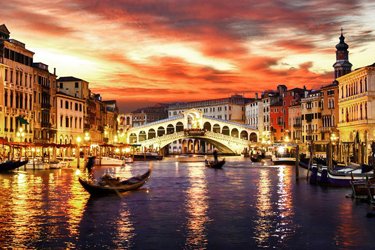
The Bridge of Sighs rivals the Rialto Bridge in fame, proudly spanning the Grand Canal. In 1593, the Rialto Bridge replaced the ancient wooden pontoon bridge that allowed people to cross towards the busy Rialto market. Today the bridge, covered by arcades, is packed with tourists and vendors, and is one of the most photographed places in the world.
The recent bridge that sparked controversy
The most recent bridge in Venice, the striking Constitution Bridge, was designed and built by the great Spanish architect Santiago Calatrava.
Commissioned in 1997, the bridge had an elephantine gestation period because of design errors and doubts about its stability. It opened to the public in 2008 and received final technical approval only one year later.
Find out more about the bridges of Venice
The Gallerie dell’Accademia
5
The Gallerie dell’Accademia house the richest collection of Venetian and Veneto paintings, from Byzantine and Gothic fourteenth-century art to the masters of the Renaissance.
A few names are enough to convey the quantity and quality of the works kept in a complex that brings together the church of Santa Maria della Carità, the monastery of the Lateran Canons and the Scuola Grande di Santa Maria della Carità: Bellini, Carpaccio, Giorgione, Veronese, Tintoretto and Titian, Tiepolo, together with the great eighteenth-century view painters Canaletto, Guardi, Bellotto and Longhi.
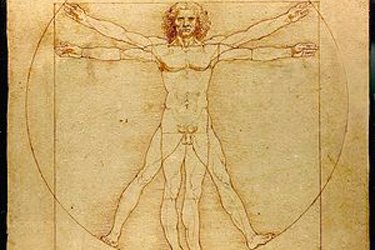
There are also works by Mantegna, one by Piero della Francesca, Crivelli, Luca Giordano, Memling and others. The museum also holds one of Leonardo da Vinci’s great masterpieces, the Vitruvian Man, although it is exhibited only very rarely because light would fade the ink.
Opening hours and ticket price for the Gallerie dell’Accademia
Opening hours: Tuesday to Sunday, 8:15 am to 7:15 pm. Monday, 8:15 am to 2:00 pm.
Ticket price: €12.
How to get there: Palazzo Venier dei Leoni, Dorsoduro 701.
Vaporetti
From Piazzale Roma or the railway station: vaporetto line 2, towards Lido, Accademia stop; vaporetto line 1, towards Lido, Accademia or Salute stop.
From St Mark’s Square: vaporetto line 2, towards Piazzale Roma, Accademia stop; vaporetto line 1, towards Piazzale Roma, Salute or Accademia stop.
Find out more about the Gallerie dell’Accademia in Venice
Peggy Guggenheim Collection
6
The Peggy Guggenheim Collection is Italy’s most prestigious collection devoted to European and American art from the first half of the twentieth century.
In this museum you will find masterpieces by some of the most important and fascinating artists of the period: Pollock, de Chirico, Picasso, Kandinsky, Brancusi and Duchamp.

Particularly interesting is the Gianni Mattioli Collection, assembled by one of the great twentieth-century collectors, with outstanding works by leading figures of Italian Futurism such as Sironi, Carrà, Soffici and Rosai, as well as paintings by Morandi and a beautiful portrait by Amedeo Modigliani.
Palazzo Venier dei Leoni
The museum is located in Venice’s only unfinished palace, Palazzo Venier dei Leoni, bought by Guggenheim to create the greatest museum of modern art of the 1950s.
Peggy spent her life pursuing a single goal: to create a museum that would give proper recognition to avant-garde works from all over the world.
Her passion was not even stopped by the outbreak of the Second World War: during the conflict, Guggenheim continued to travel through Europe, heedless of danger, in search of the works she wanted to include in her prestigious collection.
Peggy Guggenheim’s formidable personality helped make her artists some of the best-known representatives of American Abstract Expressionism.
Opening hours and ticket price for the Peggy Guggenheim Collection
Opening hours: every day from 10:00 am to 6:00 pm.
Closed: Tuesday.
Ticket price: €15.
How to get there: Palazzo Venier dei Leoni, Dorsoduro 701.
Vaporetti
From Piazzale Roma or the railway station:
Vaporetto line 2, towards Lido, Accademia stop
Vaporetto line 1, towards Lido, Accademia or Salute stops
From St Mark’s Square:
Vaporetto line 2, towards Piazzale Roma, Accademia stop
Vaporetto line 1, towards Piazzale Roma, Salute or Accademia stops
Find out more about the Peggy Guggenheim Collection in Venice
The Basilica dei Frari
7
One of the places in Venice that hurried visitors often miss is the Church of the Frari.
This monumental basilica, 102 metres long, has 17 monumental altars and a collection of artworks worthy of the finest museums in the world.

Antonio Canova and Titian are buried here, along with many doges, commanders, the musician Monteverdi and numerous other Venetian figures. In the apse, Titian’s Assumption of the Virgin is astonishing: it is the church’s most important work, together with the Pesaro Madonna, also by Titian.
The works by Bellini — the Frari Triptych and the Madonna Enthroned — and the Deposition by Frangipane are no less remarkable. Do not miss the splendid wooden choir.
Beyond the individual works, what impresses in the Basilica of Santa Maria Gloriosa dei Frari is the light, the arrangement of the artworks as if in a museum, and the monumental power that creates an overall sense of grandeur.
Opening hours and ticket price for the Basilica dei Frari
Opening hours
Monday to Saturday: from 9:00 am to 6:00 pm; last admission at 5:30 pm.
Sunday and solemnities: from 1:00 pm to 6:00 pm; last admission at 5:30 pm.
Ticket price: €3.
How to get there: Campo ai Frari, San Polo 3072. On foot, it is about 15 minutes from the railway station, following signs for Frari-Rialto.
Vaporetti
From the railway station and Piazzale Roma
Line 1 or 2 towards San Marco, San Tomà stop
From St Mark’s Square
Line 1 or 2 towards Ferrovia, San Tomà stop.
The Scuola Grande di San Rocco
8
Tintoretto poured all his mastery into painting the Sala dell’Albergo of the Scuola di San Rocco — and he succeeded, because this cycle of works is universally regarded as the Sistine Chapel of Venice.

The Scuola Grande di San Rocco was the seat of a confraternity of wealthy Venetians devoted to charitable works, and it takes its name from the body of St Roch, preserved here. In 1564, the confraternity entrusted Tintoretto with the decoration of the Scuola.
Over 24 years, the artist and his pupils created a cycle of large canvases in the Sala Terrena and the Sala dell’Albergo.
The works depict biblical episodes and scenes from the life of Christ in an exceptional pictorial journey, almost overwhelming in the scale and number of paintings.
Opening hours and ticket price for the Church of San Rocco
Opening hours: every day, 9:30 am – 5:30 pm
The ticket office closes at 5:00 pm.
Ticket price: €10.
How to get there: Campo San Rocco, 3052.
Vaporetti
From the railway station and Piazzale Roma
Line 1 or 2 towards San Marco, San Tomà stop
From St Mark’s Square
Line 1 or 2 towards Ferrovia, San Tomà stop.
The Church of San Zaccaria in Venice
9
The Church of San Zaccaria stands in Campo San Zaccaria, in Venice’s Castello district, bordering the San Marco area. In practice, it lies very close to the main attractions — the Doge’s Palace, St Mark’s Basilica, the Bridge of Sighs and so on — yet it is often left out of standard Venice sightseeing itineraries.
Dating back to the ninth century, it was built to house the relics of St Zechariah, father of John the Baptist, donated to Venice by the Byzantine emperor. The appearance we see today dates from the second half of the fifteenth century.
Its style is Venetian Renaissance. The façade features sculptures and bas-reliefs, among which the statue of the saint stands out.
The three-nave interior contains a mosaic floor of Byzantine origin and, because of the richness of the artworks inside, almost feels like a museum. Among the highlights are Giovanni Bellini’s San Zaccaria Altarpiece, paintings by Palma il Vecchio, Tiepolo and noted artists of the fifteenth and sixteenth centuries.
Also worth seeing are the Chapel of San Tarasio, also known as the Golden Chapel, with a cycle of fifteenth-century frescoes; the urn containing the body of St Zechariah; the tomb of the sculptor Alessandro Vittoria; and the Chapel of Sant’Atanasio, once the nuns’ choir, since a Benedictine convent originally stood beside the church.
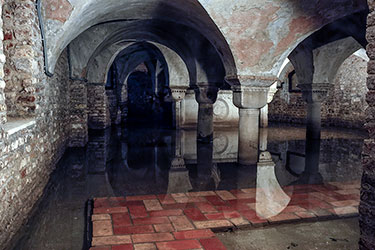
But the attraction that, more than any other, has made the Church of San Zaccaria famous is the “flooded crypt”, dating from the tenth century. Its peculiarity is that for much of the year the floor is covered by lagoon water. The crypt can be visited by walking along a raised walkway.
Opening hours and ticket price for the Church of San Zaccaria
Opening hours: Mon-Sat: 10:00 am-12:00 pm and 4:00 pm-6:00 pm. Sunday: 4:00 pm-6:00 pm.
Ticket price: free. A €3 contribution is requested to go down into the crypt and visit the Chapel of San Tarasio.
How to get there: vaporetto line 5.1, San Zaccaria stop. The church is just a few steps from the vaporetto stop.
The Scala Contarini del Bovolo in Venice
10
Climbing the Scala Contarini del Bovolo is a lesser-known Venetian experience and certainly not always at the top of the list of things to see in the lagoon. But there are just over one hundred steps to reach the highest point and enjoy the view from an unusual perspective, so we recommend going.
There are better views in the city — some cheaper, even free — but the Scala Contarini is worth appreciating for the charm of “secondary” and unusual places, away from the more celebrated attractions.
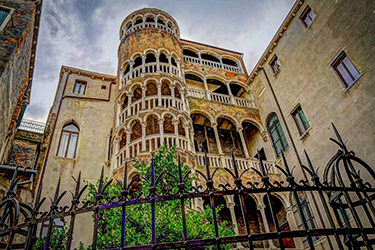
It is one of those places you have to look for deliberately, not because it is not famous enough, but because it does not have the “privilege” of overlooking the Grand Canal or the main thoroughfares.
With a little sense of direction and the right measure of curiosity, finding it in the maze of narrow calli in the San Marco district near Campo Manin will be a real pleasure. Did you know that the Venetian word bòvoło means spiral staircase?
Now for the history. The staircase was added to Palazzo Contarini — which dates back to the fourteenth century — only later, at the end of the fifteenth century.
Legend says that Pietro Contarini had it built so he could ride on horseback up to his bedroom on the top floor of the building. That is only a legend; what we know for certain is that it was designed by the architect Giovanni Candi to create access to the loggias on the palace’s four floors.
You do not need to be an architecture enthusiast to appreciate the details of the Scala Contarini, which is worth a stop even from the outside. If you decide to climb it, expect a distinctive view over the rooftops of Venice and, in addition, a small contemporary art exhibition.
Opening hours and ticket price for the Scala Contarini
Opening hours: open every day except 25 and 26 December and 1 January. Winter opening hours: 9:30 am to 5:30 pm; summer opening hours: 10:00 am to 6:00 pm
Ticket price: full ticket €8; reduced ticket for visitors aged 12 to 26 and over 65: €6; free for children up to 11 years old.
How to get there: from Piazzale Roma: Line 1, “Rialto A” stop.
From Venezia Santa Lucia: Line 2, “Rialto C” stop.
What to eat in Venice
M
In lagoon cuisine, the pleasure begins with the starters, which are undoubtedly one of the great strengths of the menu.

The counters of the bacari, Venice’s traditional wine bars, are a feast for the eyes and the palate, piled high with cicchetti, the typical Venetian small bites to enjoy with an ombra de vin, a glass of local wine.
All that remains is to choose your favourite among vegetables, crab, soppressa with polenta or half an egg with anchovies. Among first courses, one of the most typical dishes is undoubtedly the famous risi e bisi, known elsewhere as risotto with peas, which the Doges ate on 25 April in honour of the city’s patron saint.
Also excellent are spaghetti with clams, or spaghetti cooked with squid ink, always using rigorously local fish. Around here, pasta e fagioli — pasta and beans — enjoys a mysterious devotion and is found both in homes and in taverns throughout Venice.
To complete your lagoon lunch, choose a main course: not to be missed, though only for strong stomachs, is Venetian-style liver, distinctive for the generous quantity of onion with which it is prepared, accompanied by a taste of castrature, the typical artichokes grown on the islands of the lagoon.
Where to stay in Venice
H
Almost 20 million tourists pass through Venice every year. Most do not stay overnight, but leave after just a few hours of sightseeing.

Despite this form of tourism, which does not fill hotel rooms, finding a place to stay in Venice can be very difficult, especially in spring and during Carnival. Even if you do find one, expect to spend a considerable amount and do not necessarily expect ultra-luxury rooms. Local hoteliers know that visitors are willing to pay a great deal and accept relatively little just to experience the lagoon city. A standard three-star hotel can cost as much as €150 per night, while the more luxurious hotels can become truly expensive. The cheaper hotels and B&Bs are found on the mainland in Mestre, which is perfectly connected to Venice and allows you to reach the lagoon city’s main monuments in just a few minutes. It may be the less romantic solution, but it is certainly the most convenient.
If you are looking for a hotel, we recommend choosing from those available on Booking.com. There are around 450 hotels, with prices, photos and reviews from guests who stayed before you. Go to Booking.com