
Ecco la traduzione in inglese del testo allegato.
Do not trust anyone who tells you that just a few hours are enough to get to know Parma. It is not a stopover destination to be dismissed with a quick walk around the centre: it is a beautiful Italian city, rich in important monuments, several churches not to be missed, an excellent museum and a cuisine that everyone should try at least once in their lifetime.
Start your visit from Piazza del Duomo, one of the most beautiful — though less well-known — squares in the world.
Not far away is the Palazzo della Pilotta, which allows you to visit two masterpieces in one go: the Teatro Farnese and the National Gallery, with works by Fra Angelico, Leonardo da Vinci, Guercino, El Greco, Tintoretto, Tiepolo, Van Dyck and many others.
Correggio and Parmigianino deserve a separate mention. The former reached the peak of his art by painting the dome of the Cathedral and that of the Monastery of San Giovanni; the latter, instead, went mad in his search for perfection while working on the frescoes of the Basilica of Santa Maria della Steccata.
These are just some of the 10 things to see in Parma; you can discover the others by reading this page.
If you are looking for a hotel in Parma, we recommend choosing from those offered by Booking.com. There are around 60 hotels with prices, photos and reviews from previous guests. Go to Booking.com
Piazza Duomo in Parma
1
Piazza del Duomo in Parma is one of the most beautiful squares in Italy, and perhaps in the world. In a harmonious and perfectly preserved setting, the Cathedral, the Baptistery and the Bishop’s Palace create a unique backdrop and tell 1,000 years of history of this Emilian city.

The Cathedral is considered the finest example of Lombard Romanesque architecture and, because of the long history of its construction, it is a true encyclopaedia of styles. Begun around 1100, in 1526 Correggio created an extraordinary cycle of frescoes in the great dome, inspired by the theme of the Assumption of the Virgin. The other protagonist of the square is the Baptistery, built by Benedetto Antelami at the end of the 12th century.
Where it stands there was once a stream that served to feed the large internal baptismal font. The exterior of the Baptistery is made of pink marble from Verona, with an octagonal shape — eight being the day of Christ’s Resurrection — and decorated with a zoophorus, a large band featuring real and imaginary animals.
The whole exterior is a story told through images: the life of Jesus and Mary, John the Baptist, death and resurrection, just as the decorations of the interior dome depict Jerusalem after the end of the world, with the apostles and evangelists. An unmissable masterpiece. The last protagonist of the square is the Bishop’s Palace, today the bishop’s residence and home to the Diocesan Museum.
The museum route follows a chronological path through the history of Christianity in Parma. The main figure in the museum is the sculptor Antelami, to whom it is dedicated. On display are “l’Angiolen dal Dom”, the original statue of the one placed on the Cathedral bell tower, the two statues of the archangels Gabriel and Michael that decorated the Baptistery, the two prophets also once placed at the northern entrance door of the Baptistery, and finally the statues of King Solomon and the Queen of Sheba.
Opening hours and ticket price for the Cathedral, Baptistery and Museum
Cathedral opening hours: every day from 8 a.m. to 7 p.m.
Ticket price: €12 with compulsory booking.
Baptistery opening hours: every day from 10 a.m. to 6 p.m. — last admission 5:30 p.m.
Ticket price: €12 and includes admission to the Diocesan Museum and the Antelami in Parma exhibition.
Museum opening hours: every day from 10 a.m. to 6 p.m. — last admission 5:30 p.m.
How to get there: on foot in Parma’s historic centre.
San Giovanni Evangelista in Parma
2
The Monastery of San Giovanni Evangelista consists of the church, the convent and the Ancient Pharmacy of San Giovanni. The church was largely frescoed by Correggio, who reached his peak in the decoration of the dome: with an extraordinary perspective effect, the artist created an imaginary open sky, on whose clouds the apostles rest, with the figure of Christ at the centre.

The figure of Saint John is barely visible on the cornice of the dome, below the circle of apostles, and can only be seen from the presbytery. From outside, visitors can access the Monastery, with its four cloisters, and above all the wonderful Pharmacy — or spezieria — of San Giovanni. Active only for the monks from 1201, it represents a true journey through the history of medicine.
In the first room, called the “Fire Room”, you can still see the ancient counters used for sales and the scales used to weigh ingredients preserved in ceramic and wooden jars. In the second room — the Mortar Room, herbs and minerals were prepared. The third room — the Sirens Room contains valuable medical publications. In the fourth room — the Well Room or Alembic Room, there was the actual laboratory and access to the well, with water, and to the cellar where ingredients were stored.
Opening hours and ticket price for San Giovanni Evangelista
Opening hours:
Church: Monday to Saturday from 8:30 a.m. to 11:45 a.m. and from 3 p.m. to 6 p.m.; Sunday from 3 p.m. to 5:30 p.m. Monastery: Monday, Tuesday, Wednesday, Friday and Saturday from 9 a.m. to 11:30 a.m.; closed Thursday and Sunday.
Ticket price: free.
How to get there: Piazzale San Giovanni 1, behind the Cathedral. On foot in Parma’s historic centre.
The Church of Santa Maria della Steccata in Parma
3
The history of the Basilica of Santa Maria della Steccata began in the late 14th century, when the image of a nursing Madonna appeared on the façade of the oratory and immediately became an object of devotion. So many people came to see it that it became necessary to build a fence: hence the name of the church.
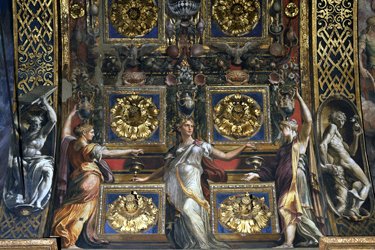
To protect the precious image, still preserved on the altar, this sanctuary was built in the 16th century, and its dome was entrusted to Antonio da Sangallo the Younger.
The masterpiece of the basilica is the underside of the presbytery dome arch frescoed by Parmigianino, his last work before madness: The Wise and Foolish Virgins, whose origin is found in the Gospel of Matthew.
According to the parable of the ten virgins, told by Jesus, ten virgins were waiting for the arrival of the bridegroom, but only five brought enough oil. So, when the bridegroom arrived, the foolish virgins had gone to buy more oil. Only the wise ones, who had brought enough, entered the feast.
Opening hours and ticket price for Santa Maria della Steccata
Opening hours: every day from 7:30 a.m. to 12 p.m. and from 3 p.m. to 6:30 p.m.
Ticket price: free.
How to get there: Piazza Steccata. On foot in the historic centre.
Palazzo della Pilotta in Parma
4
The Palazzo della Pilotta is a monumental complex whose construction was begun in 1583 by Ottavio Farnese, who simply wanted it to be an extension of the nearby Ducal Palace. The first part to be built was therefore a “Corridore”, a corridor connecting it to a courtyard where Spanish soldiers often played “pelota”, from which the name derives.
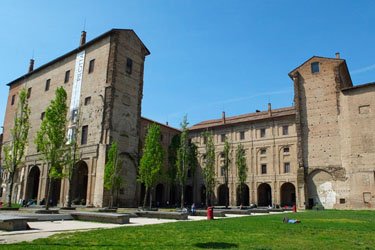
Over the decades, other spaces were added to this first section to house the rich Farnese collection of books and artworks. The upper floors are reached via the Monumental Staircase, built on the model of the one at the Escorial in Madrid. Today the Palace houses the National Archaeological Museum, the Teatro Farnese — see point 6 — the Palatine Library, the National Gallery — see point 5 — and the Bodonian Museum, and overlooks the renovated Piazza della Pace.
Opening hours and ticket price for the Pilotta Complex
Opening hours: every day from 10:30 a.m. to 6:30 p.m.
Closed: Monday
Ticket price: full ticket €12.00 for the entire Pilotta Complex.
How to get there: 10 minutes on foot from the station. Bus: no. 1, 6, 7, 8, 9, 11, 12, 13, 14, 19, 23.
The National Gallery of Parma
5
The Farnese art collection was much richer than the current one, but the last descendant, who became King under the name Charles of Bourbon, decided to transfer it to Naples.
The current collection, still exceptional, consists of paintings purchased in Tuscany from 1734 onwards, those returned to Parma after the French looting, and above all those acquired by Marie Louise of Austria, Duchess of Parma and Piacenza from 1816 to 1847.

The chronological route allows visitors to discover masterpieces from the Middle Ages onwards by Fra Angelico, Correggio — Madonna of Saint Jerome, Martyrdom of Four Saints, Madonna della Scala, the detached fresco with The Coronation of the Virgin — Parmigianino — Turkish Slave — Leonardo — Head of Leda — Cima da Conegliano, Sebastiano del Piombo, Giulio Romano, Dosso Dossi, Carracci, Guercino, El Greco, Van Dyck, Bronzino, Tintoretto, Canaletto, Bellotto and Tiepolo.
Opening hours and ticket price for the National Gallery of Parma
Opening hours: every day from 10:30 a.m. to 6:30 p.m.
Closed: Monday
Ticket price: full ticket €12.00 for the entire Pilotta Complex, including the Gallery.
How to get there: 10 minutes on foot from the station. Bus: no. 1, 6, 7, 8, 9, 11, 12, 13, 14, 19, 23.
The Teatro Farnese in Parma
6
Inside the Pilotta complex there is a theatre that immediately became an example for the whole world. The Teatro Farnese was built between 1616 and 1618 in the southern wing, and was intended by Duke Ranuccio I Farnese to celebrate the stay in Parma of Cosimo II de’ Medici. For the period in which it was built, the theatre is an example of creativity and technique: the stage system was mobile, characters could be lowered from above, and there was an ingenious system for flooding the cavea for scenic purposes.
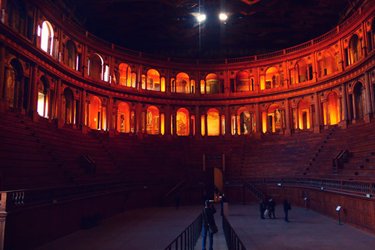
All this grace, however, was of little use: the Farnese family used the theatre only nine times, as a private space, never opening it to the city.
There were therefore very few performances, not even of exceptional quality, apart from the inaugural one in 1628 with music by Monteverdi.
After falling into decline for many centuries, in 1944 a bomb destroyed much of it. Recovered from the 1950s onwards, it was rebuilt according to the original design.
Opening hours and ticket price for the Teatro Farnese
Opening hours: every day from 10:30 a.m. to 6:30 p.m.
Closed: Monday
Ticket price: full ticket €12.00 for the entire Pilotta Complex, including the Theatre.
How to get there: 10 minutes on foot from the station. Bus: no. 1, 6, 7, 8, 9, 11, 12, 13, 14, 19, 23.
Camera di San Paolo in Parma
7
The Monastery of San Paolo in Parma contains a masterpiece of the Italian Renaissance unknown to most people. It is the Camera di San Paolo, or Abbess’s Chamber, frescoed by Correggio in 1519.

The abbess referred to in the name is Giovanna da Piacenza, a wealthy and cultured woman who invited artists and intellectuals to Parma.
The extraordinary nature of Correggio’s fresco lies in its illusionistic effect: the room has an almost cubic shape with a late-Gothic structure, completely hidden by the decorations.
A pergola of intertwined branches and wickerwork, where putti move among Diana — goddess of chastity, with reference to Giovanna da Piacenza — ram heads and mythological figures.
Although it has never been confirmed, it is believed that Correggio drew inspiration from two great Roman works: the Stanza della Segnatura by Raphael in the Vatican Museums and Michelangelo’s Sistine Chapel.
Opening hours and ticket price for the Camera di San Paolo
Opening hours:
open on Easter Sunday, Easter Monday, 25 April and 1 May.
26 and 27 March, on the occasion of I Like Parma, free admission all day
closed from 3 to 5 May
closed from 5 to 7 July
closed from 6 to 8 September closed for works: from 17 October to 14 December 2022
reopening from 15 December 2022 to 16 January 2023 closed for works: from 17 January 2023
Ticket price: full ticket €5.
How to get there: near the Cathedral, in the historic centre.
Teatro Regio in Parma
8
Although it is not as well known as La Scala in Milan, La Fenice in Venice, or San Carlo in Naples, the Teatro Regio in Parma has always been a temple of music in Italy and around the world.
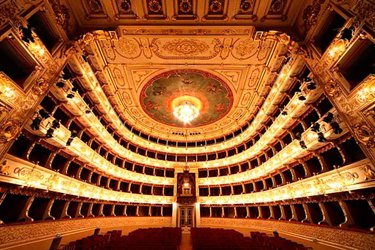
Parma itself has for centuries been considered a “City of Music”, and its enthusiasts are recognised as among the most knowledgeable and demanding in the world. This was also the case on 16 May 1829, the day of the inauguration.
That was certainly not the reception expected by Marie Louise of Habsburg, Napoleon’s wife, who had commissioned its construction. Vincenzo Bellini, who staged Zaira, was showered with boos.
The libretto was inadequate, the music reworked, and the premiere had been postponed for too long. It was a real disaster. The Teatro Regio can be visited with a guide, who explains its history during a 30-minute route through the Foyer, the Stalls and the Ridotto hall.
Opening hours and ticket price for the Teatro Regio
Opening hours:
From 1 September to 30 June
Tuesday to Saturday, from 10 a.m. to 12:30 p.m. — last admission — and from 3 p.m. to 5:30 p.m. — last admission.
From 1 July to 31 July
Monday to Friday, from 10:30 a.m. to 1 p.m. — last admission — and from 5 p.m. to 6:30 p.m. — last admission.
Ticket price: full ticket €4.
How to get there: near the Palazzo della Pilotta, in the historic centre.
What to Eat in Parma
9
When one thinks of Parma’s food, three things immediately come to mind: prosciutto crudo, filled pasta and Parmigiano Reggiano. The world-famous PDO prosciutto crudo, however, is only one of the cured meats that this part of the Po Valley has given us. A few kilometres from Parma is Zibello, where the famous culatello, the finest of cured hams, is made.

Not far away is also Felino, the homeland of salami.
Then there are coppa di Parma, spalla cotta, fiocchetto and so on. Nothing needs to be added about Parmigiano, the most famous cheese in the world.
From the combination of egg pasta, cheeses, herbs, prosciutto, other types of meat and Parmesan come some of Parma’s famous first courses. Anolini, cappelletti and tortelli, as well as tagliatelle and risottos.
Among the main courses, highlights include stracotto di manzo — slow-cooked beef — boiled meats and tripe. Also worth trying is rosa di Parma, a beef roast with Parma Ham, flakes of Parmigiano Reggiano and Lambrusco wine.
Where to Stay in Parma
10
Parma is a city of tourism and business, so it has a good range of hotels in all categories, in the centre but especially outside the city. Prices for hotels in more peripheral areas, even in higher categories, are acceptable: they start from €60 per night.
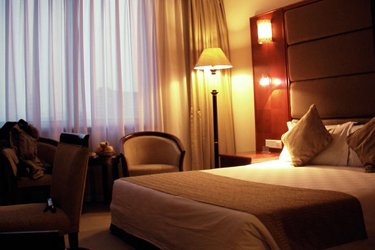
In the historic centre, however, for a good 3-star hotel or higher category, you should budget at least €70 for a room in a 3-star hotel and at least €100 for higher-category rooms.
If you are looking for a hotel in Parma, we recommend choosing from those offered by Booking.com. There are around 60 hotels with prices, photos and reviews from previous guests. Go to Booking.com