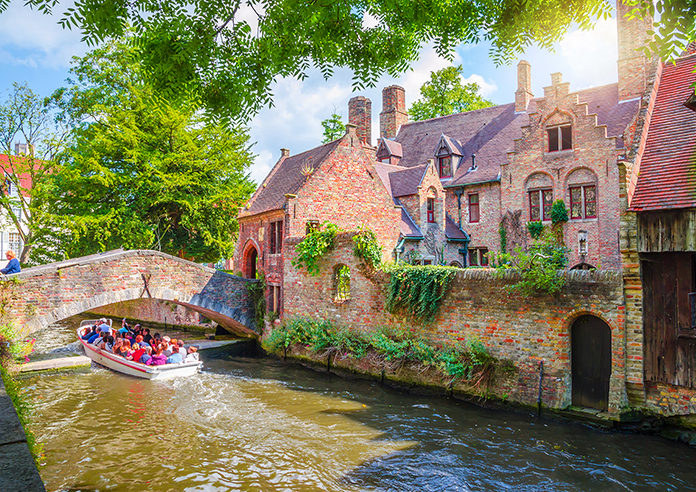
Bruges, in Belgium, is an enchanting town that has managed to preserve its medieval appearance, with brick houses, bell towers and old bridges.
Just a few minutes by train from Brussels, Bruges has an atmosphere from another time: all it takes is a walk through its cobbled streets or a boat ride along the canals to realise it.
It is impossible to remain indifferent to the subtle charm of Bruges: many picturesque corners and postcard-perfect views, as well as plenty of attractions, artistic treasures and monumental buildings that make this beautiful Flemish city a true open-air museum.
The historic centre, declared a UNESCO World Heritage Site, is splendid. It develops around the two medieval cores, the Burg and the Markt, where sites of great interest can be found. Fascinating lace and embroidery shops, precious art collections — the Flemish Primitives are very much at home here! — the timeless Beguinage, a place of prayer and meditation, and the emblematic, romantic Lake of Love all add to the city’s appeal.
But Bruges is not only about monuments and attractions, because its food is also not to be missed: beer, chocolate and French fries are the three main stars. On this page we recommend the 10 things you absolutely must do and see during your visit to Bruges.
If, on the other hand, you are looking for a hotel, we recommend Booking.com. Around 220 hotels with photos, services, prices and reviews from people who have already stayed there. Go to Booking.com.
The Markt in Bruges
1
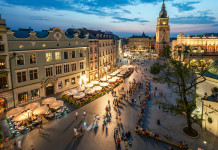
The Grote Markt, or Market Square, was the commercial centre of Bruges in the medieval period. Today it is the heart of the city and one of its main tourist attractions.

The Markt is lined with characteristic houses with pointed gables, once the headquarters of the guilds — today occupied by restaurants and cafés — and by the general markets dating back to the 1200s, the Hallen, dominated by the massive bell tower.
Rising proudly 83 metres above the historic centre, the Belfort, the symbol of Bruges and a UNESCO World Heritage Site, dominates the skyline.
Three hundred and sixty-six steps of a steep staircase lead to the top of the bell tower, which contains an impressive clock mechanism, a manually operated carillon with 47 bells, and offers a splendid view over the city and its surroundings.
On the eastern side of the square are the neo-Gothic Provincial Palace, seat of the provincial administration, and the Bruges post office building, a finely crafted red-brick building. The statues in the centre of the Markt depict Jan Breydel and Pieter de Coninck, two heroes of the Flemish uprising against French occupation, the Battle of the Golden Spurs in 1302.
Opening hours and ticket price for the Belfort of Bruges
Opening hours:
The Belfort is open every day from 9:30 to 17:00.
Closed: 1 January, Ascension Day and 25 December.
Full ticket: €14; reduced €7.
Children under 6 enter free of charge.
Free with the Brugge City Card.
How to get there: on foot in the historic centre.
The Burg in Bruges
2
The Burg is one of the main squares in Bruges. Once, the fortified castle, or burg, stood here, built to protect the settlement from Viking attacks, along with the church of Saint Donatian, the main sacred building in Bruges.
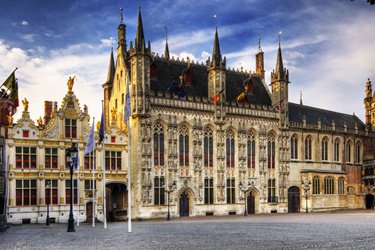
The square was the administrative and religious heart of Bruges and, although nothing remains of those two buildings, the beautiful historic buildings that surround it still bear witness to its importance.
First among them is the 14th-century Gothic Town Hall, or Stadhuis, one of the oldest in the Low Countries, with spires, turrets and a façade dotted with windows and splendidly decorated.
An absolute masterpiece is the Gothic Hall from 1400, with its late 19th-century wall paintings illustrating the most important events in the history of Bruges, and its polychrome vault.
Next to the Town Hall is the former Civil Registry, in Renaissance style, which houses the Historic Museum of the Brugse Vrije, with its monumental fireplace made of wood, alabaster and marble in honour of Charles V.
The Proosdij, or Provost’s House, the former residence of the provost of Bruges, is Baroque, while the current façade of the Palace of Justice, which replaced the 15th-century one, is in the classical style of the 18th century.
Opening hours and ticket price for Bruges Town Hall
Opening hours:
The Town Hall is open every day from 9:30 to 17:00.
Closed: 1 January, Ascension Day and 25 December.
Full ticket: €4; reduced €3.
Children under 6 enter free of charge.
Free with the Brugge City Card.
How to get there: on foot in the historic centre.
The Basilica of the Holy Blood in Bruges
3
For about eight centuries, the Basilica of the Holy Blood in Bruges has housed a fragment of the cloth used by Joseph of Arimathea to wipe the blood of Christ after the crucifixion.
The sacred relic is contained in a rock-crystal vial placed inside a small glass cylinder topped with a gold crown at each end. Its veneration is the origin of the historic Procession, the Heilig-Bloedprocessie, which takes place every year on Ascension Day through the streets of central Bruges.

The Basilica of the Holy Blood consists of two distinct parts: the lower Romanesque Chapel of Saint Basil, dating from the 12th century, rather dark and almost without decoration, where the relics of the Greek theologian are kept, and the upper Chapel of the Holy Blood, in Gothic style from the 15th century, enriched with frescoes and illuminated by beautiful stained-glass windows.
Here, one of the side chapels houses, in a magnificent silver tabernacle, the venerated relic of the Most Precious Blood.
According to legend, the Count of Flanders Diederik van de Elzas brought the relic to Bruges during the Crusades in the Holy Land, between 1150 and 1200.
It is more likely, however, that the sacred fragment came from Constantinople, which in 1204 was sacked by the crusader army of Baldwin IX. Outside the basilica, the small Museum houses the reliquary in which the vial of the Holy Blood is placed during the procession, along with other treasures belonging to the church.
Opening hours and ticket price for the Basilica of the Holy Blood
Opening hours:
The church is open every day from 10:00 to 17:00.
Ticket: basilica free, Museum €5.
Children under 12 enter free of charge.
How to get there: on foot in the historic centre.
The Begijnhof in Bruges
4
A protective wall and an 18th-century gateway, strictly closed after 18:30, preserve the tranquillity and peace of the Begijnhof “De Wijngaard”, a group of white houses gathered around a tree-lined garden, once inhabited by the beguines of Bruges and today occupied by nuns of the Order of Saint Benedict.

The Bruges Beguinage “of the vineyard” is one of the few and best-preserved complexes that arose around the 13th century in Flanders, as semi-monastic communities of single and widowed women, often wealthy, dedicated to God.
Like all beguinages, it has been declared a UNESCO World Heritage Site.
It was Margaret of Constantinople, Countess of Flanders, who founded the Begijnhof in Bruges in 1245 in order to bring together the city’s beguines. Inspired by a fervent mystical spirit, the small community of lay sisters led a life of prayer and work, asceticism and charitable activity.
One of the houses has been transformed into a museum to give visitors an idea of the beguines’ way of life. In 1584, a fire destroyed the small 13th-century church. Rebuilt in 1609, it was later renovated in late Baroque style.
Today, as in the past, the Begijnhof remains an oasis of peace in the heart of the city.
Opening hours and ticket price for the Begijnhof
Opening hours:
Begijnhof: every day 6:30 – 18:30.
Museum: Mon. to Sat. 10:00 – 17:00; Sun. 14:30 – 17:00.
Ticket price:
Begijnhof free entry.
Museum: €2.
Free with the Brugge City Card.
How to get there: on foot outside the Old Town. Wijngaardstraat, north of Minnewater.
The Groeninge Museum in Bruges
5
The Groeninge Museum, named after the Groeninge fields in the city of Kortrijk/Courtrai, where in 1302 the Flemish army defeated the army of the King of France, and also known as the Municipal Museum of Fine Arts, offers a rich collection of works of art from the 15th to the 20th century, focusing mainly on artists who lived and worked in Bruges.
The aim of the exhibition is to offer an interesting overview of six centuries of art in the Southern Netherlands.

A magnificent collection of paintings by the so-called Flemish Primitives forms the core of the permanent exhibition and, above all, one of the finest collections of medieval art in Europe.
The Museum in fact boasts several masterpieces by Jan Van Eyck, considered the founder of the Flemish school, including “Madonna with Canon George Van der Paele” and the portrait of his wife “Margareta Van Eyck”; Hans Memling, with the “Moreel Triptych”; Gerard David, with “The Judgment of Cambyses”; and Hugo van der Goes, with “The Death of the Virgin”.
Also interesting is the section dedicated to paintings by Renaissance and Baroque masters — Jan Provoost, Pieter Pourbus, Jacob van Oost and Jan Antoon Garremijn — and to neoclassical masterpieces from the 18th and 19th centuries. The museum collection closes with a fine series of paintings from Flemish Expressionism and several works of post-war modern art.
Opening hours and ticket price for the Groeninge Museum
Opening hours every day 9:30 – 17:00.
Ticket price: €14.
Free with the Brugge City Card.
How to get there: on foot in the historic centre, at Dijver 12.
The Memling Museum in Bruges
6
The old Saint John’s Hospital complex from the 12th century, once a shelter for the sick, the poor and pilgrims in Bruges, today houses the Memling Museum, the hospital museum and the old pharmacy.
Furniture, objects, archives and medical instruments tell the centuries-old history of the hospital and the charitable work of the sisters and brothers of the Sint-Janshospitaal Congregation, who cared for bodies and souls here.

The highlight of the complex, however, is the Hospital chapel, which houses six works by one of the best-known masters of Flemish painting: Hans Memling, who lived and worked in Bruges in the 15th century.
Among the masterpieces commissioned from the painter by the Congregation are the Shrine of Saint Ursula, a wooden casket containing the relics of the saint, made up of six panels telling the story of the young martyr; and the “Altarpiece of Saint John the Baptist and Saint John the Evangelist”, also known as the “Mystic Marriage of Saint Catherine”, created in 1479 and painted for the high altar of the hospital church.
The other works are the “Diptych with Our Blessed Virgin and Maarten van Nieuwenhoven”, “The Adoration of the Magi”, “The Lamentation of Christ” and “Sibylla Sambetha”, a portrait of a woman in typical late 15th-century clothing. Also worth a visit are the old dormitory, the keeper’s room and the pharmacy in the small cloister.
Opening hours and ticket price for the Memling Museum
Opening hours every day 9:30 – 17:00.
Closed: Monday, except Easter Monday and Whit Monday, 1 January, Ascension Day afternoon and 25 December.
Ticket price: €12.
Free with the Brugge City Card.
How to get there: on foot in the historic centre, at Mariastraat 38.
Minnewater Lake in Bruges
7
One of the most characteristic and popular places in Bruges is Minnewater, the lake near the Begijnhof, surrounded by a beautiful park and crossed by a charming bridge dating from 1720, which offers a spectacular view of the towers and pointed rooftops of Bruges.

A romantic place for lovers and an enchanting refuge for those seeking tranquillity, it is no surprise that this oasis of peace and beauty is also known as the “Lake of Love”, since minne in Dutch means love.
Yet its origin is far from poetic: created after the canalisation of the River Reie, the lake was used as a river port and water reservoir for the surrounding canals.
According to a widely accepted theory, this very function, water van het gemeen, meaning “common water”, gave the lake its name.
In addition to the charm and magic of the landscape, Minnewater is also famous for hosting a large colony of swans.
The presence of these beautiful birds along the banks of the lake is linked to an ancient legend. It is said that in 1488 the people of Bruges executed one of the city administrators belonging to the court of Maximilian of Austria.
Since the unfortunate man’s family coat of arms bore the image of a white swan, the emperor punished the citizens by forcing them to populate the city’s lakes and canals with swans for eternity.
Michelangelo’s Church in Bruges
8
The massive 122-metre-high brick tower of the Church of Our Lady, also known as “Michelangelo’s Church”, dominates the skyline of Bruges. Built in Brabantine Gothic style between the 13th and 15th centuries, the Onze-Lieve-Vrouwekerk is a splendid example of the skill and expertise of local craftsmen.
What makes the church famous, however, is the rich collection of art treasures kept inside.
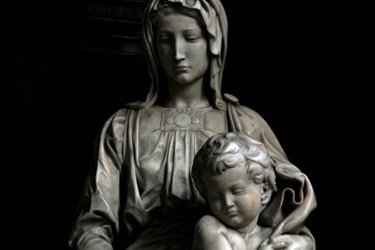
First and foremost, Michelangelo’s “Madonna of Bruges”, an extraordinarily beautiful Carrara marble sculpture placed behind bulletproof glass in the right side aisle.
The small statue of the Virgin Mary with the Child Jesus was purchased in 1506 by the Mouscron family, wealthy textile merchants from Bruges, to adorn the family tomb in the Church of Our Lady.
The only work by Michelangelo in the Low Countries, the sculpture is also notable for being the only one to have left Italy while the great artist was still alive.
Also worthy of mention are the bronze sculptures on the tombs of Charles the Bold and his daughter Mary of Burgundy in the choir, a Transfiguration by Gérard David from 1520, a Passion by Bernard d’Orley and a Virgin of the Seven Sorrows by the Bruges painter Isenbrandt.
Opening hours and ticket price for Michelangelo’s Church
Opening hours every day 9:30 – 17:00.
Closed: Monday, except Easter Monday and Whit Monday, 1 January, Ascension Day afternoon and 25 December.
Ticket price: €7.
Free with the Brugge City Card.
How to get there: on foot in the historic centre, at Mariastraat.
What to eat in Bruges
9
In Bruges there are two “food” museums: one dedicated to chocolate and one to French fries, so this should immediately give you an idea of the two most representative products of the local gastronomy. Together with beer and moules et frites, mussels with French fries, they will be constant guests on every menu you pick up in Bruges.

Flemish gastronomy is a successful mix of French and Belgian dishes. Among seafood products, shrimps, or crevettes, and eels stand out, while among meat dishes there are mixed boiled meats, or hochebot, pork mijoter and beef carbonade cooked with beer.
If meat and fish are not among your favourite dishes, there are plenty of legumes, asparagus and the famous Brussels sprout.
To accompany lunch and dinner, forget wine and get ready to choose your favourite beer from the 1,000 labels available in Belgium!
For sweet moments and a break between one monument and another, you will be spoilt for choice among dozens of chocolate shops where the master chocolatiers at work can very often already be seen through the windows. Resisting is difficult, so do not resist!
Where to stay in Bruges
10Bruges has an excellent selection of hotels, hostels and apartments at medium-high prices. In the historic centre, where the main attractions are concentrated, prices for 3-star hotels are around 60 euros per night, although you will need to be a little flexible.
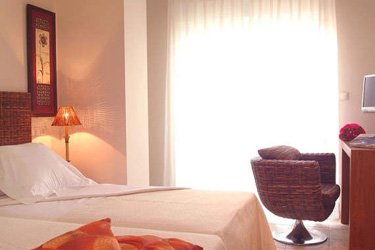
With around 80-100 euros per night, however, there is a wide choice even in the very central Market Square, the Markt.
To go below these prices and save a little, you need to look for accommodation slightly outside the centre, especially in the station area, which is about 20 minutes on foot from the historic centre.
The full range of hotels in Bruges is available on Booking.com. Around 220 hotels with photos, services, prices and reviews from people who have already stayed there.
Go to Booking.com