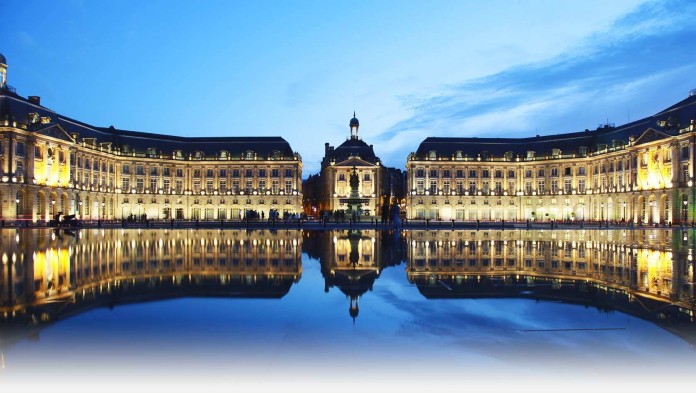
Bordeaux has a name that is inextricably linked to wine, the quintessential “wine” of the world, whose production explains much of the wealth still enjoyed today by this great French city.
All its monuments, therefore, and the things to see are more or less connected to the wine trade: Place de la Bourse, with the building where prices were negotiated; the old warehouses on the River Garonne, now extraordinarily converted into leisure venues. Wine money also explains the two extraordinary churches of Saint-André and Saint-Michel and the Museum of Fine Arts, second in richness only to the Louvre.
In recent years, Bordeaux has introduced significant changes to its urban fabric, without destroying its architectural identity—on the contrary, saving it from certain decline. Thanks to low-cost flights, today it is one of Europe’s most attractive destinations.
On this page, we recommend what to see in Bordeaux during a weekend or a short holiday.
If you are looking for a hotel, we recommend Booking.com. Around 150 hotels with photos, facilities, prices and reviews from people who have already stayed there. Go to Booking.com.
Place de la Bourse in Bordeaux
1
Much of the charm of this square comes from the Miroir d’Eau, the water mirror located a short distance away on the bank of the Garonne. The 2 centimetres of water in what locals call the pataugeoire — a paddling pool — can, when needed, turn into a mist 2 metres high.
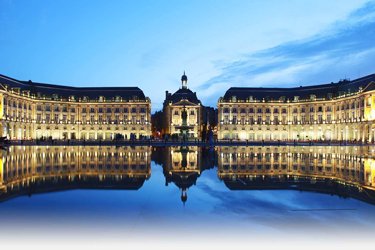
When the sky is dark or in the evening, the symmetrical outlines of the square’s two main buildings are reflected in the water mirror: the Chamber of Commerce, from which the square takes its name, and the Customs Museum, which tells the thousand-year history of trade in Bordeaux.
Needless to say, it is the place most crowded with tourists and also the most photographed. In summer, it becomes a fun way to cool your feet, especially loved by children.
Place de la Bourse was built in 1749 and was named Place Royale because it was a tribute from the people of Bordeaux to the King of France. At the first opportunity, 40 years later, the revolutionaries knocked the King’s statue off his horse and renamed it Place de la Liberté.
After several changes, in 1869 it became Place de la Bourse. At the centre stands a beautiful fountain with 3 female figures: according to some, they represent the rivers Garonne, Dordogne and Gironde; according to others, the Three Graces; and according to others still, three French princesses. Decide for yourself.
Saint-André Cathedral in Bordeaux
2
The most important religious monument in Bordeaux, the Cathedral, was built in 1096 at the request of Pope Urban II.

The beauty of this building lies in its majesty — 124 metres long and 23 metres high — and, above all, in the five chapels that radiate outwards.
For a series of historical reasons, the Cathedral’s main façade is Romanesque, and therefore very simple, while the most beautiful façade is the northern one, with the Royal Portal embellished with bas-reliefs depicting the Last Supper, the Ascension and the Triumph of the Redeemer.
On this side of the Cathedral rise two twin towers 81 metres high. The interior of the Cathedral is not of great interest, except for the Choir.
But even the sober interior has a historical explanation: it was imposed by Geoffrey Loroux (1135-1158), bishop of Bordeaux, who established the strict Augustinian rule, while the other parts reflect the different historical periods in which they were added or remodelled.
In the Cathedral square stands the very tall bell tower dedicated to Pey-Berland, the archbishop of Bordeaux who founded the city’s first university around 1440. At the top, facing the Médoc where Pey-Berland was born, stands the statue of Our Lady of Aquitaine.
Opening hours and ticket price for Saint-André Cathedral
Opening hours:
July and August:
Monday 3 pm-7 pm
Tuesday to Saturday 10:30 am-1:30 pm and 3 pm-7 pm
Sunday 9:30 am-1:30 pm and 3 pm-8:15 pm
All other months
Monday 2 pm-7 pm
Tuesday to Saturday 10:30 am-12 pm and 2 pm-6 pm
Sunday 9:30 am-12 pm and 2 pm-6 pm
Ticket price: Cathedral: free admission. Pey-Berland Tower: adults €6, free up to 25 years old.
How to get there: the Cathedral is located in Place Canteloup in the historic centre and can be reached on foot.
Saint-Michel Church in Bordeaux
3
At 114 metres high, the bell tower of Saint-Michel Church is perhaps the tallest in France. As with the Church of Saint-André, here too the tower is separate from the rest of the building, a very rare feature in Europe.

At the base of the tower there is a crypt that served as an ossuary over the centuries.
When it was decided to remove the cemetery, thousands of mummified bodies were found and housed in the crypt until 1979.
The church was begun in 1350 and continued for over three centuries in the Flamboyant Gothic style.
The interior has 3 naves with 17 chapels dedicated to brotherhoods or guilds, protected by 18th-century railings. One of the most visited chapels is that of Saint James, a stop for pilgrims travelling to Santiago de Compostela.
Opening hours and ticket price for Saint-Michel Church
Opening hours: Tuesday to Friday 2 pm-5:30 pm; Monday, Saturday and Sunday 10 am-12:30 pm and 2 pm-5:30 pm. The bell tower is currently closed for restoration work.
Ticket price: free.
How to get there: the church is located in Place Canteloup in the historic centre and can be reached on foot.
Bordeaux Museum of Fine Arts
4
Travelling around Europe, it is not often that you can enjoy such a rich collection of valuable works of art for just €4.
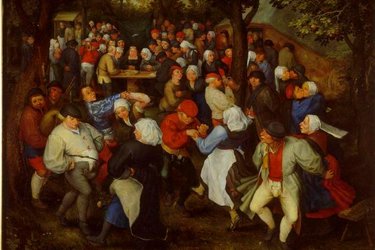
The Bordeaux Museum of Fine Arts, in fact, houses one of Europe’s most important art collections and is, together with the Louvre, one of the most important museums in France.
The collection covers the period from 1400 to 1900, with works by Titian, Veronese, Vasari, Luca Giordano, Rubens and Van Dyck, continuing with a rich 19th-century collection featuring works by Renoir, Matisse, Corot, Delacroix and Matisse, as well as several works by 20th-century artists including Picasso and Kokoschka. A must-see!
Opening hours and ticket price for the Museum of Fine Arts
Opening hours: Every day from 11 am to 6 pm, except Tuesday.
Ticket price: full price €6; reduced €3.50 for university students; free up to 18 years old.
How to get there: the museum is located on Cours d’Albret and can be reached on foot from Place de la Bourse towards the Palais de Justice.
The Grosse-Cloche Gate in Bordeaux
5
If there is one symbol that identifies Bordeaux, it is probably the Grosse-Cloche Gate, the Great Bell. It was built in the 15th century on the remains of the Saint-Éloi Gate, also known as Saint James’ Gate, because pilgrims on their way to Santiago de Compostela passed through here.

The Grosse-Cloche, together with the Porte Cailhau, is one of the most important civic monuments of medieval Bordeaux.
The gate takes its name from the great bell cast in 1775, which is located in the large arch above it. At the foot of the gate stands the small Church of Saint-Éloi — 15th century — with its arched portal.
Used for centuries to announce anything that happened in the city, today the bell rings only once a year: on 11 November, Armistice Day, which commemorates the end of the First World War.
The Garonne Riverfront in Bordeaux
6
It is no coincidence that in 2007 UNESCO decided to declare this bank of the Garonne a World Heritage Site.

It is one of the most beautiful quays in the world, where the old red-brick buildings that once housed warehouses have been perfectly restored and transformed into places for culture, sport and entertainment.
Promenades, parks, gardens, cycle paths, shops, bars and restaurants: with the redevelopment of this side of the Garonne, the lifestyle of the people of Bordeaux has changed.
Just a few metres from the city centre, they can walk, run, leave their children in a playground, or enjoy a peaceful coffee while watching the ships pass along the river.
Rue Sainte-Catherine in Bordeaux
7
It is practically impossible to visit Bordeaux without passing, and passing again, through Rue Sainte-Catherine.

This street, almost 1.2 kilometres long, is considered the longest shopping street in Europe and intersects all the most important streets in Bordeaux.
Rue Sainte-Cath, as the people of Bordeaux affectionately call it, is a true paradise for shopping lovers.
There are almost 3 km of shop windows selling practically everything: from large international chains to small shops with local products, cafés and restaurants.
On Saturdays, during the sales and in the Christmas period, the street becomes a solid wall of people going in and out of its 230 shops. An experience to try, or a nightmare. Decide for yourself!
The Grand Théâtre of Bordeaux
8
Although Stendhal, while visiting Bordeaux, declared that it was “the ugliest theatre in the world”, even he could be wrong! In fact, this theatre is absolutely worth seeing!

The Grand Théâtre is in fact considered, together with those of Paris and the Teatro Regio in Turin, one of the most beautiful opera houses in the world.
Built by Victor Louis during the reign of Louis XVI, it has survived 3 centuries unscathed and has also been used several times as the seat of the National Assembly, when, on various occasions, Bordeaux replaced Paris as the capital of France.
Considered a masterpiece of Neoclassical architecture, the theatre’s exterior features 12 Corinthian columns topped by 12 statues representing the 9 arts, together with Venus, Juno and Minerva.
The interior is magnificent: gold, white and blue — the colours of the kingdom — dominate throughout, with frescoes paying tribute to the arts, artists and the city of Bordeaux.
Opening hours and ticket price for the Grand Théâtre
Opening hours: Tuesday to Saturday 1 pm-6:30 pm; from 15 July to 31 August: 1:30 pm-6:30 pm. Closed on Sunday and Monday.
Ticket price: 50-minute guided tours by reservation from €10 per person at https://www.visiter-bordeaux.com/fr/decouvrir-bordeaux/visite-guidee-du-grand-theatre.html
How to get there: the theatre is located in Place de la Comédie. It can be reached by tram, line B, Grand-Théâtre stop, and lines C and D, Quinconces stop. By bus: lines 2, 3 and 26.
What to eat in Bordeaux
9
There would hardly be any need to explain what to eat in Bordeaux, since the city is one of the gastronomic capitals of the world.

Even less would there be any need to talk about wine, on whose production the city and the region built their fortune.
In the city, therefore, wine is practically everywhere.
But what do the people of Bordeaux usually pair it with? Local cuisine combines ingredients from the French countryside with those from the river and the nearby Atlantic.
So typical dishes include lamproie à la bordelaise — leeks and red wine — a kind of eel from the Garonne, and entrecôte à la bordelaise — onion and red wine.
Caviar from the Gironde is famous all over the world, as are the oysters from the Bassin d’Arcachon, which open every proper Bordeaux lunch or dinner.
From the Atlantic come salmon, lobsters and langoustines. Not to mention foie gras, duck, local cured meats, mushrooms and truffles, and much, much more.
Among the desserts, traditional macarons deserve a prize, but above all canelés — milk, vanilla, sugar, flour, caramel, calories! — and bouchons — almond paste and raisins.
Where to stay in Bordeaux
10There is an embarrassment of choice when it comes to sleeping in Bordeaux. The city, in fact, has an excellent range of hotels, hostels and apartments at “French” prices, but still fairly acceptable.

In the historic centre, where all the main monuments are concentrated, prices for 3-star hotels start from €60 per night. Many options are available in Chambres d’Hôtes in the countryside, just outside the city and among the Bordeaux vineyards. Although it is a little less convenient for reaching the centre, it is the ideal stay for those who want to set off and explore this French region.
The full range of Bordeaux hotels is available on Booking.com. Around 150 hotels with photos, facilities, prices and reviews from people who have already stayed there.
Go to Booking.com