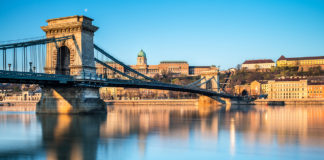
The Castle District (Várnegyed) on Buda Hill was the first historic core of Budapest, and is certainly one of the most fascinating places in the city, one of the things to see in the Hungarian capital. A UNESCO World Heritage Site since 1988, Buda is rich in monuments, churches and museums, and is considered the true soul of Budapest. There are several ways to reach the top of Buda, and one of the most charming is certainly the Sikló, the small funicular built in 1870 — departures every 10 minutes — located at the end of the Chain Bridge in Clark Square. Those who feel up to it and have a sporty spirit can, from the same square, climb the steps of the Royal Stairway.

The Royal Palace, symbol of Budapest
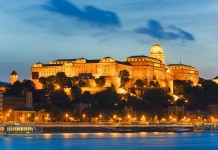
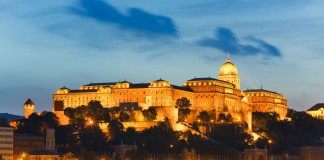
The southern area of Buda is occupied by the Royal Palace, which dominates the city from the top of the hill. The history of the Palace follows the fate of the city. It began as a fortress in the Middle Ages, was transformed into a splendid Renaissance palace under the reign of Matthias Corvinus, was completely destroyed by the Turks and was later rebuilt by the Habsburgs in Neo-Baroque style. More information can be found on our page Royal Palace of Budapest.
Buda Old Town, a small ancient world
The northern part of the district is occupied by the Old Town, surrounded by bastions and defensive walls, which has preserved its medieval appearance intact. The Old Town is accessed through the solemn Vienna Gate — Bécsi Kapu.

Enjoy a pleasant walk through the narrow streets and alleys of this ancient village, admire the colourful Baroque-style houses and decorated churches, and discover beneath the arcades of the buildings the famous “seats” dating back to the age of chivalry: a memory of another time, when the niches with seats carved into the stone were used as shelter from the sun or rain. And when you feel tired, do not worry: there is a wide choice of traditional cafés where you can take a break. Buda is a small city within the city, where you have the feeling of going back in time — despite the crowds of tourists — and where you can find enchanting corners and splendid views.
Matthias Church and other churches in the Buda district
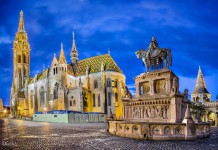
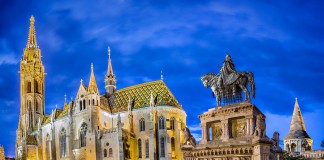
The oldest building in the district is the Church of Mary Magdalene — 13th century — of which only the bell tower with 24 bells remains. However, the real gem is the Matthias Church, built more than 700 years ago in Holy Trinity Square, the district’s main square.
Every era has left its mark on the church. In the square you can also admire the Holy Trinity Column, built by the survivors of the plague epidemics of the 17th and 18th centuries as a sign of gratitude, and the Baroque building of the Old Town Hall.
The Fisherman’s Bastion in Buda

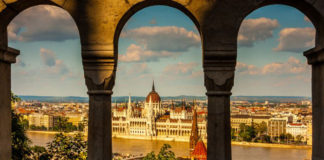
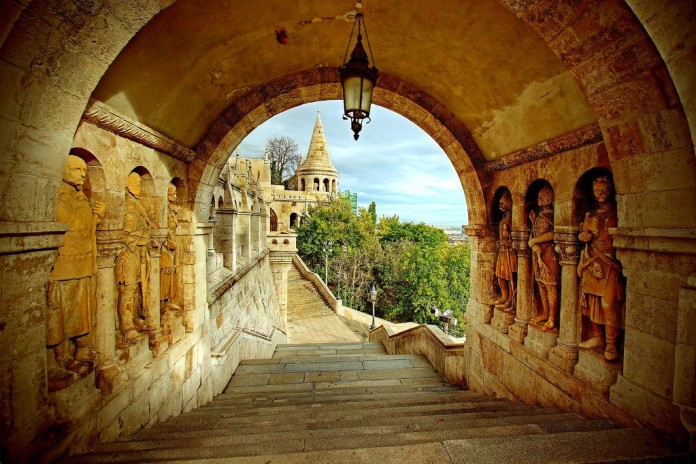
Behind the church stands the Fisherman’s Bastion — Halászbástya — a beautiful panoramic terrace offering a splendid view of the Danube and Pest.
This fairytale-like fortress, built in 1905 in Neo-Romanesque and Neo-Gothic style on the site of the medieval walls, is embellished with cloisters, stairways and seven turrets representing the seven Magyar tribes that conquered the lands where Hungary now stands.
It is still unclear whether the Bastion owes its name to the fish market that was held here in medieval times or to the guild of fishermen who, in the Middle Ages, were responsible for defending this stretch of wall. In front of the Bastion stands the equestrian statue of King Saint Stephen, founder of the Hungarian nation.
Beneath Buda, among prehistoric paintings and thermal springs
Buda’s underground world is just as spectacular. Beneath the hill there is a system of caves and caverns rich in thermal springs, forming a labyrinth more than ten kilometres long. The caves were used as early as prehistoric times, as shown by the paintings discovered there; the Turks used them for military purposes, and during the Second World War they served as air-raid shelters for the inhabitants of Budapest.
Gellért Hill, Buda’s other hill
Castle Hill is not the only high point in Buda. South of the old fortress rises Gellért Hill, a place rich in history and legend — it is said that magical rituals once took place in the woods on the hill — and an extraordinary panoramic spot that attracts many visitors.
The hill takes its name from Saint Gerard, the bishop who, in 1064, was locked inside a barrel filled with nails and rolled down this hill by pagan Hungarians who opposed his work of conversion to Christianity. It is still unclear whether this is legend or fact, but a bronze statue has been placed on the site of his martyrdom in memory of the sacrifice of the missionary bishop.

At the top of the hill stands the Citadella, a defensive structure built by the Austrians after the uprisings of 1848–49 to control the city, although in reality it never performed any military function.
The interior of the Citadella can be visited — 9 am–8 pm; October–April 9 am–5 pm — for a fee, but it can easily be skipped. What is unmissable, however, is the enchanting landscape offered to visitors, among the most beautiful in the city.
Another monument with strong symbolic value is the Statue of Liberation of 1945, dedicated to “those who gave their lives for the independence, freedom and prosperity of Hungary”, commemorating the end of the Nazi occupation.
The 14-metre-high statue depicts a female figure holding a palm branch in her hands stretched towards the sky. At the woman’s feet, a symbol of victory, are two other figures symbolising progress and the fight against evil.
After so much walking, you can treat yourself to a break by stopping at one of the three thermal baths hosted by the hill: the beautiful Turkish-origin Rác and Rudas Baths and the elegant Gellért Bath.