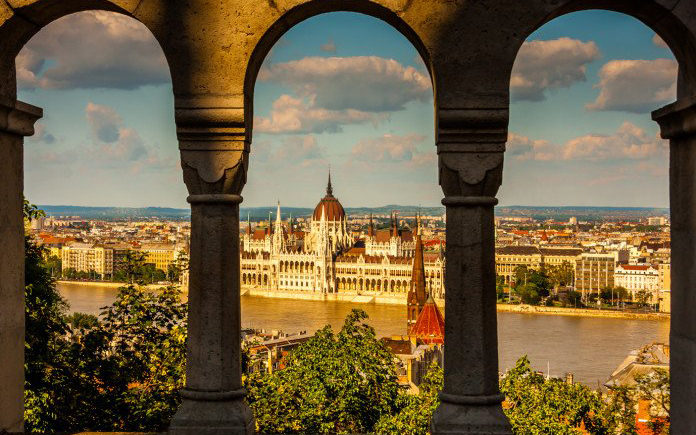
Budapest is not called the “Paris of the East” by chance. The city has many features in common with the French capital, and some views immediately bring Paris to mind: there is a river cutting through the city, overlooked by castles and beautiful buildings, and there is a hill, similar to Montmartre, where you can climb up and enjoy a view over the whole of Budapest.
But the similarities end there: fortunately, Budapest has an identity of its own — perhaps even more than one.
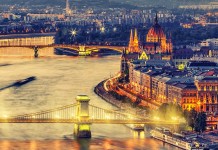
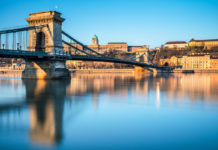
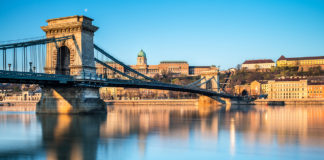
It is no coincidence that Budapest is also the result of three cities: Buda, Pest and Óbuda, connected by the Chain Bridge and seven other bridges, still among the most photographed corners of Budapest today.
For information about the currency, the most dangerous areas, hospitals, pharmacies and useful phone numbers, visit the page with practical information about Budapest.
Three days may be enough to discover the Hungarian capital: from Roman Budapest to medieval Budapest with its Castle, passing through a day on the Danube and a wonderful journey back in time through metro stations that still seem frozen 130 years ago.
So here is what you absolutely must see in Budapest during a weekend or a short holiday.
If, instead, you are looking for a hotel, we recommend choosing among those offered by Booking.com. There are around 2,440 hotels with prices, photos and reviews from guests who have stayed there before you. Go to Booking.com
The Buda District in Budapest
1
The district of Buda was the original core of the city of Budapest.
On this hill and within the walls of the Castle, the inhabitants of Pest took refuge when the Mongol attacks became unbearable.

A beautiful city was born, capable of rivaling nearby Prague and Vienna. Then the Turks arrived, conquering Buda in 1541 and remaining there for almost 150 years.
Buda was transformed: churches became mosques, and minarets and Turkish baths appeared.
In 1686, after 75 days of bombardment, the Austrians liberated Buda, but nothing remained of its former splendor: it was rebuilt while preserving its old appearance.
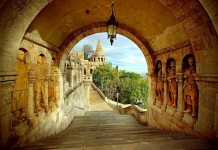
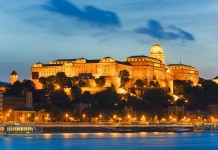
Destroyed again in 1945 and rebuilt once more, today it is home to the Royal Palace, Matthias Church and some very beautiful views.
It is certainly one of the places in Budapest you absolutely must see.
Find out more about Buda
Opening hours and ticket price for the Royal Palace of Budapest
Opening hours: the Castle courtyard is always open. National Gallery from Tuesday to Sunday, 10 am-6 pm. The ticket office closes at 5 pm. Closed on Mondays.
Ticket price: the Castle and gardens are free. The museums require a ticket: 3,200 forints, around €8, but they are included in the Budapest Card.
How to get there: in the upper part of Buda. By funicular, recommended, departing from the Chain Bridge. By buses 16, 16A and 116 from Moszkva Square. On foot via the stairways from the Chain Bridge or along the path next to the funicular. Cost: 1,200 forints; operating from 7:30 am to 10 pm.
Matthias Church
2
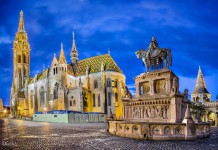
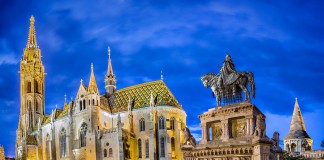
In the heart of Buda, the Gothic spires of Matthias Church rise toward the sky.
Built at the request of King Béla IV in the 13th century, the Church of Our Lady, dedicated to the Virgin Mary, later took its current name in honor of the Hungarian king Matthias Corvinus, an enlightened ruler who had it rebuilt toward the end of the 15th century and celebrated his two weddings here. Notice the royal coat of arms, the raven, on the façade of the tower.
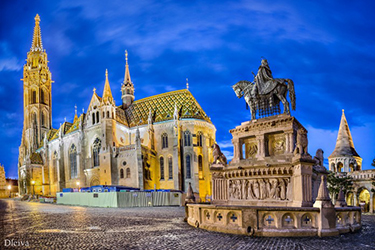
Later modified and enriched, during the Turkish occupation from 1541 to 1686 the Church was converted into a mosque.
In 1896, long restoration works began under architect Frigyes Schulek, after which the sacred building took on its present Gothic appearance, as ordered by Emperor Franz Joseph I of Austria.
Damaged during the Second World War, it underwent restoration for another twenty years.
Opening hours and ticket price for Matthias Church
Opening hours: the church opening hours depend on religious services. Visits alternate with interruptions for Masses. For detailed opening hours, visit the church’s official website, in English.
Full ticket: 1,600 HUF, around €7.
How to get there: Bus: 16, 16A, 116. On foot from the Danube bank. From Adam Clark Square with the Castle Funicular, 200 HUF. From Palota Ut with the lift leading to the Castle.
Find out more about Matthias Church
Budapest Castle
3
Buda Castle, also known as the Royal Palace, is certainly among the things to see in Budapest.
From the top of the magnificent and romantic Buda district, which together with Pest gives the city its name, the Castle dominates the city.

The history of the Palace has accompanied the fate of the Hungarian capital for centuries.
It began as a fortress in the Middle Ages, was transformed into a splendid Renaissance palace under the reign of Matthias Corvinus, was completely destroyed by the Turks, and was later rebuilt by the Habsburgs in neo-Baroque style.
Set on fire and bombed during the war, it underwent a long restoration that gave the Castle a more sober appearance than in the past, while still revealing a combination of different styles and forms.
The Palace was the residence of Hungarian rulers for over 700 years; today, however, it houses museums and cultural institutions and is a UNESCO World Heritage Site.
Opening hours and ticket price for Budapest Castle
Opening hours: the Castle courtyard is always open. National Gallery from Tuesday to Sunday, 10 am-6 pm. The ticket office closes at 5 pm. Closed on Mondays.
Ticket price: the Castle and gardens are free. The museums require a ticket: 3,200 forints, around €8, but they are included in the Budapest Card.
How to get there: in the upper part of Buda. By funicular, recommended, departing from the Chain Bridge. By buses 16, 16A and 116 from Moszkva Square. On foot via the stairways from the Chain Bridge or along the path next to the funicular. Cost: 1,200 forints; operating from 7:30 am to 10 pm.
See on the map where the Castle is located.
Find out more about Budapest Castle
The Pest District in Budapest
4
If Buda is the ancient and noble part of Budapest, Pest is its modern and innovative heart.
Restless and disorderly, it is the perfect counterpoint to the calm of Buda, gathered around its Castle.
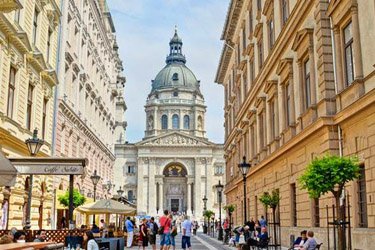
Pest does not have major museums to visit: here, rather, the creative side of Budapest stands out, with small shops run by designers and young artists.
There is still no shortage of things to see: the Parliament Building and St. Stephen’s Basilica, the Great Synagogue and the Ethnographic Museum.
It is also the ideal part of Budapest for shopping: along Andrássy Avenue there is plenty to spend money on.
There is also the House of Terror, used by both the Nazis and the Communists as a place of torture.
See on the map where Pest is located.
Find out more about Pest
St. Stephen’s Basilica
5
St. Stephen’s Basilica in Budapest, dedicated to the first Christian king of Hungary, is the largest church in the Hungarian capital and can accommodate around eight thousand people. It is located in the district of Pest.

Construction lasted more than half a century, from 1851 to 1905, the year it was consecrated.
The long construction period of the church was linked to a series of events: first the War of Independence of 1848-49, which interrupted the excavation works; then the deaths of the two architect-designers; and later the collapse of the dome during a storm in 1868, which forced the builders to demolish everything and start again from scratch.
Opening hours, ticket prices and other information for visiting St. Stephen’s Church in Budapest
How to get there: on foot in the center of Pest.
Metro: red line, Kossuth Lajos tér station
Tram: line 2
Bus: 15
Find out more about St. Stephen’s Church in Budapest
The Óbuda District
6
In addition to Buda and Pest, Budapest has another district that is less famous but absolutely not to be missed, because it is the city’s oldest settlement.
Its origins date back to 35 BC, when the Romans founded the military city of Aquincum, the capital of the province of Pannonia.
In a short time, the military settlement became a wealthy and developed city that reached up to 30,000 inhabitants.
What remains of that past helps us understand its grandeur.
In the area of the archaeological excavations, you can find the remains of public buildings, homes and shops, the macellum, or covered market, the ruins of the basilica and the forum, the large public baths, and the temple dedicated to the cult of the sun god Mithras.
Find out more about Óbuda
The Museum of Fine Arts in Budapest
7
You do not expect to come across such a great art collection in an Eastern European country.
And yet, the Museum of Fine Arts in Budapest has nothing to envy the great museums of the world, such as the Prado in Madrid and the Louvre in Paris.
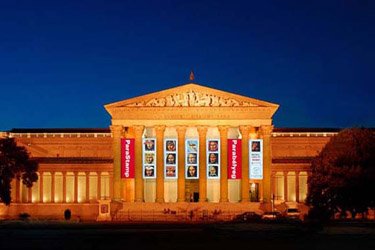
The Museum is divided into six major sections: Greco-Roman antiquities, Egyptian collection, sculptures, casts and drawings, the Old Masters Gallery and the Contemporary Masters Gallery.
The latter two sections preserve works of exceptional richness: Giotto, Tiepolo, Raphael, Titian, Velázquez, Ribera, El Greco, Murillo, Goya, Pieter Bruegel the Elder, Rubens, Van Dyck, Rembrandt, Albrecht Dürer, Lucas Cranach the Elder.
The 19th- and 20th-century collection includes works by all the major French Impressionists, Renoir, Monet, Manet, Delacroix, Gauguin, Cézanne, Picasso and others.
Opening hours and ticket price for the Museum of Fine Arts
Opening hours: Tuesday to Sunday, from 10:00 am to 6:00 pm. Monday: closed.
Ticket price: 3,200 forints, around €9. Included in the Budapest Card.
How to get there: Heroes’ Square, Hősök tere.
Metro M1: Hősök tere
Bus lines 20E, 30, 30A and 105: Hősök tere.
Trolleybus lines 72, 75 and 79: Hősök tere.
Find out more about the Museum of Fine Arts in Budapest
Budapest Statue Park
8
The people of Budapest were clever: while all Eastern European countries took advantage of the end of Communism to tear down statues, venting decades of lost freedom on marble, here they did something better.

They turned these giants into an excellent tool for making use of memory, however painful that memory may be.
They therefore gathered together all the statues representing the great figures of Communism — Marx, Lenin, Stalin, Béla Kun — together with anonymous liberating soldiers of the former USSR, and created a Memento Park of Communism.
If looking the “comrades” in the face is not enough and you want to take a little piece of them home, you can also buy souvenirs from the Cold War years, including pins, badges, T-shirts and vintage cigarettes.
If you are interested, there is a beautiful exhibition on how a Communist spy was trained.
Opening hours and ticket price for Statue Park
Opening hours:
Mon-Sun: 10:00 am-6:00 pm, from May to October,
Mon-Sun: 10:00 am-4:00 pm, from November to April.
Ticket price: 2,200 forints, around €6. Included in the Budapest Card.
How to get there: outside the city center of Budapest. By direct bus from the city center. Departure every day at 11 am from Deák tér, which can be reached by metro lines 1, 2 and 3. You will find a bus marked Memento Park.
To find out more, visit the page dedicated to Budapest Statue Park.
Budapest Thermal Baths
9
It is well known that the Romans had a special fondness for thermal baths: not only did they not miss the chance to enjoy a hot bath in Budapest’s springs, they did even more.
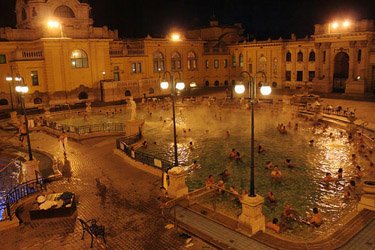
They founded “Aquincum” with grand thermal baths, whose remains can still be seen today in various places in Óbuda.
Since then, Budapest has always been a thermal city and has not lost this characteristic even after becoming a metropolis: today it is the only European capital with thermal baths, and in 1934 it earned the title of “thermal city”.
You can enjoy this long tradition and, above all, 70 million liters of water per day at temperatures ranging from 21 to 78°C, in both large and small thermal baths.
Find out more about the best thermal baths in Budapest.
The Great Synagogue of Budapest
10
Budapest has always had a large Jewish community.
Even today, 22 synagogues are active, many of them in schools, hospitals or private homes.
Right in the heart of the Jewish ghetto stands the largest synagogue in Europe.

Built in 1859 in neo-Moorish style, it can accommodate up to 3,000 people.
In the lower part of the synagogue there are seats for 1,497 men, while on the upper floor there are seats for 1,472 women.
In the garden of the Synagogue, directly above a former mass grave, there is a monument commemorating the Jews killed by the Nazis in 1944-45: it is a willow tree, called the “Tree of Life“, with metal leaves.
The name of a martyr is engraved on each one.
The Great Synagogue also includes the Jewish Museum and Archives, built at the beginning of the 20th century. The complex also includes the “Heroes’ Temple”, a structure built to commemorate all Hungarian soldiers of Jewish faith who died in the trenches of the First World War.
To complete the visit, just a few meters away is the Small Synagogue on Rumbach Sebestyén Street, designed by the Viennese architect Otto Wagner.
Opening hours and ticket price for the Great Synagogue
Opening hours: hours vary depending on the time of year and religious services. Winter 10 am-4 pm, summer 10 am-8 pm.
Closed: Saturday, December 24 and 25.
Ticket price: 5,000 forints, around €14, including the Jewish Museum and Archives. 10% discount with the Budapest Card.
How to get there: Dohány Street, in the historic center. Metro M2, Astoria stop.
Find out more about the Great Synagogue of Budapest
Margaret Island in Budapest
11
Gardens, thermal baths, swimming pools, parks for walking and sports.
Those who visit Budapest in a hurry usually miss a walk around Margaret Island, which is located right in the middle of the Danube and can be easily reached via the bridge of the same name.

The ideal thing to do is rent a bike on site and explore this little island from end to end — after all, it is only 2.5 km long!
Before Margaret Island existed, there were three separate islets: Bath Island, Painters’ Island and Rabbits’ Island.
Joined together with concrete at the end of the 19th century, today they form a single island named after Margaret, daughter of King Béla IV, who withdrew to a monastery on the island after the Tatar invasion.
Today it is the favorite place for locals looking for a few hours away from smog or going for a swim in the thermal waters of the large Palatinus outdoor pool.
Find out more about Margaret Island
The Parliament Building in Budapest
12
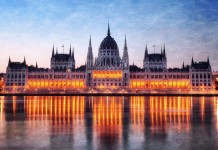
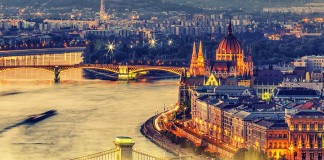
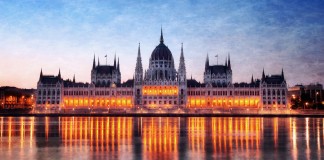
The Budapest Parliament is one of the city’s symbols, perhaps the best known and most photographed.
It was built between 1885 and 1904 by architect Imre Steindl, who drew inspiration from the Houses of Parliament in London and Cologne Cathedral.

The Gothic exterior, imposing with spires, turrets, arches and windows, contrasts with the Baroque and Renaissance styles of the interior.
The great façade on the Danube does not do justice to the overall size of the building: almost 18,000 square meters, 27 entrances and 691 rooms.
There is no doubt that the President of the Republic, the Prime Minister and the members of parliament have quite a fine residence in which to carry out their duties!
Opening hours, ticket prices and other information for visiting the Budapest Parliament
Address: Pest district, Danube riverbank
How to get there: on foot in the center of Pest, along the Danube riverbank. See on the map where the Parliament is located.
Metro: red line, Kossuth Lajos tér station
Tram: line 2
Bus: 15
Trolleys: 70 and 78
Opening hours: every day from 9 am to 3 pm.
Closed: January 1, March 15, Easter and Easter Monday, May 1, August 20, October 23, November 1, and from December 24 to 26.
Ticket price: HUF 2,200 for EU citizens. Tickets can be purchased at the visitor centre.
There is usually a 30-minute queue. Guided tours in Italian depart at: 10:15 am, 1:15 pm, 2:15 pm, 3:30 pm.
Find out more about the Budapest Parliament Building
The Chain Bridge in Budapest and the Funicular
13For centuries, Buda and Pest were two separate cities. Only in spring and summer, when the weather allowed, were they connected by floating bridges, which were then dismantled during the winter.
According to legend, the construction of a permanent bridge was due to Count István Széchenyi, after whom the bridge is officially named.

The count’s dying father was in Buda while he was in Pest: not only was he unable to say his final goodbye, but he had to wait a week before he could attend the funeral.
So he decided to have the bridge designed by English engineer William Tierney Clark and have the works supervised by the Scottish engineer Adam Clark. Construction began in 1839 and ended exactly 10 years later.
The bridge is called this because of the “chains” that decorate its sides and, in reality, it is a larger copy of a bridge, Marlow Bridge, that William Clark had built on the banks of the Thames in Marlow, England.
The lions, symbols of Budapest
At the end of the bridge there are lions and other symbols: according to legend, these sculpted lions have no tongues, which supposedly drove Adam Clark to suicide out of shame. The engineer was very proud of his bridge and challenged anyone to build one more beautiful and larger.
In reality, the lions do have tongues, but this can only be noticed from above. At the time, the bridge was a true marvel: 202 meters long, it was the largest single-span bridge in the world and remained unbeaten for a long time.
It was the retreating German Nazis who blew it up, but it was rebuilt in 1949 for its centenary.
Cars pass through the center and pedestrians along the sides, but very often it is fully pedestrianized and can be enjoyed to the fullest.
On the Buda side, the historic funicular departs for the Castle and the Royal Palace.
What to Eat in Budapest
14
It certainly cannot be described as light cuisine. Meat, potatoes, onion, spices and paprika are the basis of many dishes in Budapest and Hungary.

These high-calorie preparations are mainly justified by the cold climate, which in winter can even reach 50 degrees below zero.
With such cold weather, the body needs calories and the palate needs a little comfort. And so everything begins with fried lard to which paprika is added: it is the basis of everything, including the famous Goulash, the typical dish par excellence.
No two goulashes are the same, because everyone cooks it with their own variation: in any case, meat, potatoes, pepper and paprika must not be missing.
Besides Goulash there are other soups, while the most famous meat dish is pork with, needless to say, paprika and potatoes. There is plenty to try — just be prepared for long digestions.
Where to Stay in Budapest
Budapest is one of Europe’s growing destinations. The development of low-cost flights, still affordable prices and good tourist hospitality explain the success of the Hungarian capital.
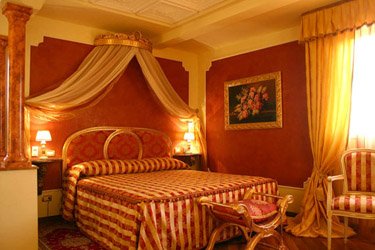
Budapest has been part of the top ten European capitals for years now. The range of hotels, B&Bs and guesthouses is very wide: there are around 2,440 accommodation facilities spread throughout the city. We recommend staying in the central area, which allows you to move around more freely, especially in the evening, although this does have some impact on hotel costs.
To book a hotel in Budapest, we recommend Booking.com. You can choose from around 200 hotels with photos and reviews from people who have already stayed there.
Go to Booking.com