
The best way to start discovering Lucca is to look at it from above. You can do this by climbing onto its mighty walls, going up the Guinigi Tower, or tackling the 207 steps of the even taller Torre delle Ore.
From these viewpoints, you can admire a splendid panorama over the rooftops of this Tuscan town: an overall view that allows you to appreciate its beauty and harmony, and to recognise the same urban layout established by the Romans.
Piazza dell’Anfiteatro already reveals, in its name, what once stood in this space now occupied by one of the most beautiful squares in Italy. The Church of San Michele, also known as San Michele in Foro, stands where the centre of ancient Lucca once was. The two main axes, Via Fillungo and San Paolino, today streets for shopping and social life, follow the lines of the Roman decumani.
Lucca is a welcoming, orderly city, with excellent food and surroundings of unspoilt nature. Also made famous among young people by Lucca Comics & Games, it is often visited too hastily by tourists stopping in the city before reaching Pisa.
Lucca, however, is not a city to be visited in just a few hours. One day is the bare minimum, but it is better to devote at least 3 days to this Tuscan town, so you can enjoy it in the evening too and discover the villages nearby.
On this page, we recommend what you absolutely must see during a holiday or weekend in Lucca.
If you are looking for a hotel, we recommend choosing from those offered by Booking.com. There are about 100 hotels with prices, photos and reviews from guests who stayed before you. Go to Booking.com.
Piazza dell'Anfiteatro in Lucca
1
We do not think we are doing any injustice to other Italian cities if we define Piazza dell’Anfiteatro in Lucca as one of the most beautiful squares in Italy. The first thing to see as soon as you set foot in Lucca, it was built from 1830 onwards by the architect Nottolini, following the ancient layout of the Roman amphitheatre.

The construction sacrificed a large part of the Roman structures, which are partly visible inside the shops surrounding the square.
The harmony of Piazza Anfiteatro is best appreciated from its centre and is largely due to the absence of large openings. Access to the square is through four small arched gateways, which gives it the appearance of an “enclosed square”. The point where the four gateways intersect is marked by a ceramic tile at the centre of the square. The shops, cafés, outdoor tables and weekly market make it the heart of Lucca, an essential place for both locals and tourists to pass through and stop.
Lucca Cathedral
2
The first thing you notice about the Cathedral dedicated to San Martino is the asymmetry of the right side of the façade, which had to adapt to the already existing bell tower. On the polychrome façade, inspired by Pisa Cathedral, there is the statue of Saint Martin in the act of sharing his cloak with a poor man.
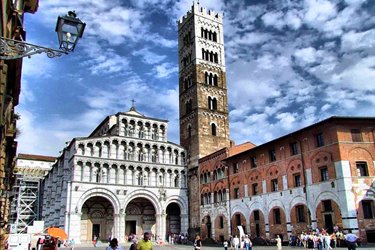
On the right side there is a labyrinth inspired by the myth of Ariadne and Theseus and, symbolically, by the path to be taken in life in search of redemption.
The monument to Ilaria del Carretto and the other works
The interior has three naves and preserves some extraordinary works of art: first of all, the Funerary Monument of Ilaria del Carretto, wife of the lord of Lucca Paolo Guinigi, created by Jacopo della Quercia.
The work most cherished by the people of Lucca is the ancient crucifix of the Volto Santo — or Holy Face — which is said to represent the true face of Christ. According to legend, it was carved by Nicodemus, aided by the grace of God, to hand down the true features of Christ.
After drifting across the Mediterranean, it came to rest in the port of Luni and was brought to Lucca by Bishop Giovanni in 782.
Also not to be missed are the Madonna and Child with Saints Peter, Clement, Paul and Sebastian by Ghirlandaio and the Last Supper by Tintoretto. It is worth climbing up the 60-metre bell tower, from which you can enjoy a wonderful view over Lucca.
The Cathedral Museum of Lucca
Also not to be missed is the nearby Cathedral Museum, with eight rooms, among which the room of the choir books and illuminated manuscripts and the Treasury room with the Jewels of the Volto Santo stand out.
A few metres from the Cathedral there is also the Monumental and Archaeological Complex of the Church of San Giovanni and Santa Reparata. Of the 12th-century church, the monumental portal remains, while inside, works and remains tell the story of the city’s evolution over the centuries.
The walkways that allow visitors to “walk” over the remains of the original 12th-century church are particularly fascinating.
Opening hours and ticket price for Lucca Cathedral
Opening hours
Cathedral: Monday – Saturday 10:00 am – 6:00 pm; Sunday and holidays 12:00 pm – 6:00 pm Cathedral Bell Tower: Every day 10:00 am – 6:00 pm Museum: Every day 10:00 am – 6:00 pm Baptistery and Church of Saints Giovanni and Reparata (archaeological area and bell tower): Every day 10:00 am – 6:00 pm
Ticket price: the combined ticket includes Cathedral + Bell Tower + Museum + Baptistery and Church of Saints Giovanni and Reparata (archaeological area and bell tower) Full price: €9.00 Reduced: €6.00
Official website: Cathedral Museum
The churches of San Michele and San Frediano
3
Like many other Italian cities, Lucca is also known as the “city of 100 churches”. This abundance of places of worship refers not only to visible churches, but also to private chapels attached to palaces, some of which can still be seen.
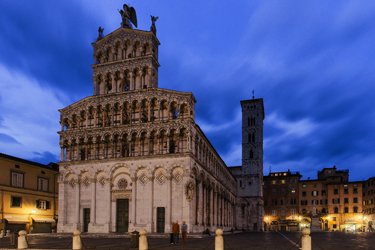
After the Cathedral of San Martino, the two most important churches are those of San Michele and San Frediano.
San Michele is located in the square of the same name, where the Roman Forum once stood.
It is striking for its very tall façade, which rises four metres above the roof and is crowned by Saint Michael the Archangel in the act of slaying the Dragon.
According to legend, there is an extraordinary diamond on the finger of the statue, which can be seen sparkling at night. San Frediano is one of the oldest places of worship in Lucca, founded by the saint after whom it is named. It is remarkable for the mosaic on its façade — something very rare for a Romanesque church — and for the beautiful baptismal font housed inside.
Opening hours and ticket prices for the churches of San Michele and San Frediano
Opening hours:
San Frediano Basilica: every day from 9:00 am to 6:00 pm. San Michele Church: from 7:40 am to 12:00 pm and from 3:00 pm to 6:00 pm.
Ticket price for San Frediano: €3 Ticket price for San Michele: free
How to get there:
San Michele
Piazza San Michele, in the historic centre.
San Frediano
Piazza San Frediano, in the historic centre.
The Walls of Lucca
4
You do not realise the majesty of the Walls of Lucca until you actually set foot on them. It is not so much their height that amazes you — 12 metres — but their length of 4 kilometres and width of 30 metres,

as wide as four motorway lanes!
With all this space available, and without any enemy left to defend against, it was natural for the city to transform this area into a beautiful tree-lined avenue where people can walk, play sports, organise events or simply enjoy the lovely panorama over the city’s rooftops.
The Walls of Lucca: a masterpiece known all over the world
Admired throughout the world for their architectural value, they have always been a subject of study for architects and urban planners: they are, in fact, the only example of defensive walls from the modern age to have survived intact to the present day.
They were built between 1504 and 1645 based on a project by Alessandro Farnese and, fortunately, were never needed to defend the city from a siege. They were, however, very useful in saving the centre of Lucca from the violent flood of the Serchio River on November 18, 1812.
Guinigi Tower and Torre delle Ore in Lucca
5
There was a time, in the Middle Ages, when Lucca had 250 towers of every size. Today, only two remain: the Guinigi Tower and the “Torre delle Ore”.
The Guinigi Tower was commissioned by the wealthy and powerful family of Lucca merchants in the 15th century. It is 45 metres high and has a hanging garden at the top, where beautiful holm oaks have been growing for centuries.
The presence of trees on top of a tower makes it one of the most unusual places in Lucca and in Italy. Their shade is ideal, especially in summer, for recovering from the climb up 230 steps!

The Torre delle Ore
The Torre delle Ore is irresistible for European enthusiasts of time-measuring mechanisms: installed in 1754 by Lucca clockmakers in place of a pre-existing clock, it still works today with manual winding and has its mechanism on display.
Here too, you reach the top after climbing 207 wooden steps, and the view is spectacular, partly because this tower is even taller than the Guinigi Tower.
Opening hours and ticket prices for the towers of Lucca
Opening hours:
Guinigi Tower hours
January-February-March 20: 9:30 am-4:00 pm March 21 – April – May: 9:30 am-6:30 pm (Saturday and Sunday closing at 7:30 pm) June-July: 9:30 am-7:30 pm (Saturday and Sunday closing at 8:30 pm) August – September: 9:30 am-7:30 pm (Saturday and Sunday in August closing at 8:00 pm) October – November-December: 9:30 am-4:00 pm Closed on 25/12
Ticket price: €5
Torre delle Ore hours:
January 1 – March 20: CLOSED
March 21 – May 31: 9:30 am-6:30 pm
June 1 – September 20: 9:30 am-7:30 pm
September 21 – September 30: 9:30 am-6:30 pm
October 1 – November 4: 9:30 am-4:00 pm Closed November 5 – December 31 Ticket price: €5
How to get there: Via S. Andrea. On foot in the historic centre.
National Museum of Palazzo Mansi in Lucca
6
This beautiful 17th-century palace, once owned by the wealthy Mansi family, houses the most important collection of paintings in Lucca.
After passing through the various richly frescoed family apartments — with one notable work being a Holy Family by Van Dyck — visitors enter the picture gallery, with 83 works donated to the city in 1847 by Grand Duke Pietro Leopoldo II after the annexation of Lucca to the Grand Duchy of Tuscany.

The first room
The first room contains large paintings, including The Continence of Scipio by Domenico Beccafumi and The Triumph of David by Rutilio Manetti. The two main works are The Triumph of Galatea by the Lucca-born Pietro Testa and Saint Sebastian by Luca Giordano.
The second room of the Palazzo Mansi Museum
The second room is known as the “Medici Room” because it contains almost exclusively portraits of the Tuscan family.
Among them is the best-known painting in the gallery, the Portrait of a Young Man by Pontormo, representing Alessandro de’ Medici, Duke of Florence, followed by Don Garzia de’ Medici as a child and Cosimo I by Bronzino.
The third room of the Museum
In the third room are small-format paintings mainly dealing with religious themes: the Portrait of a Man by Tintoretto and the Madonna and Child by Francesco Avanzi, the 16th-century copy of the Madonna and Child with Saint Anne and the Young Saint John by Andrea del Sarto, and the Christ Carrying the Cross attributed to Beccafumi. In the fourth and final room there are several Flemish and French paintings.
Opening hours and ticket price for the Villa Mansi Museum
Opening hours:
Tuesday and Thursday: 9:00 am-7:30 pm, last admission at 6:00 pm. Admission only with guided visits at 9:00 am; 10:00 am; 11:00 am; 12:00 pm; 1:00 pm; 2:00 pm; 3:00 pm; 4:00 pm; 5:00 pm; 6:00 pm
Wednesday, Friday and Saturday: 12:00 pm-7:30 pm, last admission at 6:00 pm. Admission only with guided visits at 12:00 pm; 1:00 pm; 2:00 pm; 3:00 pm; 4:00 pm; 5:00 pm; 6:00 pm.
Closed: Monday, the second, fourth and fifth Sunday of the month, January 1st, December 25th
Ticket price: full price €4.00 – reduced €2.00
How to get there: on foot, in Via Galli Tassi 43. From the Church of San Michele, follow Via San Paolino.
Official website: Palazzo Mansi
Piazza Napoleone in Lucca
7
Piazza Napoleone is the largest square in Lucca, but in terms of beauty it cannot be compared to the small and harmonious Piazza dell’Anfiteatro. It stands where the Augusta Fortress and then the Citadel of Lucca, commissioned by Paolo Guinigi, once stood.
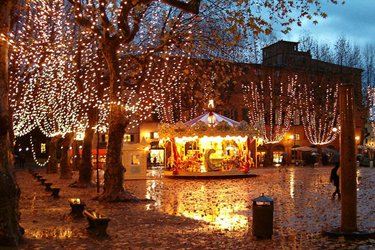
It takes its name from Elisa Bonaparte, sister of the French Emperor, who governed the Principality of Lucca from 1806 and commissioned the architect Lazzarini to create an open space that would enhance the Ducal Palace.
The intervention led to the destruction of old houses, salt warehouses and even the Church of San Pietro Maggiore.
At the centre of the square there was supposed to be a large statue of Napoleon, but after the Emperor’s fall it was replaced by one of Maria Luisa of Bourbon, chosen as regent of the new Duchy of Tuscany.
Today, the Ducal Palace houses the Province of Lucca and the square is a space with shops, bars and restaurants, a meeting place for locals and tourists. If you are in Lucca in July, do not miss the magical nights of the Summer Festival, which takes place in this square.
Giacomo Puccini House Museum
8
You cannot leave Lucca without visiting the birthplace of the composer Giacomo Puccini. An essential entry on the list of things to see, this building in Corte San Lorenzo is where Puccini was born on December 22, 1858. Buying back the house, which his parents had been forced to sell, became one of the obsessions of his life.
Only after the success of the opera Manon Lescaut was he able to fulfil his dream. Today, in this house turned museum, visitors can follow an itinerary through the life and works of the composer of Tosca, Turandot and Madama Butterfly. Scores, photos, posters, sketches: all materials donated first by his widow and later by the Foundation that bears his name.
Opening hours and ticket price for the Puccini House Museum
Opening hours:
March
Monday – Sunday from 10:00 am to 6:00 pm
closed on Tuesday — except holidays
from April 1st to September 30th
Monday to Sunday from 10:00 am to 7:00 pm
from October 1st to November 1st
Monday – Sunday from 10:00 am to 6:00 pm
closed on Tuesday — except holidays
from November 2nd to December 7th
Monday – Friday from 10:00 am to 2:00 pm
Saturday, Sunday and holidays 10:00 am – 5:00 pm
closed on Tuesday — except holidays and November 29th
closed from November 7th to 18th
from December 8th – January 8th
every day from 10:00 am to 5:00 pm
Closed on December 25th
from January 9th to February 28th Monday to Sunday from 10:00 am to 6:00 pm
closed on Tuesday — except holidays
Ticket price: €9. It can be purchased in Piazza Cittadella, 5, or online on the official Museum website. How to get there: in Corte San Lorenzo, on foot in the centre of Lucca.
Palazzo Pfanner in Lucca
9
Just outside the Walls of Lucca there is an extraordinary 17th-century palace with a wonderful Italian-style Baroque garden: Palazzo Pfanner. Usually overlooked by rushed tourist itineraries, it is unmissable for its beauty and history. It was built in 1660 by a wealthy local family, who entrusted the design of the palace to the architect Martinelli and the garden to the Messina-born Filippo Juvarra.

Over the centuries it changed ownership until, in 1846, it became the property of the Pfanner family, beer producers, who built in this palace the first brewery in the Duchy of Lucca and one of the first in Italy: the Pfanner brewery.
Palazzo Pfanner: a film set
You have probably seen the monumental staircase, the palace interiors and the gardens in one of the many films shot here: for example, Il marchese del Grillo by Mario Monicelli with Alberto Sordi (1981), and The Portrait of a Lady by Jane Campion with Nicole Kidman (1996).
If you want to live inside a dream, you can sleep in the Prince Federico Suite, with 18th- and 19th-century frescoes, an original beamed ceiling and a splendid panoramic view over the garden and the Walls of Lucca.
Opening hours and ticket price for Palazzo Pfanner
Opening hours:
Ticket price: garden + palace €6.50
How to get there: Via degli Asili, 33. On foot near the Walls.
The Devil's Bridge
10
Lucca is set in an extraordinary natural landscape, which would be a shame not to enjoy during a stay in this Tuscan town. Just a few minutes from the centre is the Serchio River Park, where you can walk, go canoeing, hike or simply have a picnic.

Among the villages near Lucca not to be missed are Montecarlo, Capannori and Altopascio, famous for its bread.
The Devil’s Bridge
Along the course of the Serchio, you encounter one of the most important tourist attractions in the area: the Devil’s Bridge, an extraordinary example of architecture which, precisely because of this, led people to imagine the devil’s involvement in its construction.
We are in the municipality of Borgo a Mozzano, and the highly scenic bridge appears along the Abetone and Brennero state road. Its real name is “Ponte della Maddalena”, and it connects the two banks of the Serchio River. Its construction dates back to the time of Countess Matilde of Canossa (1046-1115).
It has the typical appearance of a medieval “humpback bridge”, except that this one is asymmetrical, so much so that its central arch seems to stand by a miracle — and that is why the devil is brought into the story!
Lake Vagli
11
Continuing along the Serchio River on the Abetone and Brennero state road, about an hour from Lucca, you reach Lake Vagli. The landscape is wonderful, even though the lake is artificial, created following the construction of a dam in 1947.
The creation of the lake submerged the small village of Fabbriche di Careggine, founded in the 12th century by blacksmiths from Brescia and specialised in metalworking.
The submerged village of Fabbriche
The village, which had 30 houses and 146 inhabitants, continues to live underwater and emerges only during lake drainage and cleaning works.
The last time this happened was in 1994 and perhaps it will happen again in 2024. The 146 inhabitants were moved to the village of Vagli Sotto, which faithfully reproduces the old village of Fabbriche.
Today, this lake is worth visiting for several reasons: first of all, for its unspoilt environment, a true place of peace. Then for the spectacular view from the walkway along the edges of the dam.
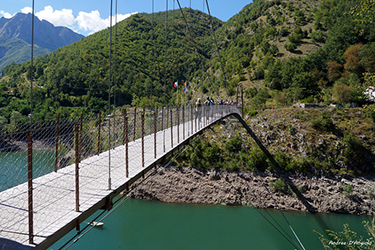
There is also a beautiful suspension bridge designed by Morandi in 1953 to connect the new village with the opposite bank. A little further on, another bridge allows you to admire the lake from above: it is the Tibetan suspension bridge dedicated to the Marines of the San Marco Battalion, leading to the Park of Honour and Dishonour.
In this park there are several statues dedicated to people who brought honour and dishonour, with a rather blurred transition from one “section” to the other.
We come across the Italian Fabrizio Quattrocchi and a French police dog, both killed by ISIS, the captain of the Costa Concordia with rabbit ears, and even a statue of Putin. These elements regularly spark controversy over this park, built more for political and tourist marketing purposes than out of love for art!
Torre del Lago - Puccini
12
Torre del Lago Puccini is a hamlet of the municipality of Viareggio, about 5 kilometres away. From Lucca, it can be reached in 30 minutes by car or train. It takes its name from the tower on the shores of Lake Massaciuccoli, which originally served as a lookout tower and was later transformed into the home of a local family.
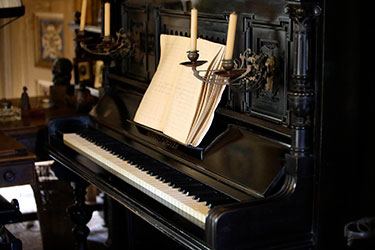
Torre del Lago is famous for being the birthplace of the Italian composer Giacomo Puccini. Today, the musician’s Art Nouveau villa has been turned into a house-museum and can be visited all year round, every day except Monday. The opening hours calendar can be consulted on the official website of the attraction.
The rooms of the Puccini Museum: what to see
On the ground floor are the kitchen, the private chapel where Puccini is buried, and the Hunting Room, while the bedrooms are located upstairs. At the entrance to the museum, visitors are given an information booklet, useful for understanding the history of the house.
The Puccini Festival: an event not to be missed
The main event in Torre del Lago is the Puccini Festival, one of the most important opera festivals in Italy, held every year in July and August. The programme includes internationally successful opera concerts.
To enjoy a beautiful view over the lake, stop in Piazza Belvedere Puccini, from where you can glimpse the countryside villages of Massarosa, Quiesa and Massaciuccoli on the opposite shore.
Let us then head towards the centre of the town and stop to visit the 18th-century Church of San Giuseppe, which after the war was restored, enlarged and had its bell tower completely rebuilt.
Lake Massaciuccoli
Of scenic interest is Lake Massaciuccoli, part of a natural area that was once entirely marshland. Today, the lake is the habitat of many plants, such as reeds and water lilies, and is an excellent place for birdwatching.
In summer, Torre del Lago is also popular for its wide beach of pale sand, almost entirely free, although there is also an equipped area with beach establishments.
Opening hours and ticket price for the Puccini House Museum
How to get to Torre del Lago Puccini:
Florence-Pisa motorway: Migliarino-Pisa Nord exit
Genoa-Livorno motorway: Viareggio exit
By train: from Viareggio Station, take a local bus to Torre del Lago Puccini.
Ticket price: full price €7 (adults and children over 13); reduced €3 (ages 6 to 13).
What to eat in Lucca
13
Lucca’s cuisine fits perfectly, in terms of ingredients and flavours, into the rich Tuscan tradition. Simple, genuine and almost always made with local products, it satisfies the desire for a “return to tradition” felt by those who visit cities like Lucca.
Traditional soups and first courses in Lucca
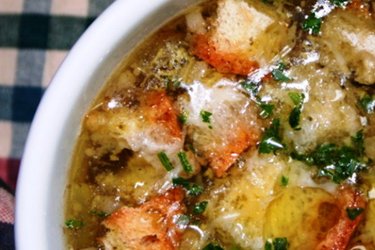
Among the first courses, soups stand out, such as farro soup, made with beans, herbs and ham, and garmugia, made with onions, peas, artichokes, asparagus, fresh broad beans, meat, pancetta, oil and toasted bread croutons.
Also among the first courses, try farinata, tordelli — fresh pasta — matuffi — soft polenta — and vegetable flans.
Traditional main courses
Among the main courses are stewed rabbit, roasted salt cod with chickpeas and, above all, rovelline, slices of beef breaded and fried, then cooked again in a sauce with tomatoes and capers.
Desserts to try in Lucca
They are usually served with mashed potatoes. Desserts are also closely linked to the local area: let us start with buccellato, a typical ring-shaped cake with raisins and aniseed, so typical that there is a local proverb saying “those who come to Lucca and do not eat buccellato may as well never have been there”.
Other desserts include castagnaccio — chestnut flour, shelled walnuts, pine nuts, orange peel, raisins, rosemary and oil — and necci, crêpes made with chestnut flour and ricotta.
Zuppa lucchese is a variation of buccellato softened with vin santo, strawberries flavoured with wine and cream. Finally, there is a rich chocolate cake with a filling of boiled rice, dark chocolate, cocoa, candied fruit, pine nuts, raisins, nutmeg and eggs.
Where to stay in Lucca
H
Lucca has excellent accommodation capacity, but it is a city with strong tourist appeal, so it is better to book your stay in advance.
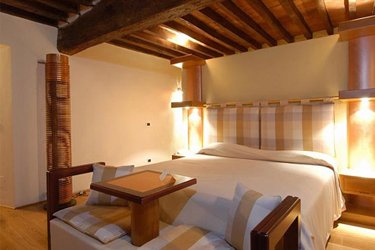
The average price of a 3-star hotel inside the walls of Lucca starts from €70 in high season — from April onwards. During certain events, such as the Summer Festival, Comics & Games and the Puccini Festival, it may be difficult to find the most affordable rooms.
To book a hotel, we recommend choosing from those offered by Booking.com. There are about 100 hotels with prices, services, photos and reviews from guests who stayed before you. Go to Booking.com.