

The magnificent combination of a major city and a natural reserve of beautiful parks and green spaces makes Oslo a truly unmissable destination. The capital of Norway lies between the Oslo Fjord and green hills rich in forests, so much so that in 2007 Oslo was named the second greenest and most environmentally friendly city.
If you walk through the city center, just a few steps will be enough to find a lovely park where you can relax, and with only a 10-minute boat ride, you can set off to discover the wonderful beaches on the Oslo Fjord. But the capital of Norway is also rich in attractions, museums, art galleries, and shops where you can enjoy some shopping.
And remember: you cannot leave Oslo without first getting to know its painter par excellence, Edvard Munch. The paintings of this tormented and brilliant artist are displayed at the Munch Museum and the National Gallery.
To admire the artistic spirit of this city, you do not necessarily have to enter a museum: Vigeland Park is one of Oslo’s most popular tourist attractions and is home to as many as 212 statues by sculptor Gustav Vigeland. Here are the 10 things you absolutely must not miss in this city waiting to be experienced!
If, on the other hand, you are looking for a hotel, we recommend choosing from those offered by Booking.com. There are around 320 hotels with prices, photos, and reviews from guests who stayed there before you. Go to Booking.com
Akershus Castle in Oslo
1
Located on the promontory overlooking the Oslo Fjord, the proud Akershus Fortress is the main architectural symbol of the Norwegian capital.
Built during the reign of Håkon V toward the end of the 13th century to protect the city from invaders, as shown by its four defensive towers, the medieval building was transformed into a Renaissance palace in the first half of the 1600s at the request of Christian IV.

During the 1700s, the structure began to show some signs of decay, but restoration work only began in 1899.
Today the complex, while still remaining a military installation, has taken on the appearance of a park often used for theatrical performances and open-air concerts during the warmer season.
Inside Akershus Festning stands the old Castle — Akershus Slott — whose sumptuous rooms are now used by the Government as ceremonial halls.
The royal chapel, on the other hand, houses the Mausoleum of the Norwegian Royals. Within the fortress walls, you will also find the Norwegian Resistance Museum and the Armed Forces Museum. The view over the harbor and the city is beautiful. Do not miss the changing of the guard, which takes place every day at 1:30 pm.
Opening hours and ticket price for Akershus Castle
Opening hours: every day from 6 am to 9 pm.
Ticket price: free admission.
How to get there: the castle can be reached in 10 minutes on foot from the center of Oslo via Kronprinsesse Märthas plass.
The National Gallery in Oslo
2
One of Oslo’s most popular tourist attractions is undoubtedly the National Gallery, known in Norwegian as the Nasjonalgalleriet.
This gallery, included in the museum complex of the National Museum, houses the largest collection of Norwegian art from the Romantic period to modern works, ranging from the 19th century to the Second World War. Of particular interest is the display of many masterpieces by Edvard Munch, including a version of the famous Scream.

The National Gallery features not only works by Norwegian artists, but also by many important European painters such as Picasso, Gauguin, and El Greco.
Do not miss the masterpieces by the Impressionists Monet, Manet, Renoir, Degas, Cézanne, and Matisse. The sculpture collection is also remarkable, with highlights including Renoir’s “The Triumph of Aphrodite” and Degas’ “Morning Toilette.”
The Gallery also hosts temporary exhibitions of historical and contemporary art.
Opening hours and ticket price for the National Gallery
Opening hours: from Tuesday to Sunday, from 10 am to 9 pm.
Ticket price: adults NOK 180, seniors and ages 18–25 NOK 110, ages 0–18 and Oslo Pass holders free admission.
How to get there: the museum is located at Brynjulf Bulls plass 3. It can be reached from the center of Oslo in about 5 minutes by car via Rv162, or by public transport. The stop is Nationaltheatret.
Oslo Cathedral
3
The wonderful Church of Our Savior, consecrated in 1697 and restored to its original Baroque appearance in 1950, is certainly worth a visit, especially for its beautiful stained-glass windows, the work of Emanuel Vigeland, brother of the more famous Gustav, and for its beautiful painted ceiling with scenes from the New and Old Testament.

The fine altarpiece, a depiction of the Last Supper and the Crucifixion, was created in 1748 by Michael Rasch and was a distinctive symbol of the church. It was later transferred to several cities in Norway, until in 1950 it was returned from the church of Prestnes to Majorstuen.
With a little luck, you may be able to attend one of the evocative concerts that are sometimes held inside the cathedral.
The arcades and porticoes behind the Cathedral — the Basarhallene, or bazaar halls — dating back to 1858 and located behind the cathedral, now house distinctive shops and markets.
Opening hours and ticket price for the Cathedral
Opening hours: every day from 10 am to 4 pm, Friday from 4 pm to 11:30 pm.
Ticket price: free.
How to get there: the cathedral is located at ortorvet 1, in the city center.
Vigeland Park in Oslo
4
You will probably go to Vigeland Park, the heart of the very popular Frognerparken, almost absent-mindedly, simply because it is listed in the guide, without having the slightest idea of what awaits you.

As soon as you enter the park, you will not believe your eyes: statues of annoyed children, embracing lovers, and thoughtful elderly people will surprise you with their exceptional beauty.
Vigeland Park is a true open-air museum of masterpieces by Norway’s most famous sculptor, Gustav Vigeland, with as many as 212 granite and bronze sculptures to admire and photograph.
The most famous statues are Sinataggen, the “Little Hot-Head,” depicting a very angry child stamping his feet, and the Monolitten, or Monolith, a 17-meter-high column where 121 human figures cling to one another, almost as if struggling to reach the top of the obelisk.
We recommend visiting the park at sunset, when the shadows create spectacular plays of light that seem to gently caress the sculptures.
Opening hours and ticket price for Vigeland Park
Opening hours: every day.
Ticket price: free admission.
How to get there: the park can be reached by car in 10 minutes from the center of Oslo via Rv162, or in 20 minutes by train from the central station.
Viking Ship Museum in Oslo
5
Even though they are still and do not advance threateningly across the sea, the dark and refined forms of the Viking ships preserved in the Museum inspire a certain awe and reverence, so much so that visitors find themselves speaking in hushed voices without even understanding why.

The funerary vessels displayed at the Vikingskipshuset are imposing and majestic and tell part of the history of this ancient seafaring people.
The ships on display, made of oak wood, were buried more than 1,100 years ago because they were used as giant coffins for nobles, alongside whom everything they were thought to need in the afterlife was placed, from jewelry to tapestries. Many of the artifacts found are displayed in the museum.
According to Viking beliefs, the ships were meant to transport their owners, members of the royal family, to the world of the dead.
The most solemn of all the ships is the Oseberg, which required as many as 30 rowers and is decorated on the stern and bow with carvings depicting dragons and serpents. The sturdiest is the Gokstad, the most significant and important example of a Viking ship. Of the third ship, the Tune, only a few fragments and planks remain.
The three ships were found in three large burial mounds on the Oslo Fjord and brought to light in the second half of the 19th century.
Opening hours and ticket price for the Viking Ship Museum
The museum will remain closed for restoration until 2025/2026.
TusenFryd Amusement Park in Oslo
6
Oslo is not only rich in art, museums, and monuments: it also knows very well how to entertain you. TusenFryd Amusement Park is a beautiful amusement park, about 20 km from the city center, much loved by both adults and children.
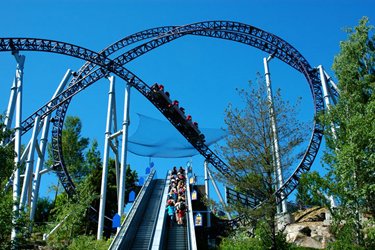
In the park, you can have a great time among many exciting attractions, a water park, BadeFryd, and an area dedicated to younger children.
The SpeedMonster deserves special attention: an exciting roller coaster inspired by racing cars. Just think, it will take you from 0 to 90 km/h in only 2 seconds and will reach zero gravity 12 times on every ride.
After walking through the streets of Oslo, all that remains is to end your visit in style with a pleasant thrill-filled pastime.
Opening hours and ticket price for TusenFryd Amusement Park
Opening hours: from May to October, with times varying depending on the month. On average from 10 am to 6 pm.
Ticket price:
Adults 120 cm and taller: NOK 459
Children from 95 to 120 cm tall: NOK 389; children under 95 cm tall: free
Seniors over 60: NOK 330
How to get there: the park is located at Fryds vei 25, Vinterbro. It can be reached by car — 20 km, following the signs for TusenFryd from the E6/E18 exit at Vinterbro — by train, Ski stop, or by bus, Route 505 from the Oslo bus terminal, platform B3, toward TusenFryd.
The Oslo Opera and Ballet Theatre
7
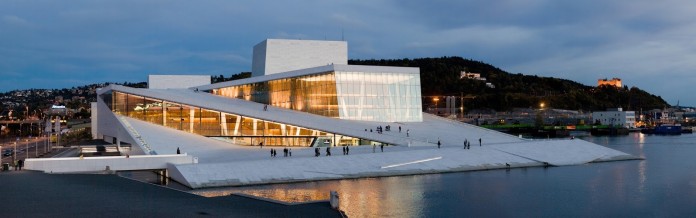
A futuristic construction of glass and white Carrara marble on the shores of the Oslofjord, the Opera House rises from the sea like a huge block of glittering ice.

Inaugurated in spring 2008, the building designed to host the activities of the Norwegian Opera and Ballet has already become an icon of the city, a symbol of Oslo’s waterfront redevelopment project.
The monumental work, designed by the Norwegian firm Snøhetta and costing around 600 million euros, stands as a bold experiment in urban architecture, as shown by the large sloping plane that allows entry to the theatre from the city and then rises up to the roof, from which visitors can admire the panorama of the city and its fjord.
Great attention to detail and a refined choice of materials also characterize the interiors — foyer and theatre halls — where Baltic oak wood dominates.
The building houses 1,100 rooms, including a large horseshoe-shaped auditorium with 1,369 seats, whose stage measures several thousand square meters, part of which lies 16 meters below sea level; the second hall has 400 seats, and the studio has 200 seats.
To visit the inside of the building, you need to book a guided tour in English in advance; the foyer and roof, however, are open to visitors.
Opening hours and ticket price for the Opera and Ballet Theatre
Opening hours:
foyer and roof with free admission. Interior from Monday to Saturday 11 am–6 pm, Sunday 12 pm–6 pm.
guided tours in English from Monday to Saturday at 1 pm and 2 pm, and on Sunday at 2 pm and 3 pm.
Ticket price:
• Guided tours: adults NOK 120, children NOK 70.
Foyer and roof with free admission.
How to get there: the theatre is located at Kirsten Flagstads Plass 1. It can be reached on foot in 20 minutes from the center, or by tram and bus.
Norwegian Museum of Cultural History
8
Located on the Bygdøy peninsula, the Norwegian Museum of Cultural History is the largest open-air museum in Norway. Through reconstructions of rural and urban landscapes, rich collections, and many engaging activities, visitors relive Norwegian cultural history from the Middle Ages onward.

The museum includes more than 150 buildings from different regions of the country dating back to the 17th and 18th centuries, as well as a stave church built entirely of wood around 1200 in the municipality of Gol and transported here in 1885 at the request of Oscar II, King of Sweden.
The fascinating museum space is completed by old shops, craft workshops, carriages, folk music and dances, guides dressed in traditional costumes, and even a historic playground.
If you want to spend a pleasant day outdoors and discover Norwegian life, arts, and traditions, the Norsk Folkemuseum will not disappoint you!
Opening hours and ticket price for the Norwegian Museum of Cultural History
Opening hours: every day from October to April 11 am–4 pm and from May to September 10 am–5 pm.
Ticket price:
High season — more or less every weekend and from May to September: adults NOK 180, seniors NOK 140, ages 18–25 NOK 100, children 0–17 and Oslo Pass holders free.
Low season — more or less all weekdays and all of January: adults NOK 140, seniors NOK 120, ages 18–25 NOK 80, children 0–17 and Oslo Pass holders free.
How to get there: The museum is located at Museumsveien 10 on Bygdøy, about 5 km from the center of Oslo. By bus: 30 Bygdøy from the center, Folkemuseet stop. By car/bicycle/on foot: from the E18 or Bygdøy Allé, take the exit for Bygdøy. Follow the signs for the Norwegian Museum of Cultural History.
What to Eat in Oslo
9
Of course, Oslo’s typical dishes are linked to its ancient and deep-rooted seafaring tradition: in this city, you can enjoy different types of fresh fish and seafood specialties that you may never have tasted anywhere else.

You cannot miss the famous salmon, served smoked or grilled, as well as cod, catfish, herring, shellfish, and shrimp, cooked or freshly caught.
If you prefer meat, Oslo is fully prepared: you can find elk, reindeer, and venison, with an already strong flavor that is often enhanced with a sauce made from sour cream.
Also worth mentioning is dried meat, which in Oslo takes the form of ham or sausages, perhaps accompanied by delicious geitost, a sweet cheese made from cow’s and goat’s milk.
To enjoy these dishes at their best, we invite you to try the excellent local beer and Oslo’s delicious aquavit.
Where to Stay in Oslo
10
Oslo offers a wide choice of hotels, bed & breakfasts, farm stays, hostels, and campsites. Most bed & breakfasts are located in the city, but some are also scattered throughout the countryside: pay attention to road signs, looking for the words rom or husrom.

Another place where you can sleep is in the fishermen’s cabins, the so-called rorbu. A little out of the way, these cabins are completely independent, with a living room and kitchen in one space, a bedroom, and a bathroom.
A rorbu with two bedrooms costs from NOK 600 and up per night, and you often have to pay a little extra for towels and bed linen.
Hostels in Oslo belong to two different chains: Hostelling International and VIP Backpackers Resort International, both very welcoming and comfortable.
A bed costs from NOK 100 to 300 per night, while a double room costs from NOK 300 to 600. In the rooms you will find blankets and pillows, but you will need to bring sheets from home or, if you prefer, rent them at the hostel.
Hotels offer discounted rates especially on weekends and in summer: compared with the rest of Europe, prices in Oslo are not very high. Another very convenient solution for your holidays is farm stays, located in the western part of Oslo, where you can take care of animals and enjoy many different activities: fishing, trekking, horseback riding, and boat excursions.
If you are looking for a hotel, we recommend choosing from those offered by Booking.com. There are around 320 hotels with prices, photos, and reviews from guests who stayed there before you. Go to Booking.com


