

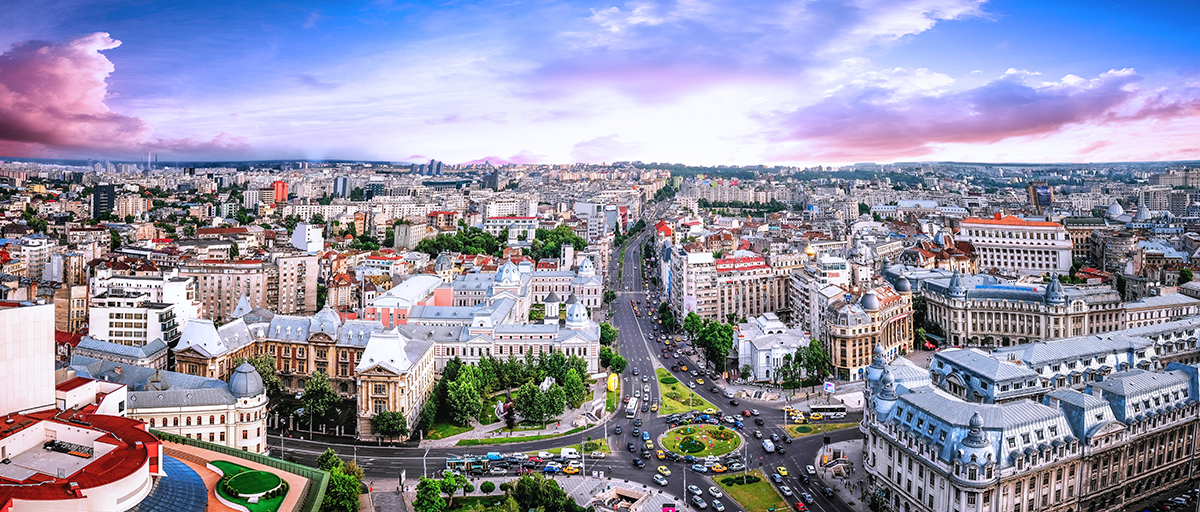
“Once upon a time, there was a shepherd who stopped in a fertile field with his flock and gave life to the city of Bucharest” the legend surrounding the creation of the capital of Romania sounds just like a fairy tale.
The shepherd’s name was Bucur, which in Romanian means “joyful, happy”, but despite this cheerful beginning, the history of Bucharest is anything but idyllic. Between wars, earthquakes and the atrocious years of Nicolae Ceaușescu’s dictatorship, the wonders of this place are due solely to the strength of the country and its ability to be reborn.
The first architectural transformations began in the 19th century, with the aim of making the city resemble other European capitals. The architects entrusted with the works were partly French and partly Romanian, and the city’s new appearance became very similar to the French capital, which is why many call it “Little Paris”.
Walking along the tree-lined avenues, reminiscent of French boulevards, you will find many references to Parisian style, even in the names, such as Charles de Gaulle Square. An explicit reference to Paris is the Arch of Triumph, erected in 1878 to celebrate Romania’s independence.
An ideal destination for a weekend but also for a longer holiday, below you will find a selection of the 10 things to do and see in Bucharest. And if you are travelling by car and want to explore the neighbouring areas, Romania will surprise you!
If you are looking for a hotel in Bucharest, we recommend choosing from those offered by Booking.com. There are around 2,600 hotels with prices, photos and reviews from guests who have stayed there before you. Go to Booking.com.
The Palace of Parliament - Casa Poporului
1
The Secretary General of the Council of Europe, Catherine Lalumiere, managed to perfectly sum up the dual nature of the Palace of Parliament in Bucharest with the phrase “the palace of a megalomaniac, but also a masterpiece of the Romanian people”.

Majestic, imposing and immense are the adjectives that come to mind when looking at it. Its construction, however, was not the expression of a wealthy city, but of the personality cult of its dictator, Nicolae Ceaușescu.
Work began in 1984, during a period when Bucharest was experiencing economic hardship and, in order to satisfy his desire for ostentation, the tyrant drove the people into poverty.
Ceaușescu found the necessary space by razing entire districts on Uranus Hill to the ground, forcing families to move into buildings provided by the communist regime. The architect Anca Petrescu was chosen because her project was the largest, and to build it Ceaușescu demanded that only Romanian materials be used.
The fall of the government in 1989 prevented the completion of the works and, to this day, only 60% of the original project has been completed. After his death, there was talk of demolishing the entire palace, but the Romanian people responded differently: they changed its name from House of the Republic to House of the People and wanted to preserve it as a symbol of the dictator’s defeat, forced to flee from the very palace he had so strongly desired.
The Parliament of Bucharest, with its 1,000 rooms, ranks first in the Guinness World Records as the largest administrative building for civilian use, second in the world by surface area only to the Pentagon in the United States, and among the heaviest and most expensive buildings in the world.
An organised tour lasting about an hour and a half will take you through the palace rooms, where even the objects flaunt wealth, such as the carpet in the main hall, which weighs an impressive 14 tonnes! It is worth stepping out onto the terrace, which reveals the modern side of Bucharest.
Opening hours and ticket price:
Address: Strada Izvor 2-4;
Opening hours: open every day from March to October from 9:00 am to 5:00 pm, with the last tour departing at 4:30 pm; from November to February from 10:00 am to 4:00 pm, with the last tour departing at 3:30 pm;
Ticket price: the standard tour costs 40 lei per person, about €8.40; with additional access to the underground levels, 45 lei per person, about €10; while the panoramic tour costs 600 lei, about €127, for a group of up to six people.
The Village Museum
2
An unmissable stop on a trip to Bucharest is the Village Museum. Its correct Romanian name is Muzeul Național al Satului “Dimitrie Gusti”, dedicated to one of its founders, Dimitrie Gusti, a Romanian sociologist and historian who also coordinated the ethnographic research until its opening in 1936.

Walking along the shores of Herăstrău Lake, among the wonders of the park of the same name, you will find the entrance to a “real village”, with period houses containing a collection of monuments and artefacts dating from the 17th to the early 20th century.
It will not feel like you are visiting Europe’s largest open-air museum, but rather as if you have been transported to another era. The 272 wooden houses will seem to have been built on site, rather than brought here in 1936 from all over the country. The place serves as a reminder of Romanian rural culture, and for this reason you will find artisans demonstrating traditional techniques for making objects from the past.
Like any proper village, it has its bridges, furnished houses, farms and churches, such as the Greek-Catholic church from the Dragomireşti region in the Carpathians. Do not miss the small underground houses, where you have to lower your head to enter! The very low entrance fee is the icing on the cake.
Opening hours and ticket price for the Village Museum:
Address: Kiseleff Road no. 30;
Opening hours: Monday from 9:00 am to 5:00 pm and Tuesday to Sunday from 9:00 am to 7:00 pm;
Ticket price: adults 15 lei, about €3.15.
Bucharest Old Town: Lipscani District and the History Museum
3
The historic centre of Bucharest, south of Piața Universității, is almost entirely pedestrianised and is known as the Lipscani district, although Lipscani is actually the name of one of its main streets.
A maze of narrow streets showcasing the architectural wealth and history of the Romanian capital, it is also a pleasant place to spend the evening hours among venues, bars, restaurants and live music.
Among neoclassical, baroque and Gothic buildings, you will find the old residence, Curtea Veche, of Prince Vlad III, known for his bloodlust as Vlad the Impaler, or Dracula.

Built in 1459, the residence suffered serious damage and today only its remains can be visited, brought to light thanks to archaeological work carried out towards the end of the 1960s.
The church next to it was the palace basilica and is the oldest in the city, as its construction dates back to the 16th century.
Bucharest’s past is preserved in the National Museum of Romanian History, located along one of the city’s main streets, Calea Victoriei.
Its imposing façade does not go unnoticed and, after climbing the steep staircase, you will gain access to as many as 650,000 historical artefacts, enriched every year by new discoveries. The museum’s approximately 60 rooms illustrate Romanian history from the Palaeolithic to the 20th century, including the Lapidarium, the Treasury Room and its most important work: the copy of Trajan’s Column.
In the 15th century, the streets that are now characterised by art galleries, cafés and antique shops were the commercial heart of the area, with workshops belonging to craftsmen and merchants. A particularly atmospheric, bohemian-style walk is through the Macca-Villacrosse Passage, between Calea Victoriei and Strada Eugeniu Carada, with a glass roof connecting the buildings.
The advice is to experience the historic centre by day, strolling among historic buildings and shops, and by night, when it is taken over by nightlife. If at some point you happen to see the Capitoline Wolf in Piazza Roma, it is not an illusion but a gift from the Italian State to Romania in 1906 for the 40th anniversary of the accession to the Romanian throne of the German prince Carol I.
Opening hours and ticket price for the National Museum of Romanian History:
Address: Calea Victoriei 12;
Opening hours: Monday and Tuesday: closed. Open Wednesday to Sunday from 10:00 am to 6:00 pm. The ticket office closes at 5:15 pm;
Ticket price: adults 10 lei, about €2.10 per person
Patriarchal Cathedral of Saints Constantine and Helena
4
The Orthodox Cathedral of Saints Constantine and Helena, just a short distance from the Parliament on the Metropolitan Hill of Bucharest, is also known as the Patriarchal Cathedral because, since 1925, it has been the official seat of the Patriarch of all Romania.
Incorporated into the former monastery built in the 17th century by Constantin Serban Basarab, Prince of Wallachia, it is part of an architectural complex that also includes the Palace of the Patriarchate and the Patriarchal Residence.

Free admission is one more reason to enter and admire the splendid frescoes created between 1932 and 1935 by the painter Dimitrie Belizarie.
If the sacred atmosphere of the place is accompanied by a religious ritual, you will feel emotionally involved even if you profess another faith.
The architectural style is inspired by that of the cathedral of Curtea de Argeș. A silver reliquary contains the remains of Saint Dimitrie the New, Patron Saint of the city of Bucharest, and during his feast day, on 27 October, the cathedral becomes a pilgrimage destination.
The chapel of the Patriarchal Residence is a true jewel, very well preserved despite being the oldest part, with paintings and carved, gilded wood. The Patriarchal Palace is characterised by imposing Ionic columns grouped in pairs and was built in the early 20th century by the architect Dimitrie Maimarolu.
Visiting the complex is free, and it is worth taking the time to admire the richness of its workmanship, such as the mosaics, the frescoes of the portico and the perfectly crafted woodwork.
Opening hours and prices for the Patriarchal Cathedral of Saints Constantine and Helena
Address: Strada Dealul Mitropoliei;
Opening hours: from 7:00 am to 8:00 pm;
Ticket price: free
Piața Revoluției — Revolution Square
5
On every trip there is a place of memory where it is only right to pause, and Revolution Square is one of them.
In the square there are tangible signs of the madness of the dictator Nicolae Ceaușescu, who reduced an entire country to poverty with laws that attacked human dignity and with inconceivable brutality.

The date to remember is 21 December 1989, when Ceaușescu appeared on the balcony of the former headquarters of the Central Committee of the Communist Party to deliver his final speech before fleeing by helicopter.
That day, the people gathered in the square were furious, and their anger towards the dictator was repressed by Ceaușescu’s loyalists with gunfire into the crowd: the bullet marks on the building opposite remain as evidence.
The size of the Memorial of Rebirth, Memorialul Renaşterii, built in 2005 and about 25 metres high, symbolises the Romanians’ desire to close an atrocious chapter in their history. Designed by Alexandru Ghilduş, it was a highly debated work, as not everyone was able to understand the symbolism expressed by the artist.
Its shape is that of a huge cylinder whose tip pierces a tangle of barbed wire, from which drops of blood descend. These drops were actually the result of an act of vandalism, but they were not removed because they perfectly express the suffering endured by the population.
Royal Palace and National Museum of Art
6
The importance of the National Museum of Art of Romania is also reflected in its location in Revolution Square, housed inside the magnificent Royal Palace.
The early 19th-century building was transformed into a Royal Palace by Prince Alexandru Ghica in 1837, but over the years the structure suffered serious damage following a fire and the bombing that struck the city in April 1944.

Only in 1948 did the palace pass into the hands of the Ministry of Culture and Information for the opening of the national museum of Romanian art.
Another severe blow came in 1989, when over 1,000 works were destroyed. The current structure of the museum is recent, as it was reopened in 2000 with three permanent exhibitions: the European Art Gallery, the Romanian Modern Art Gallery and the Old Romanian Art Gallery.
The galleries retrace Romanian history from the 14th to the 19th century, with ancient local precious objects and modern works by important artists such as Grigorescu, Luchian and Brancusi. In addition, part of the former royal collection is on display, with European works by great masters such as Rubens, Rembrandt, El Greco, Monet and Rodin.
Part of the history of this fascinating place can be found in the rooms of the Royal Palace that can be visited, in the exhibition “Fragments of Memory”, where period photographs illustrate the key moments of the royal family and the various reconstructions of the palace.
Opening hours and ticket price for the National Museum:
Address: Calea Victoriei 49-53;
Opening hours: closed on Mondays. Open Wednesday to Sunday, from 10:00 am to 6:00 pm. Last admission one hour before museum closing. Tickets and the museum shop close one hour before the museum closes;
Ticket price: combined ticket for the National Museum of Romania, European Art Gallery and Romanian Art Gallery, plus the Museum of Art Collections: 30 lei, about €6.30. It is also possible to visit just one gallery at a reduced price. Historic spaces, Royal Bedroom, Throne Hall and Voievozilor Staircase: 20 lei, about €4.20.
George Enescu and Cantacuzino Palace
7
Walking along the grand avenue of Calea Victoriei, once a crossroads for trade between Bucharest and Brașov, your gaze will inevitably fall on the majestic Cantacuzino Palace, amid the museums, theatres and libraries that embellish the city’s oldest street.

After seeing the ostentation of the buildings commissioned by the dictator, here it is impossible not to notice that wealth can also be transformed into elegance. Grigore Cantacuzino, also known as the “Nabob” because of his wealth, commissioned the construction of the palace in 1901 from the architect John D. Berindei, who involved world-famous artists, sculptors and interior decorators in the project.
The residence is a blend of luxury and elegance in which different styles combine perfectly: baroque, rococo and Art Nouveau elements.
Its importance, and above all its connection with music, began with Grigore’s son, Mihail Cantacuzino, who, together with his wife Maruca, loved organising sumptuous parties. Important artists from Romanian and foreign aristocratic circles performed there, including the greatest Romanian musician, George Enescu, who became a regular guest of the house and, after Mihail’s death, was finally able to declare his love for Maruca.
After Enescu’s death, his wife founded the “George Enescu” Museum. Since 2007, the palace has been included on the list of European Heritage monuments.
Behind the palace you will find the “George Enescu” Memorial House, an austere home that preserves important evidence of the fascinating life of the violinist, composer, pianist and conductor who, after travelling the world, died in Paris.
Opening hours and ticket price for Cantacuzino Palace:
Address: Calea Victoriei, no. 141;
Opening hours: closed on Mondays. Open Tuesday to Sunday from 10:00 am to 5:00 pm, admission until 4:30 pm. Free admission on the 26th of every month;
Ticket price: adults 10 lei, about €2.10 per person.
Herăstrău Park
8
Romanians are very proud of their large green spaces, and Herăstrău Park, in Romanian Parcul Herăstrău, is one of them. Lake Herăstrău was surrounded by a vast marshy area, which was drained in 1935 to create this extensive green lung.

Just like architectural wonders, nature is able to create enchanting places, especially when helped by expert hands, such as those of architects Ernest Pinard and Fr. Rebhun.
Herăstrău Park is easy to reach in the northern area of Bucharest and is worth dedicating an entire day to, both to relax and to visit the monuments within it and enjoy the various attractions for adults and children.
The park is divided into two areas: a cultural area with the Village Museum, two theatres, one of which is open-air, libraries and two exhibition pavilions; and another area where you can enjoy numerous outdoor activities thanks to fitness areas, cycle paths, a golf course, a children’s playground and walking trails.
If you feel like cycling, you can rent a bike at the entrance for a very low price and ride around the park, quickly reaching the various attractions. Walking among poplars, oaks, maples, willows and cherry trees, let yourself be enchanted by the romantic Japanese garden, which the Japanese Embassy itself helped create in 1998. There is no shortage of restaurants and hotels nearby.
Opening hours and ticket price for Herăstrău Park
Address: Sector 1;
Opening hours: open 24 hours a day;
Ticket price: free.
The Romanian Athenaeum
9
Events are one of the many ways to get to know a people, and attending a concert at the Romanian Athenaeum, one of the symbols of the country’s culture, will leave you with a memory that you will forever associate with the city of Bucharest. It is a true temple of art, even in its form, with a neoclassical style and columns surrounding the great concert hall.

Right in the historic centre, you will recognise it by its circular shape, linked to the foundations of the circus that once stood on that site.
Built on property that belonged to the wealthy Văcărescu family, the project was entrusted to the French architect Albert Galleron, and funds were also raised through public donations.
It was inaugurated in 1888 and, in 2007, became part of the sites bearing the European Heritage Label.
At the entrance there are six columns supporting the peristyle and five mosaic medallions representing the best-known Romanian princes: Alexandru cel Bun, King Carol I, Neagoe Basarab, Matei Basarab and Vasile Lupu.
The great hall that awaits you inside is enchanting, with its 12 Carrara marble columns and a splendid 70-metre-long fresco painted by the Romanian artist Costin Petrescu. Do not miss the Philharmonic Hall dedicated to the great George Enescu.
Opening hours and prices for the Romanian Athenaeum:
Address: Strada Benjamin Franklin 1-3;
Opening hours: closed on Mondays. Open Tuesday to Friday from 12:00 pm to 7:00 pm. Saturday and Sunday: from 4:00 pm to 7:00 pm;
Ticket price: varies depending on the concert.
Stavropoleos Monastery
10
The architecture of the Stavropoleos Orthodox Church makes it perfectly recognisable, especially in relation to the buildings surrounding it in the heart of the historic centre.

Its eclectic style, known as Brâncovenesc in relation to the period in which it developed, during the rule of Prince Constantin Brâncoveanu, and the floral decorations on the façade make it an unmissable stop during a stay in Bucharest.
The 1724 church is part of a monastic complex that includes a splendid cloister, a library, a refectory and sacred and ancient objects.
Entering the church, enveloped by a mystical atmosphere, your gaze is lost among the multitude of colours on the completely frescoed walls and the rich iconostasis, made of carved wood, depicting the faces of saints against a golden background.
Opening hours and prices for Stavropoleos Monastery:
Address: Strada Stavropoleos 4;
Opening hours: Monday to Saturday at 8:00 am, 6:00 pm and 9:00 pm; Sunday at 9:30 am, 6:00 pm and 9:00 pm
Ticket price: free.
What to Eat in Bucharest
Romanian cuisine is strongly influenced by Balkan gastronomy. Typical dishes are mostly meat-based, but you will also find excellent freshwater prawns and spit-roasted carp.
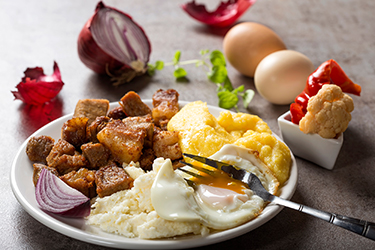
If you like tripe, one of their specialities is Ciorbă de burtă, a soup with sour cream, vegetables, chicken, veal and, of course, tripe.
Various typical Romanian dishes are accompanied by mămăligă, a cornmeal dish similar to Italian polenta, served topped with a sheep’s cheese cream known as brânză, or with meat stew, cheese and eggs in tochitură.
Let yourself also be delighted by desserts such as the simple but delicious plăcintă, a cake filled with cheese, or cozonac, a traditional holiday sweet, especially at Easter, made with flour, walnuts, milk and cocoa, with a shape similar to a braid.
Around Bucharest: Dracula’s Castle and the Castles of Transylvania
Beyond the Carpathians, Romania hides fascinating castles in isolated places that, especially at dusk, evoke unsettling feelings. Worth visiting are Peleș Castle, Râșnov Fortress and the famous Bran Castle, better known as Dracula’s Castle.

The description of the Transylvanian castle in Bram Stoker’s novel, perched on the edge of a precipice, above a chasm carved by rivers crossing the forests, perfectly reflects the image you will see when you arrive.
The author had never been to Romania, but he was probably inspired by an illustration in a book by Charles Boner, and it seems that for his protagonist, Dracula, he also drew inspiration from the ferocity of Vlad Țepeș, the ruler of Wallachia.
It matters little whether these associations are real or fictional, because Bran Castle, with its Time Tunnel and Museum of Medieval Art, is such a distinctive and unusual place that it deserves a visit. If you happen to be there during Halloween, taking part in the party they organise will be an unforgettable experience!
Opening hours and prices for Bran Castle:
Address: Str. General Traian Mosoiu, no. 24, Bran, Romania
Opening hours: from 1 April to 30 September, Monday from 12:00 pm to 6:00 pm; Tuesday to Sunday from 9:00 am to 6:00 pm. Last admission at 6:00 pm. From 1 October to 31 March, Monday from 12:00 pm to 4:00 pm; Tuesday to Sunday from 9:00 am to 4:00 pm. Last admission at 4:00 pm;
Ticket price: adults 40 lei, about €8.40.
Hotels in Bucharest
If you are looking for a hotel in Bucharest, we recommend choosing from those offered by Booking.com. There are around 2,600 hotels with prices, photos and reviews from guests who have stayed there before you. Go to Booking.com.